
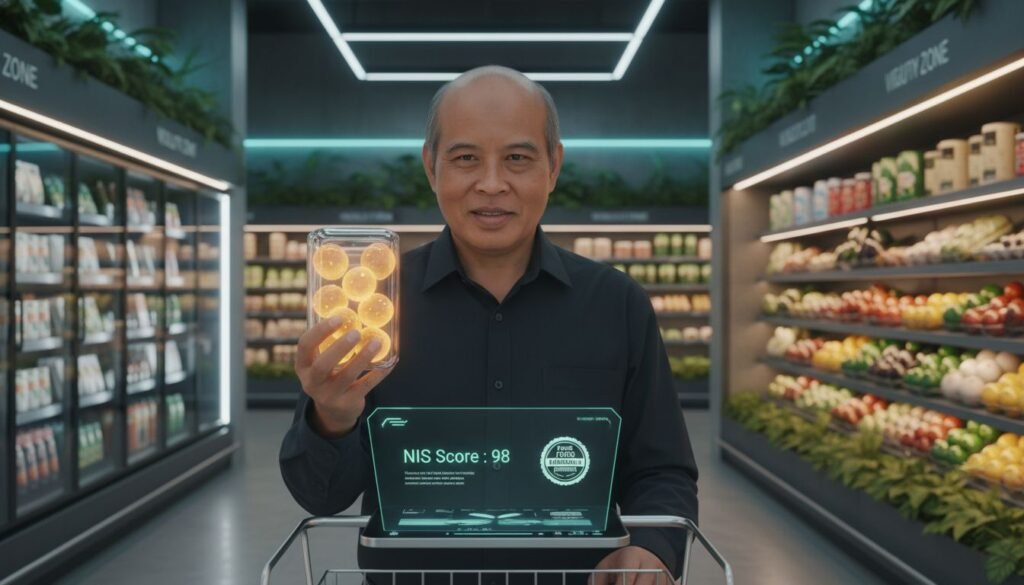
2026 Whole Food Regulations: Experts say that 2026 will be the “Nutritional Renaissance,” a time when people will change the way they eat for good. The tides have finally shifted after decades of a disastrous worldwide experiment with synthetic ingredients and lab-made foods that taste great. The “Pure Food Mandate” has successfully broken up the power of ultra-processed food (UPF) companies. We no longer have to guess what's in our food; we are seeing a return to biological integrity required.
At Fit Global Life, we have tracked this transition since its inception. We understand that for the high-performing individual, food is not merely fuel; it is a sophisticated set of instructions for your DNA. This complete guide will help you navigate a world where “clean eating” is no longer just a choice for the wealthy but a global standard.
1. The End of the “Grey Area” Label: What the NIS Means
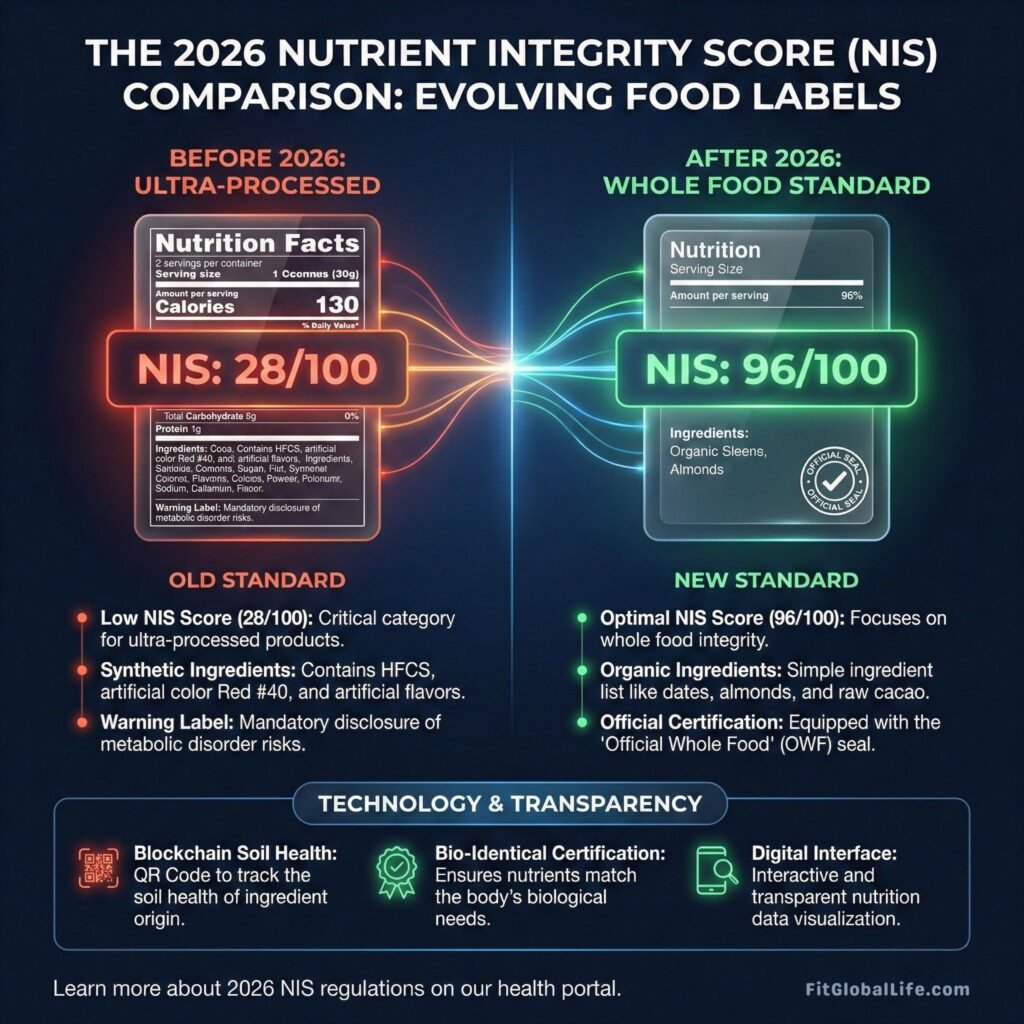
The food business has been in a “Grey Area” for more than fifty years, hiding thousands of chemical compounds behind nebulous phrases like “natural flavors,” “added stabilizers,” and “conditioning agents.” These words were “trade secrets” protected by law, allowing businesses to avoid answering to customers. As of January 2026, this lack of transparency is officially illegal. The centerpiece of this transparency revolution is the Nutrient Integrity Score (NIS).
The NIS Calculus: More Than Just Calories
The NIS is a complex algorithm that evaluates food based on how well it preserves its molecules. Unlike the rudimentary nutrition panels of the 2010s, which focused solely on macronutrient counts, the NIS subtracts points for high-heat processing, synthetic emulsifiers, and industrial fillers.
This system is heavily influenced by the NOVA Food Classification System, which provides a scientific framework for distinguishing between minimally processed and ultra-processed items. The NIS takes NOVA a step further by assigning a real-time value to the bioavailability of micronutrients. If a mineral is present but chemically “locked” by a stabilizer, it doesn't count toward the score.
New 2026 Transparency Standards:
- The “Bio-Identity” Requirement: Every ingredient list must now distinguish between “Bio-Identical” (derived from nature) and “Synthetic-Analog” (lab-created) ingredients.
- Synthetic Disclosure: If an ingredient, such as “vanilla,” was synthesized in a lab, it must be legally labeled as a Synthetic Analog.
- Metabolic Disruptor Warnings: Following the success of Front-of-Package Labeling in South America, products containing high levels of processing contaminants must display a clear visual warning: “High Risk of Metabolic Disruption”.
- Real-Time Traceability: Utilizing the technology found in our guide to Decentralized Health, food packaging now features dynamic QR codes.
- Soil Health Index (SHI): These codes reveal the Soil Health Index of the farm, ensuring the minerals promised on the label are actually present in the plant.
2. Defining “Whole Food” as a Legal Biological Standard
A “whole food bar” might have 30 ingredients and be very extruded by 2024. In 2026, the law has finally caught up with biological reality. To carry the Official Whole Food (OWF) Seal, a product must pass a rigorous “Structural Integrity Test”.
The 90/10 Rule of Preservation
The new mandate requires that any product labeled as “Whole” must retain at least 90% of its original fiber matrix. The Harvard T.H. Chan School of Public Health has long argued that the health effects of UPFs are directly linked to the loss of this structure. Without fiber to slow the absorption, even “healthy” ingredients cause rapid glucose spikes and metabolic strain.
In 2026, the term “Whole Grain” can no longer be applied to flour that has been stripped and “enriched.” It must be the intact kernel or a cold-milled equivalent that maintains the germ-to-endosperm ratio required by the body’s digestive enzymes.
The Mitochondrial Perspective
The 2026 regulations recognize that food is information. If that information is corrupted by excessive processing, it leads to cellular “miscommunication”. This is particularly damaging to the mitochondria—the powerhouses of your cells. When UPFs deliver “naked” energy without the necessary co-factors (enzymes and minerals), mitochondria enter a state of oxidative stress.
By mandating OWF standards, we ensure the body receives the correct biological signals, aligning with the latest research on Mitochondrial Health from the NIH. High NIS-rated foods act as mitochondrial catalysts, promoting longevity at the cellular level.
3. Auditing Your Footprint: Blockchain and the New Consumerism
In the era of Decentralized Health and Web3, transparency is everything. In 2026, we do not trust a food producer's claim unless they can show real-time data on the blockchain. The days of “greenwashing” and “healthwashing” are effectively over.
The Digital Carbon Ledger
Modern nutrition is inextricably linked to environmental health. The 2026 mandate requires a Digital Carbon Ledger for every mass-market food item. At Fit Global Life, we recommend using tools like EcoTrace to audit your consumption. This technology allows you to:
- Trace Nutrient Origin: Verify that your “grass-fed” beef actually grazed on soil with a high SHI.
- Monitor Energy Density: Track the real-time energy consumption used to process your food.
- Direct Restoration Participation: Many Grade-A NIS foods now come with “Restoration Credits.” A portion of your purchase is automatically diverted to soil regeneration or reef recovery projects, verified through non-fungible carbon NFTs.
This isn't just about saving the planet; it’s about ensuring the food you eat hasn't been grown in “dead soil,” which is a primary cause of micronutrient deficiency in the modern world.
4. Navigating the 2026 Grocery Aisle: A Practical Guide
The layout of a 2026 supermarket is fundamentally different from the cluttered aisles of the past. The “center aisles”—once the graveyard of nutrition—have been largely replaced by Vitality Zones.
A. The Vitality Zones (Cold-Chain Nutrition)
Because synthetic preservatives like BHA, BHT, and potassium bromate are now strictly limited, “shelf-stable” products have become rare. Most real food is kept in Vitality Zones—temperature-controlled environments using UV-C lighting to prevent spoilage without chemical intervention. This mirrors the World Health Organization (WHO) recommendations on reducing salt and chemical preservatives.
B. Smart-Carts and Epigenetic Syncing
Modern grocery carts are equipped with biometric scanners. By syncing with your Epigenetic Eating profile, your cart will highlight foods that optimize your specific genetic predispositions. For example, if your DNA markers show a sensitivity to lectins or a high requirement for Vitamin K2, the cart will guide you toward the specific NIS Grade-A foods that fill those gaps.
C. The Ancestral Tech Shift: HPP and Fermentation
We are seeing a resurgence of ancient processing methods enhanced by 2026 technology. HPP (High-Pressure Processing) is now the industry standard, recognized by the FDA for eliminating pathogens while preserving the raw enzymes destroyed by traditional heat pasteurization.
5. The Psychology of “Ethical Euphoria”
Why does this regulatory shift matter for your mental performance and longevity? In our series on Mind & Mental Performance, we explore how “eco-anxiety” and the subconscious guilt of poor consumption act as chronic stress factors.
Eliminating the “Processing Fog”
Ultra-processed foods were designed to bypass the brain's satiety signals, creating a cycle of addiction and “brain fog.” By removing neuro-disruptive additives (like certain artificial sweeteners and dyes), the 2026 regulations allow for a Biological Reset.
When your diet is clean, your brain achieves the state of “Deep Focus” required in our Digital Deceleration protocols. This mental clarity, combined with the knowledge that your consumption is restorative, leads to what we call “Ethical Euphoria.” This is a neurobiological state where dopamine and serotonin are released not from sugar spikes, but from a profound sense of homeostasis and contribution to global health.
6. The Economic Shift: Purity as the New Currency
We must address the elephant in the room: The Cost of Purity. Under the 2026 regulations, “cheap” food has become more expensive because the external costs (healthcare burden and environmental damage) are now factored into the price through Metabolic Taxes.
The Wellness Subsidy Program
However, to ensure health isn't just for the 1%, governments have introduced the Nutrient Credit System. Citizens who purchase high NIS-rated foods receive tax credits directly to their digital health wallets. We are moving toward an economy where the most nutritious food is the most accessible, flipping the “food desert” paradigm on its head. This economic model aligns with our Bio-Hacking Retreats philosophy: internal healing should be the foundation of global prosperity.
FAQ: Navigating the Pure Food Era
Conclusion: Reclaiming Our Biological Heritage
The 2026 regulations are more than just legal hurdles for corporations; they are a declaration of independence for the human body. We are reclaiming our right to eat food that our DNA recognizes.
The end of ultra-processed dominance allows us to return to a state of Homeostasis, where food is once again medicine, and vitality is the default state of being. At Fit Global Life, we believe that when you fuel the body with integrity, you unlock the full potential of the human spirit.
Disclaimer
This article is intended for educational purposes and reflects the current 2026 global food standards. Always consult with a clinical nutritionist or functional medicine practitioner to align your diet with your specific biochemical individuality.