
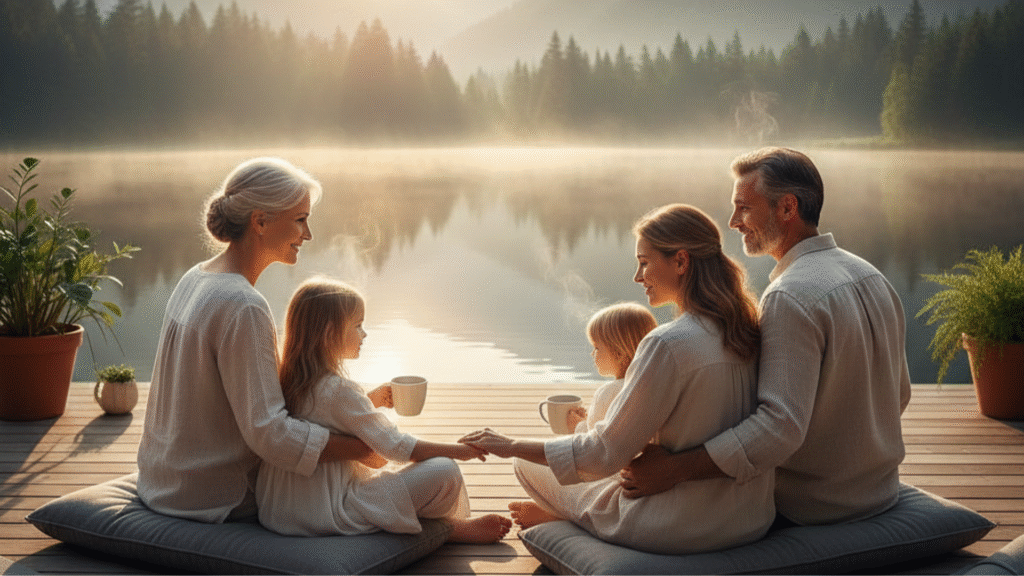
1. Introduction: Beyond the Holiday—A New Paradigm for Family Connection
I remember the last time we all went on a large family trip. We believed that taking a week off from work would be beneficial. Instead, it felt like juggling chainsaws: managing differing dietary needs, coordinating teenagers’ schedules with grandparents’ rest times, and perpetually attempting to pry the parents away from their work emails. We were physically close, but finding a genuine connection was still tricky. That was still difficult to locate.
This notable fact reveals a significant shift in how modern families seek healing. Holidays alone are no longer enough to deal with the stress, digital fragmentation, and generational gaps we all confront. The Multi-Gen Wellness Retreats are a new, powerful movement that will help.
Unlike standard vacations, Multi-Gen Wellness Retreats are not about sightseeing or passive relaxation; they are an intentional, structured, and purpose-driven journey focused on the holistic health of the entire family unit—physical, mental, emotional, and spiritual. Based on my years of experience observing and participating in wellness trends, I can attest that these retreats represent an investment in collective health that yields returns long after the luggage is unpacked. They force us to transition from merely coexisting to truly flourishing together.
The core thesis is simple: by removing the noise and replacing it with shared, meaningful wellness practices, we don't just relax; we rebuild the foundations of our family bond. This journey is how families in the 21st century can achieve ultimate, sustainable well-being.
2. The Core Philosophy: Why Wellness Needs Generations Together
The modern family often lives parallel lives, separated by geographic distance, technological barriers, and wildly different daily stressors. Wellness, when pursued individually, can usually feel isolating. But when embraced as a shared goal in a neutral, nurturing setting, it becomes a powerful unifying force.
The Gap in Wellness Between Generations
Every generation today faces its own unique health challenges. Gen Z and younger millennials have the most anxiety and stress caused by technology. Gen X and older Millennials are in the “sandwich generation,” which means they care for both their kids and their elderly parents, leading to chronic fatigue. Simultaneously, our older generation (Baby Boomers and beyond) prioritizes maintaining their physical and mental well-being.
This combination creates an intergenerational wellness gap.
Consider a teenage daughter who is unable to detach from her phone and a lonely, forlorn grandmother. A traditional setting offers no common ground. However, in the context of Multi-Gen Wellness Retreats, the shared practice of gentle stretching or a guided nature walk becomes a bridge. The younger generation might, for the first time, see their elders' need for physical modification, and the elders might witness the stress relief that physical movement offers the teens. This setting actively encourages what I term “generational healing,” the process of acknowledging and working together to address the historical tensions and particular challenges each age group faces. If you want to reduce your daily stress before your next major trip, consider focusing on basic wellness strategies.
Shifting from Proximity to Intentional Connection
It's not difficult to confuse closeness and connection. A holiday gathering at home may sound like a good idea, but it can be challenging to focus due to distractions such as the constant ping of alerts, the TV, the need to cook, or the desire to keep the house clean. To truly connect with someone, you need to intentionally eliminate distractions and create a space where you can be present.
The beauty of a wellness retreat setting is that it is a container for focus. When everyone agrees to temporarily check out of their routines—and often their devices—they check in to the family dynamic. According to research on family systems, strong intergenerational bonds are vital indicators of individual well-being and longevity. For example, research published in journals like the Journal of Gerontology frequently emphasizes the emotional and cognitive advantages that robust familial connections confer upon older adults, as well as the sense of security they afford to younger individuals [Read more on Family Cohesion and Aging]. Multi-Gen Wellness Retreats help this link grow by changing the way people interact from passive proximity to active involvement.
3. Building the Blueprint: Designing an Effective Multi-Gen Wellness Retreat
Planning a successful multi-gen wellness retreat itinerary requires the finesse of a diplomat and the insight of a personal trainer. It's about designing a spectrum of activities that honor the high-energy participants while accommodating those with mobility limitations.
The Three Pillars of a Successful Multi-Gen Itinerary
The best retreats operate on a foundation of balance, featuring activities done together, activities designed for individual growth, and essential downtime.
Pillar 1: Shared Synchronous Activities (Bonding)
These are the moments that create enduring shared memories and reinforce the keyword: Multi-Gen Wellness Retreats.
- Nature Walks/Gentle Hikes: Choose trails with flexible distance options. The goal is immersion in nature, not endurance.
- Family Cooking Classes: Emphasizing Nutrition and Collaboration. Assign roles based on ability (e.g., grandparents share traditional recipes, teens handle the chopping, and kids handle mixing).
- Sunset/Sunrise Meditation: Simple, non-denominational guided meditation that can be done seated or lying down, focusing on shared stillness.
Pillar 2: Age-Specific Parallel Programs (Individual Growth)
Allowing each group to pursue wellness tailored to their needs ensures everyone leaves feeling restored, not compromised.
- Children/Teens: Digital Detox Workshops (focusing on the healthy use of technology), Creative Movement/Play-based Yoga, or supervised Nature Exploration.
- Adults (Gen X/X/Millennial): Intensive stress management workshops, deep-dive fitness sessions, or financial wellness seminars—addressing the pressures of their life stage.
- Seniors: Aqua Aerobics, Cognitive Games/Brain Health Workshops, or specialized Gentle Stretching/Tai Chi focused on fall prevention.
Pillar 3: The Gift of Unstructured Time (Autonomy)
The freedom to do nothing is a critical component of wellness. Scheduling too much leads to resentment. Ensure dedicated blocks of time where family members can opt for solo reflection, a nap, or spontaneous one-on-one time (e.g., reading a book together).
Location, Logistics, and Accessibility (E-E-A-T in Action)
Choosing the venue for your Multi-Gen Wellness Retreats is the most crucial logistical decision. My professional advice is to prioritize accessibility and flexibility above all else.
- Accessibility: Is the location truly multi-gen? This means ramps or elevators, easily accessible bathrooms, and dining areas that can accommodate varying needs (food allergies, mobility issues).
- Safety & Trustworthiness: Ensure the location is relatively close to reliable medical services. Furthermore, purchasing robust travel insurance is not just an option; it's a non-negotiable component of planning large-group, multi-generational travel. This is where expertise meets practical application.
4. The Psychological and Physical Payoffs of Multi-Gen Wellness
The measurable outcomes of these intentional retreats extend far beyond a refreshed look or a few days of better sleep. They affect brain chemistry and long-term family dynamics.
The Neuroscience of Shared Relaxation
When we relax deeply, our nervous system shifts from the sympathetic (fight-or-flight) to the parasympathetic (rest-and-digest) state. Observing this transition in loved ones through shared practices triggers our mirror neurons.
This phenomenon is known as co-regulation. When a stressed parent sees their highly anxious teenager finally breathe deeply and relax during a joint meditation, the parent’s own stress response dampens, and vice versa. We literally borrow calm from one another. This scientifically grounded mechanism is why communal relaxation is exponentially more powerful than individual effort.
Beyond Calorie Counting: The Holistic Health Metrics
While some people equate retreats with weight loss, the metrics for Multi-Gen Wellness Retreats are far more holistic and sustainable:
- Improved Quality of Sleep: Establishing a healthier routine and reducing stress often leads to better sleep architecture.
- Lowered Cortisol Levels: The sustained reduction in stress results in lower levels of the chronic stress hormone cortisol.
- Enhanced Communication: Learning the “language of wellness”—using terms like “I need space” or “Let’s try a mindful minute”—instead of defaulting to conflict.
Cultivating Family Resilience and Legacy
This is where the true power of these retreats emerges. When generations spend time away from their daily roles, they can engage in activities that foster family resilience. Retreats provide a safe platform for seniors to share their family history, values, and stories with younger generations, fostering a deep sense of legacy and belonging. These aren't lectures; they are passed down during a collaborative kitchen session or a quiet walk, weaving a tapestry of shared identity that strengthens the family unit against future challenges.
5. Case Study & Personal Anecdote: My Experience with Multi-Gen Wellness Retreats
I’ve personally observed and facilitated the powerful experiences. My first exposure to an actual Multi-Gen Wellness Retreat environment involved a family struggling with a pervasive lack of verbal communication. The mother was a driven executive, the father a quiet academic, the grandmother a matriarch, and the teenage son utterly disengaged.
The breakthrough moment wasn't a complex therapy session—it was the Family Improv class. The grandmother, usually rigid, surprised everyone with a spontaneous dance move, causing the teenage son, typically stoic, to burst into genuine laughter. For the first time all week, the family dynamic shifted from polite tension to authentic joy.
My ‘Aha!’ Moment: I realized that wellness, when applied across generations, acts as a lubricant for vulnerability. The shared, neutral activity—a cooking class, a paddleboard lesson, or even just sharing a quiet tea—forced them to communicate without the old, ingrained scripts of their home roles. The father taught the son a breathing technique he’d learned, an interaction that would never have happened amid the city's pressures.
The Long-Term Impact: They didn't come home reformed. But they did come home with new tools: they instituted a mandatory “No Phone Hour” at dinner (a habit learned during the retreat), and the son started asking his grandmother about her life before she became a grandmother. The retreat hadn’t fixed all their issues, but it had created a new, healthier baseline for interaction—the goal of any authentic multi-gen wellness retreat.
6. Expert Tips & Actionable Takeaways for Your Multi-Gen Journey
Planning your own transformative experience requires savvy execution and focus on integration.
Budgeting and Resource Allocation
While dedicated wellness resorts provide five-star experiences, successful multi-generation wellness retreats don't have to be expensive. Consider a DIY Retreat: Rent a large, fully equipped house in a scenic, secluded location. Hire local experts for specific sessions (a yoga instructor for one morning, a nutritionist for one afternoon). This approach maintains the intentionality and distraction-free environment while significantly controlling costs.
Post-Retreat Integration (The Crucial Follow-Up)
This is my unique perspective on the subject: The Retreat is the Start, Not the End. The highest return on your investment comes from integrating the new habits.
- The Family Wellness Anchor: Choose a straightforward activity from the retreat to continue every week (e.g., a Family Sunday Walk or a Weekly Check-in, where each person shares one thing they are grateful for).
- The Shared Language: Continue using the wellness vocabulary learned—ask “What do you need to refill your cup today?” instead of “Why are you sad?”
The Technology Paradox
Digital detox is essential, but technology shouldn't be the enemy. My expert tip is to set strict boundaries but allow intentional use. Use technology together during the retreat to listen to a guided meditation app or research local, healthy meal options. But implement a strict “No Phones in Communal Areas” rule during meals and wellness sessions.
This journey is about creating a new narrative for your family. By dedicating the time, resources, and intention to a Multi-Gen Wellness Retreat, you are not just booking a trip; you are scripting a healthier, more resilient future for every generation you love.
7. Conclusion: The Return on Investment in Collective Health
The pressures of modern life—the constant connectivity, the differing needs of diverse age groups, and the scarcity of truly present time—make the Multi-Gen Wellness Retreats a necessity, not a luxury. They serve as a powerful blueprint for achieving holistic health and fostering profound family connections in a world that constantly pulls us apart. By prioritizing shared experiences, acknowledging individual needs, and fostering an environment of intentional connection, these retreats deliver an unparalleled return on investment: a healthier, more understanding, and more unified family unit.
To read more about retreats, please click here.
Disclaimer
The content of this article, “Unlocking Ultimate Wellness: The Transformative Power of Multi-Gen Wellness Retreats,” is strictly for informational and educational purposes only.
1. Not Professional Medical Advice: This information is not a substitute for professional medical advice, diagnosis, or treatment. Always consult a qualified healthcare provider regarding any health concerns, diets, or fitness routines.
2. Travel and Safety: Recommendations regarding travel, logistics, and activities are based on general experience. Traveling with multiple generations carries inherent risks. Readers must conduct their own due diligence, verify safety information, and ensure all participants have adequate travel and medical insurance. You implement any advice in this article at your own risk.