
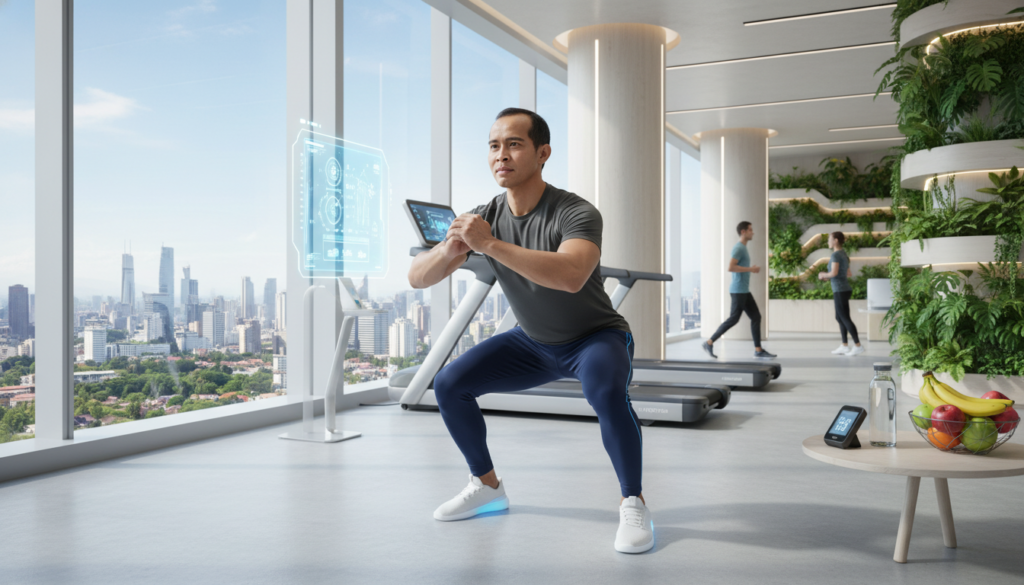
For the past decade, the wellness industry has primarily been a visual medium. We measured “health” by the depth of a tan, the definition of an abdominal muscle, or the vibrancy of a smoothie bowl on a smartphone screen. However, as we transition into 2026, the façade has begun to crumble. The “Filtered Era” is over. We have entered the era of Functional Health.
This shift isn't just a trend; it's a biological necessity. In 2026, looking fit will no longer matter if your biological markers indicate that you are aging at an accelerated rate. Wellness in 2026 is about the invisible—the mitochondria, the microbiome, and the nervous system.
The Great Paradigm Shift: Why 2026 is the Year of Biological Truth
The global wellness market, now valued at a staggering $2 trillion according to McKinsey, has undergone a fundamental pivot. The consumer of 2026 is no longer buying “thinness”; they are buying resilience. The year 2026 represents a massive inflection point in how we view human potential, as detailed in our analysis of critical insights for 2026.
Moving Beyond the Filter: The Decline of “Instagrammable” Health
We’ve realized that a six-pack doesn't protect you from chronic inflammation. In fact, many of the aesthetic standards of 2020—extreme calorie deficits and overtraining—are now recognized as precursors to metabolic dysfunction. Research in PubMed Central (PMC) has increasingly highlighted how the pursuit of aesthetic perfection often correlates with poor mental health and hormonal disruption.
The Rise of Bio-Individual Sovereignty
The most significant change in Wellness in 2026 is the democratization of data. We are moving away from “influencer-led” advice toward “data-led” decisions. People are becoming the CEOs of their own bodies, using tools that were once reserved for elite athletes.
Statistical Reality: The $1.8 Trillion Shift Toward Longevity
Investment is moving away from makeup and “fat burners” toward longevity clinics and cellular health. According to recent projections, the longevity economy is expected to dominate the wellness sector, as the aging population seeks not just more years, but more healthy years.
Functional Nutrition: Achieving Bio-Harmony in 2026
In 2026, the word “diet” is considered archaic. We now speak in terms of Bio-Harmony.
Achieving bio-harmony is about more than just food; it’s about establishing proven wellness habits that improve daily energy through consistent cellular support. In 2026, we've moved from guessing to knowing.
Nutrigenomics: Why Your DNA Now Dictates Your Plate
We finally understand that one person’s “superfood” is another person’s inflammatory trigger. Nutrigenomics—the study of how food affects gene expression—is now mainstream. By 2026, it’s common to see people ordering meals based on their genetic predisposition for sodium sensitivity or caffeine metabolism. For a deeper look at how this impacts your daily life, see our guide on Metabolic Health Secrets.
The Glucose Revolution 2.0: CGM for Non-Diabetics
Continuous Glucose Monitors (CGMs) are the “must-have” accessory of 2026. By tracking blood sugar in real time, users can see precisely how a “healthy” oat milk latte might send their insulin levels into a tailspin, leading to brain fog and fat storage. We’ve moved from guessing to knowing.
“Fibermaxxing” and the Neuro-Gut Connection
While protein was the obsession of 2024, 2026 is the year of Fiber. We’ve discovered that the microbiome is essentially the “second brain.” High-fiber diversity is now the primary metric for gut health, which in turn regulates everything from mood to immune response.
Post-Supplement Era: Whole Foods vs. Synthetic Bio-Hacks
There is a growing skepticism toward synthetic “stack” supplements. In 2026, people are returning to fermented foods, organ meats, and ancestral eating patterns, realizing that nature's complexity cannot be fully replicated in a lab-made pill.
The Evolution of Movement: Training for the Centenarian Decathlon
We’ve stopped training to look good in a swimsuit; we are now training for the “Centenarian Decathlon”—a term coined to describe the physical tasks we want to be able to perform at age 90.
Muscle as a Metabolic Organ (Not Just for Show)
Muscle is no longer just about aesthetics. In 2026, the medical community recognized skeletal muscle as a vital endocrine organ. It secretes myokines—small signaling molecules that fight inflammation and improve brain function. If you want to stay young, you must build muscle. Check out our latest Longevity Tips for specific protocols on building “longevity muscle.”
Zone 2 Training and Mitochondrial Density
The “no pain, no gain” era of HIIT (High-Intensity Interval Training) has been tempered by the rise of Zone 2 cardio. This steady-state, low-intensity movement is the secret to mitochondrial health. In 2026, we prioritize being able to hold a conversation while jogging, knowing that this builds the cellular machinery required for long-term energy.
The Critical Role of Grip Strength and Stability
If you want to know how long you’ll live, check your grip strength. The American College of Sports Medicine (ACSM) identifies strength and stability for older adults as the top priority. Falls are a leading cause of mortality among older people; therefore, balance and grip are now core components of any Wellness in 2026 program.
Wearable Integration: From Step Counting to Real-Time Recovery
Steps are a primitive metric. In 2026, our wearables track Heart Rate Variability (HRV), respiratory rate, and even sweat composition. Your watch doesn't just tell you to “move”; it tells you when to stop because your nervous system hasn't recovered from yesterday's stress.
The GLP-1 Impact: Navigating the Muscle Crisis
The widespread adoption of GLP-1 agonists (like Ozempic) has changed the world, but it has created a new problem: Sarcopenia (muscle loss).
The Hidden Danger of Rapid Weight Loss
By 2026, we are seeing the fallout of “thinness at any cost.” People who lost weight via medication without resistance training are finding themselves “skinny-fat”—losing the very muscle that protects their metabolism.
Protein Optimization Strategies
To combat this, the wellness industry has pivoted to “protein-first” protocols. In 2026, supplemental leucine and high-quality whey or collagen will no longer be for bodybuilders; they will be essential medical interventions for anyone on weight-loss medication to ensure they lose fat, not functional tissue.
Brain Wealth: Cognitive Longevity and Nervous System Regulation
In 2026, a “sharp mind” is the ultimate status symbol. We are no longer impressed by how much you work, but by how well your brain functions.
True cognitive longevity is built on a foundation of mental toughness. Understanding how to master emotional strength is the first step in regulating a stressed nervous system.
Vagus Nerve Stimulation and Emotional Resilience
The Vagus nerve is the “highway” of the parasympathetic nervous system. From “Vagus nerve massage” to sophisticated electrical stimulation devices, regulating the stress response is the new meditation. We’ve realized that you cannot be “well” if you are constantly in a state of “fight or flight.”
The End of Hustle Culture: Sleep as the Ultimate Performance Metric
Sleep is the undisputed king of Wellness in 2026. We have moved past the “I'll sleep when I'm dead” mentality. High-performers now treat their 8-hour sleep window with the same discipline they once applied to their careers.
Digital Sunsets and the Circadian Reset
Blue light is the new secondhand smoke. In 2026, “Digital Sunsets”—the practice of turning off all screens two hours before bed—is a standard health recommendation to protect the body's natural circadian rhythm.
Environmental Wellness: Solving the “Indoor Generation” Crisis
We spend nearly 90% of our lives inside, and it's killing our vitality. Wellness in 2026 brings the “outside in.”
Air Proteomics and Biophilic Design
Modern homes in 2026 are built with “air proteomics”—filtration systems that sense and remove microplastics and toxins in real time. Biophilic design, which integrates natural elements like indoor forests and natural light, is no longer a luxury—it’s a health standard.
The Science of “Forest Bathing”
“Forest Bathing” (Shinrin-yoku) has moved from a “hippy” concept to a medically prescribed treatment. Studies show that spending time in nature increases “Natural Killer” (NK) cells, which help the body fight off tumors and viruses.
Financial Wellness: The Cost of Living Longer
Longevity isn't cheap. In 2026, we are seeing the rise of Preventive Financial Planning. People are realizing that if they are going to live to 100, they need a “Health Pension.”
Investing in Preventive Health vs. Reactive Medicine
We are shifting from “Sick Care” to “Health Care.” Spending money on high-quality food, blood tests, and functional coaching is now seen as an investment that prevents the astronomical costs of chronic disease management later in life.
Conclusion: Embracing Your Functional Future
The transition from aesthetic to functional health isn't about giving up on looking good. It’s about the realization that true beauty is a byproduct of a high-functioning system. When your mitochondria are firing, your gut is balanced, and your nervous system is regulated, you will naturally radiate a level of health that no filter can replicate.
Wellness in 2026 is about agency. It’s about moving from being a passenger in your body to being the pilot. The future of health isn't on your screen; it's in your cells.
Frequently Asked Questions (FAQ) about Wellness in 2026
1. Is “aesthetic health” completely dead? Not at all, but it is no longer the primary goal. In 2026, looking good is seen as the “side effect” of being functionally healthy. If you are strong, energetic, and metabolically flexible, you will naturally have a healthy appearance.
2. What is the most crucial tool for Wellness in 2026? The most essential tool is awareness, driven by data. Whether it's a CGM, a wearable recovery tracker, or regular blood work, knowing your specific biological numbers is the baseline for health.
3. Why is everyone talking about the Vagus Nerve? Chronic stress is the primary cause of nearly all modern diseases. The Vagus nerve is the main component of the parasympathetic nervous system, and learning to “tone” it allows you to recover from stress faster, improving everything from digestion to heart health.
4. How do I start “Functional Training” if I'm a beginner? Start with the “Big Five”: Squat, Hinge, Push, Pull, and Carry. These movements mimic daily life. Focus on moving well before moving heavy.
5. Can I achieve Bio-Harmony without expensive gadgets? Yes. While gadgets help, the fundamentals of Bio-Harmony are free: morning sunlight, eating whole foods, walking 10,000 steps, and getting 8 hours of sleep.
Medical Disclaimer
The content provided in this article, including text, graphics, and images, is for informational purposes only. It is not intended to be a substitute for professional medical advice, diagnosis, or treatment. Always seek the advice of your physician or other qualified health provider with any questions you may have regarding a medical condition. Never disregard professional medical advice or delay in seeking it because of something you have read on this website.