
For decades, the fitness industry obsessed over the “visible.” We tracked the kilograms on the barbell, the calories on the plate, and eventually, the 10,000 steps on our wrists. But as we move deeper into 2026, the vanguard of high-performance living has realized that these are “lagging indicators.” They are the smoke, not the fire.
The “fire” is Mitochondrial Recovery.
If you’ve followed our previous exploration into The Biological Twin, you know that we are no longer guessing about our health; we are simulating it. And the most critical variable in any biological simulation today is the efficiency of your mitochondria. If your cellular engines are sluggish, no amount of “clean eating” or “optimized sleep” will save you from the creeping fog of premature aging.
The Death of Macro-Tracking: Why We Are Moving Subatomic
In 2026, the phrase “I’m tired” has been medically reclassified. We no longer view fatigue as a lack of caffeine or sleep; we view it as a Bioenergetic Deficit.
We’ve moved past the era of wearables that simply count movements. Modern biohackers are now looking at subatomic health. Why? Because your basal metabolic rate is dictated by mitochondrial density, not just muscle mass. You can have the physique of an Atlas, but if your mitochondrial recovery is stunted, you are essentially a Ferrari with a lawnmower engine.
Beyond Calories and Steps: The ATP Economy
Adenosine Triphosphate (ATP) is the literal currency of life. Every thought you think and every muscle fiber you twitch costs ATP. In a world of “Hyper-Personalized Generative Fitness,” we are learning that the “Cost of Recovery” is higher than we thought.
Research published by The Buck Institute for Research on Aging suggests that mitochondrial decay is the primary driver of the “aging phenotype.” When we talk about Mitochondrial Recovery, we aren't just talking about feeling “refreshed”—we are talking about maintaining the voltage of your very existence.
Understanding the “Powerhouse” in 2026: More Than Just a Biology Textbook Cliché
We all remember the phrase from high school: “The mitochondria is the powerhouse of the cell.” In 2026, we’ve updated that definition. Mitochondria are the Environmental Sensors of the cell. They don't just produce energy; they decide if the environment is safe enough to thrive or if the body should switch into “Survival Mode.”
The Mitochondrial Bottleneck: Why You’re Tired Despite Sleeping 8 Hours
Have you ever slept a full night and woken up feeling like you’ve been hit by a truck? This is the Mitochondrial Bottleneck.
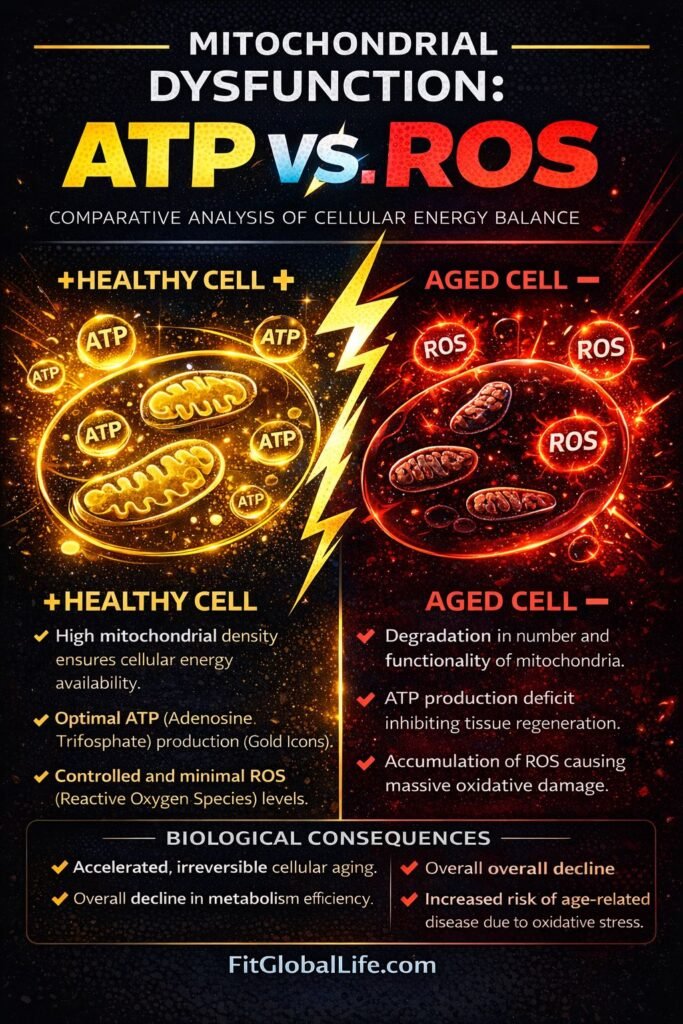
When your mitochondria are damaged by oxidative stress or environmental toxins (what we call “mitochondrial dysfunction”), they become “leaky.” Instead of efficiently turning oxygen and glucose into ATP, they produce excessive Reactive Oxygen Species (ROS). This creates a cycle of internal inflammation. To fix this, you don't need more sleep; you need a targeted protocol for mitochondrial repair.
The Science of Mitochondrial Biogenesis: Building New Engines
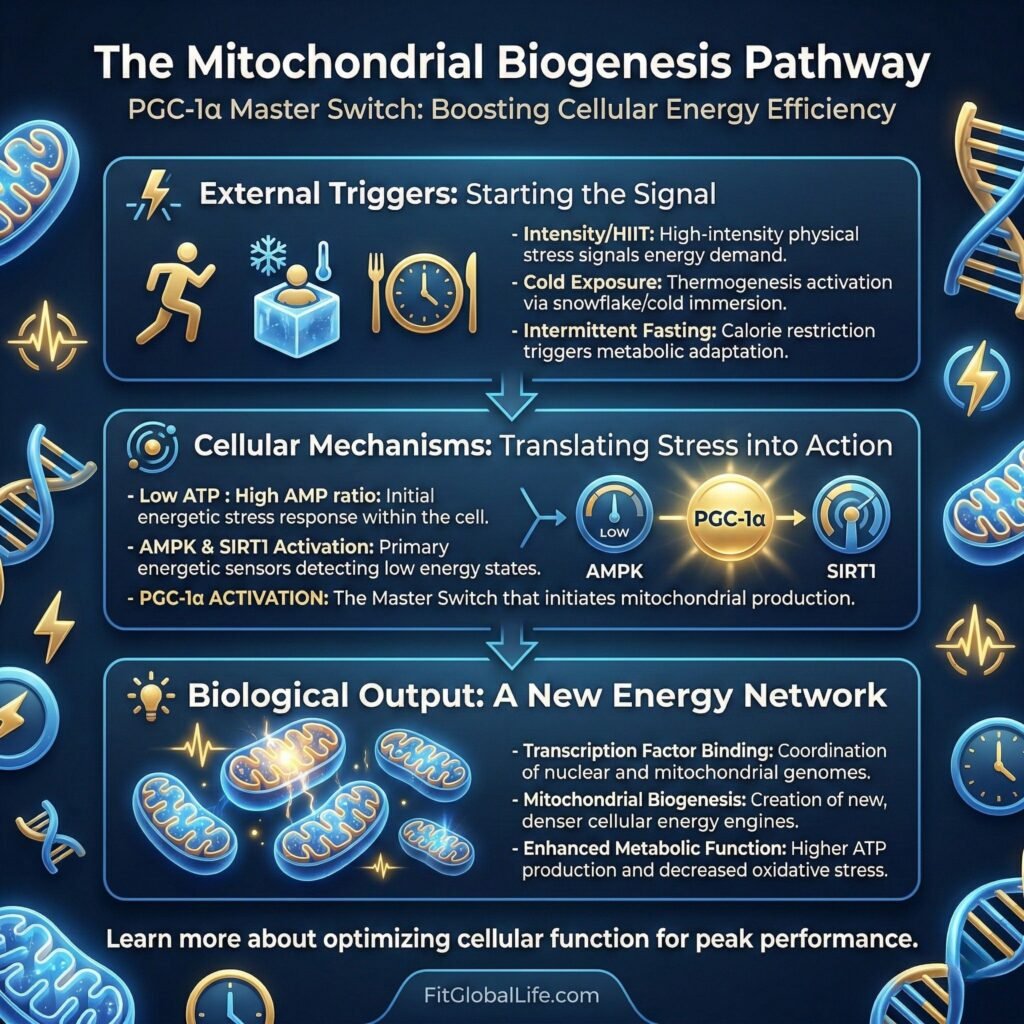
The most exciting breakthrough of the mid-2020s is that we are no longer stuck with the mitochondria we were born with. Through a process called Mitochondrial Biogenesis, we can actually force our cells to grow more and larger mitochondria.
Hormetic Stress: The “Goldilocks Zone” for Cellular Growth
In my years of consulting for elite athletes, the biggest mistake I see is “Comfort Overload.” Mitochondria are like high-performance software; they only upgrade when they are challenged.
We use Hormesis—brief, controlled bursts of stress—to trigger biogenesis. This isn't about crushing yourself in the gym for two hours. It’s about precision. Think of it as “Biological Micro-Dosing.” By stressing the cell just enough, we activate the PGC-1α pathway, the “master switch” for mitochondrial growth.
4 Pillars of Mitochondrial Recovery: A 2026 Protocol
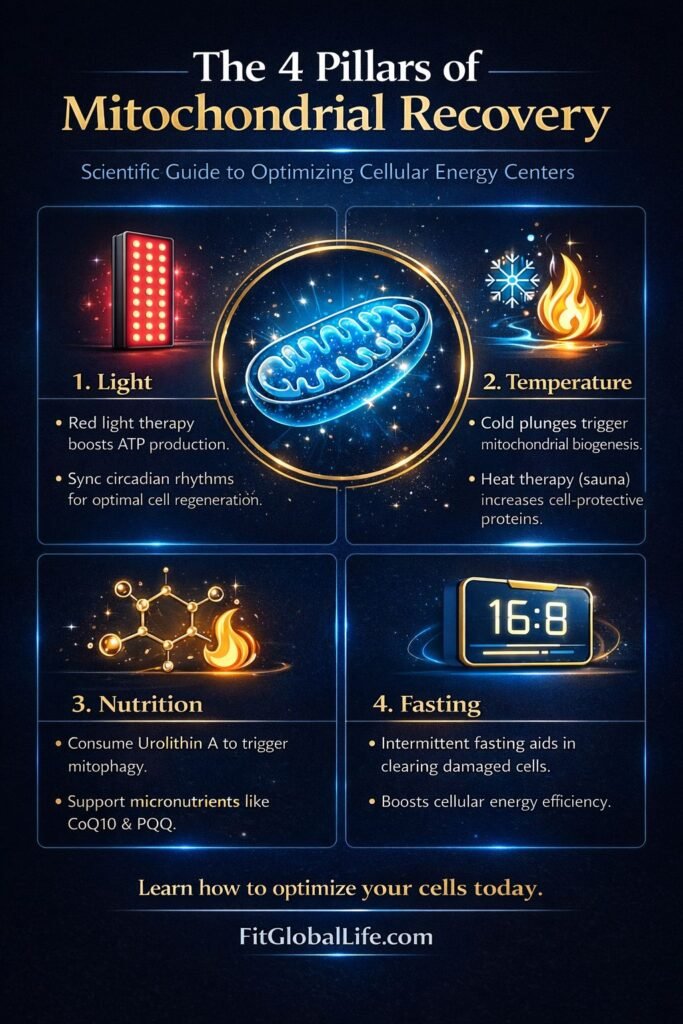
To achieve true Mitochondrial Recovery, we must move beyond the basic “diet and exercise” mantra. Here is the 2026 gold standard protocol:
1. Advanced Photobiomodulation (Red Light 2.0)
We’ve known about Red Light Therapy for years, but in 2026, we are using specific wavelengths (660nm and 850nm) to target Cytochrome c Oxidase. This is a protein in your mitochondria that absorbs light and immediately ramps up ATP production.
I personally use a full-body panel for 10 minutes every morning. It’s not about a “glow”; it’s about charging my cellular batteries before the day’s demands drain them. It is arguably the most effective way to combat the cellular effects of blue light toxicity.
2. Nutritional Deep-Dives: Urolithin A and Targeted NAD+ Precursors
In the past, we took generic multivitamins. Today, we focus on Mitophagy.
Urolithin A has become the “it” molecule of 2026. It is a metabolite that triggers the body to recycle “garbage” mitochondria so new ones can take their place. Combine this with NAD+ precursors (like NMN or NR), and you are effectively providing both the fuel and the maintenance crew for your cells. You can find these compounds in specific fermented foods, but for therapeutic levels, clinical-grade supplementation is often required.
3. Thermal Cycling: The Mitochondrial “Reset” Button
The “Sauna to Cold Plunge” transition is no longer just for Scandinavian hermits. It is a vital tool for Mitochondrial Recovery.
- Heat Shock Proteins (HSPs): Triggered by the sauna, these prevent proteins from misfolding in the cell.
- Cold Shock Proteins: Triggered by the ice bath, these stimulate “Brown Fat” activation, which is incredibly dense in mitochondria.
This “thermal stress” forces the mitochondria to become more efficient at thermogenesis, which translates to higher energy levels in your daily life.
4. Mitophagy: The Most Important Spring Cleaning for Cells
Sometimes, the best way to get better is to demolish. Mitophagy is the process of breaking down only the bad mitochondria. Intermittent Fasting or “Fast-Mimicking Diets” are the main ways to do this. When the body doesn't have enough fuel from outside sources, it turns to its own cells and starts “eating” the weakest ones.
If you aren't practicing some form of time-restricted feeding, you are likely carrying around “zombie” mitochondria that are sucking energy without giving any back.
The Connection Between Mitochondria and Mental Longevity
We often think of mitochondria in our muscles, but the highest concentration of these organelles is actually in your Brain and Heart.
“Brain fog” is essentially Neuro-Mitochondrial Failure. When the mitochondria in your neurons can’t keep up with the demand of processing information, they slow down. This is why Mitochondrial Recovery is the new frontier of nootropics. We aren't just taking stimulants like caffeine anymore; we are taking “mitotropics” that support the metabolic health of our gray matter.
Measuring Your Power: Modern Lab Tests for Mitochondrial Function
You cannot manage what you do not measure. In 2026, we’ve moved beyond standard blood panels. To truly assess your Mitochondrial Recovery, you should look for:
- Intracellular NAD+ Levels: A direct look at your cellular fuel gauge.
- Lactate Threshold Testing: A high resting lactate level often indicates that your mitochondria aren't processing oxygen efficiently.
- VO2 Max: Still the “gold standard” for systemic mitochondrial capacity.
By tracking these, you can see if your Post-Biotic Power and recovery protocols are actually working at a cellular level.
Frequently Asked Questions (FAQ)
1. What is the fastest way to trigger Mitochondrial Recovery? The fastest physiological trigger is Hormetic Stress. This includes short bursts of high-intensity interval training (HIIT) or thermal cycling (alternating between a sauna and a cold plunge). These activities create a temporary “energy crisis” in the cell, forcing the mitochondria to adapt, repair, and multiply (a process known as biogenesis).
2. Can supplements actually “fix” my mitochondria? Supplements like NAD+ precursors (NMN/NR), CoQ10, and Urolithin A act as the raw materials and maintenance tools for cellular energy. While they are highly effective, they work best when paired with lifestyle foundations like circadian-aligned sleep and strategic fasting. Think of supplements as the high-octane fuel and lifestyle as the engine tuning.
3. How do I know if my mitochondria are struggling? Common symptoms of mitochondrial dysfunction include chronic fatigue that doesn't improve with rest, “brain fog,” slow recovery after exercise, and high sensitivity to cold. In a clinical setting, this can be measured through lactate threshold testing or specialized intracellular NAD+ blood panels.
4. Does Red Light Therapy really work for cellular energy? Yes. Photobiomodulation (specifically in the 660nm and 850nm range) interacts with an enzyme in the mitochondria called Cytochrome c Oxidase. This interaction reduces oxidative stress and allows the mitochondria to produce ATP more efficiently. It is one of the most non-invasive ways to boost cellular voltage.
5. Is Mitochondrial Recovery different from standard muscle recovery? Yes. Muscle recovery often focuses on repairing fiber tears and reducing inflammation. Mitochondrial Recovery is deeper; it’s about the metabolic health of the organelles inside those muscle fibers. You can have repaired muscles that still lack the “stamina” to perform if the mitochondrial density is low.
Conclusion: The Future Belongs to the Energized
In the Sovereign Health Era, your greatest asset isn't your bank account—it’s your Bio-Availability.
Mitochondrial Recovery is the bridge between simply “not being sick” and being “optimally alive.” By focusing on the subatomic, we solve the problems of the macroscopic. We sleep better, think faster, and age slower.
The question for 2026 is no longer “How much can you do?” but “How well can your cells recover?” If you master your mitochondria, you master your life.
Disclaimer
The information provided on Fit Global Life regarding Mitochondrial Recovery, biohacking protocols, and cellular health is for educational and informational purposes only. It is not intended as medical advice, diagnosis, or treatment. Always seek the advice of your physician or another qualified track health provider with any questions you may have regarding a medical condition. Never disregard professional medical advice or delay in seeking it because of something you have read on this website. The use of high-intensity hormetic stressors (cold/heat exposure) and specific supplementation should be approached with caution, especially for individuals with underlying cardiovascular or metabolic conditions.