In a world that never stops talking, buzzing, and pinging, silence has become the most expensive commodity on earth. As an editor at Fit Global Life who has spent years tracking wellness trends, I’ve seen trends come and go—from cold plunges to hyperbaric chambers. But in 2026, the most profound medical intervention isn't a pill or a machine; it’s the absence of sound.
Welcome to the era of Acoustic Tourism. This isn't just about “getting away from it all.” It is a calculated, biological necessity to reset a nervous system fried by the “Global Hum.” In this deep dive, we explore how acoustic tourism benefits your cellular health, where to find the world's quietest cities, and why your next vacation should be measured in decibels, not miles.
The Biological Cost of the “Global Hum”
Before we dive into the destinations, we must understand why we are fleeing. According to the World Health Organization, noise pollution is the second-largest environmental cause of health problems, after air quality.
By 2026, urban noise levels have risen by an average of 12% globally compared with a decade ago. This constant auditory assault keeps our amygdala in a state of chronic hyper-vigilance. I’ve personally worn a continuous glucose monitor (CGM) and a heart rate variability (HRV) tracker while walking through a typical metropolitan center. The data was startling: my cortisol spikes didn’t just occur when I was stressed at work; they peaked when I was exposed to the 85 dB roar of city traffic and construction.
Acoustic tourism benefits the body by facilitating “Autonomic Down-Regulation.” When we enter “Quiet Parks” or “Silent Cities,” our blood pressure drops, and our brain enters the alpha-wave state—the gateway to deep healing. This is the same state achieved during deep meditation, but it is reached passively through environmental immersion.
The Science of “Sonic Healing”
Research from the National Park Service Natural Sounds Division has shown that natural soundscapes—the rustle of leaves and the flow of a stream—actually trigger the parasympathetic nervous system. In contrast, “technophony” (man-made noise) triggers the sympathetic nervous system (fight-or-flight).
When we talk about longevity, we often focus on Epigenetic Eating (as detailed in our previous guide on DNA-based diets), but we often ignore the “Epigenetic Environment.” Noise pollution can actually alter gene expression related to inflammation and cardiovascular health. By choosing silent travel, you are quite literally giving your DNA a break from the stress of modern life.
What Exactly is a “Silent City”?
A Silent City isn't a ghost town or an abandoned ruin. It is a modern urban environment designed with Acoustic Ecology at its core. These are cities that have successfully implemented “Sonic Zoning.”
1. Oslo, Norway, is recognized as the Pioneer of Electric Silence.
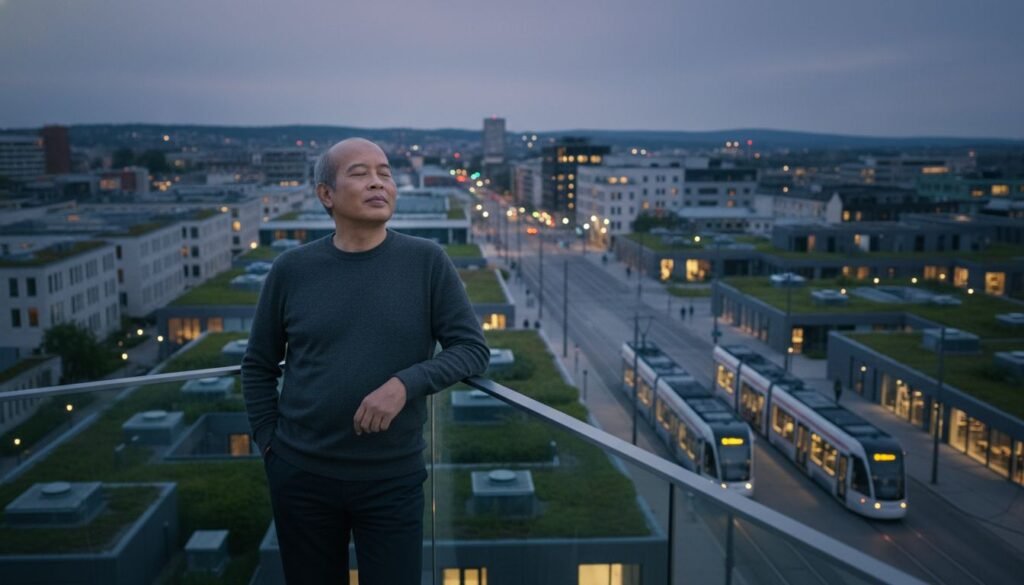
Oslo has become the gold standard for acoustic tourism in 2026. By mandating electric transport and banning non-essential combustion engines in the city center, Oslo has reduced ambient city noise by nearly 20 decibels.
Walking through Oslo today feels like being in a library with a view. You can hear the wind through the trees and the conversations of people thirty feet away without them raising their voices. For the wellness traveler, this means a 30% increase in “Restorative Sleep Cycles,” as measured by wearables such as the Oura Ring Generation 4.
2. Kyoto’s “Temple Zones” and Acoustic Buffers
Kyoto has expanded its traditional silent zones. They now use “Acoustic Buffers”—architectural green walls that absorb sound—around their historical districts. It is a masterclass in how ancient wisdom meets modern engineering. I recommend staying at the Hoshinoya Kyoto, which has integrated noise-canceling architectural glass that allows the visual beauty of the river while maintaining a strict 25 dB interior environment.
3. Zurich’s Low-Decibel Luxury
Zurich has pioneered “Quiet Pavement” technology—a porous asphalt that absorbs tire noise. When combined with its extensive tram network (which now runs on magnetic levitation tracks in some sectors), the city has become a sanctuary for those suffering from sensory overload.
Why “Acoustic Snacks” are the New 5-Minute Workout
We often talk about “exercise snacks” (short bursts of movement), but 2026 is seeing the rise of “Acoustic Snacks.” These are 15-minute immersions in pure, natural soundscapes.
Research from the Harvard T.H. Chan School of Public Health suggests that natural sounds—waterfalls, wind, and bird calls—can lower heart rate more effectively than complete artificial silence (which can sometimes cause anxiety in those used to noise). This is why Acoustic Tourism often leads travelers to “Quiet Parks.”
The 2026 List of International Quiet Parks (QPI)
To be certified as a “Quiet Park,” a location must offer long periods of “natural quiet” with no more than one man-made noise intrusion every 15 minutes.
- Zabalo River, Ecuador: One of the last places on Earth where you can experience “Primal Silence.”
- Haleakalā National Park, USA: Specifically the “Sliding Sands” trail, which is arguably the quietest place on Earth.
- Grasslands National Park, Canada: A vast expanse where the acoustic horizon extends for miles.
Editor’s Note: If you cannot yet travel to these locations, I highly recommend investing in the Sony WH-1000XM6 Noise-Canceling Headphones. While not a replacement for natural silence, their “Nature-Frequency Passthrough” mode is the next best thing for urban dwellers.
The Economics of Silence: Why Quiet is the New Status Symbol
In my view, the “Soft Living” movement mentioned in our previous insights is directly tied to how we consume sound. In the early 2000s, status was about the loudest car and the most crowded club. Today, status is about being unreachable and unheard.
Luxury hotels are no longer boasting about their sound systems; they are marketing their “Acoustic Insulation Ratings.” We are seeing the rise of Silent Spas, where even staff communicate via haptic devices to ensure guests' auditory field remains undisturbed.
Sensory Wellness Retreats: The New Frontier
In 2026, retreats like The Silence in the Swiss Alps offer “Auditory Fasting.” Guests surrender all digital devices and spend seven days in absolute vocal silence. The result? A significant increase in “Deep Focus” capabilities—a skill that is becoming rare in our AI-driven world (revisit our Digital Deceleration guide for more on this).
How to Plan Your Acoustic Pilgrimage: A Step-by-Step Guide
If you are ready to experience the benefits of acoustic tourism firsthand, you don't need to fly to the Amazon immediately. You can start with “Sound Mapping.”
Step 1: Audit Your Current Environment
Use an SPL (Sound Pressure Level) meter app on your phone. If your home environment consistently stays above 55 dB, your nervous system is likely in a state of chronic low-level stress.
Step 2: Use Acoustic Maps for Travel
Use apps like Hush City or SoundPrint to find the quietest spots in your destination. These crowdsourced maps are the “Yelp” of silence.
Step 3: The 2:1 Recovery Ratio
For every two hours of “high-decibel” activity (airplanes, city tours, conferences), schedule one hour of “Acoustic Recovery.” This could include a visit to a botanical garden or a soundproof meditation pod.
Step 4: Invest in Proper Gear
Travel with high-fidelity earplugs like Loop Earplugs. Unlike foam plugs, these let you hear conversations clearly while filtering out the damaging “clutter” of background noise.
The Impact on Mental Longevity
Beyond physical health, acoustic tourism is a defense against cognitive decline. Chronic noise has been linked to increased risk of dementia and cognitive impairment. By seeking out silent cities, we are effectively giving our brains the “darkness” they need to process information and clear metabolic waste.
Much like Vagus Nerve Stimulation (which we've covered as the missing link in stress management), silence directly toggles the vagus nerve. It tells your body: You are safe. You can rest.
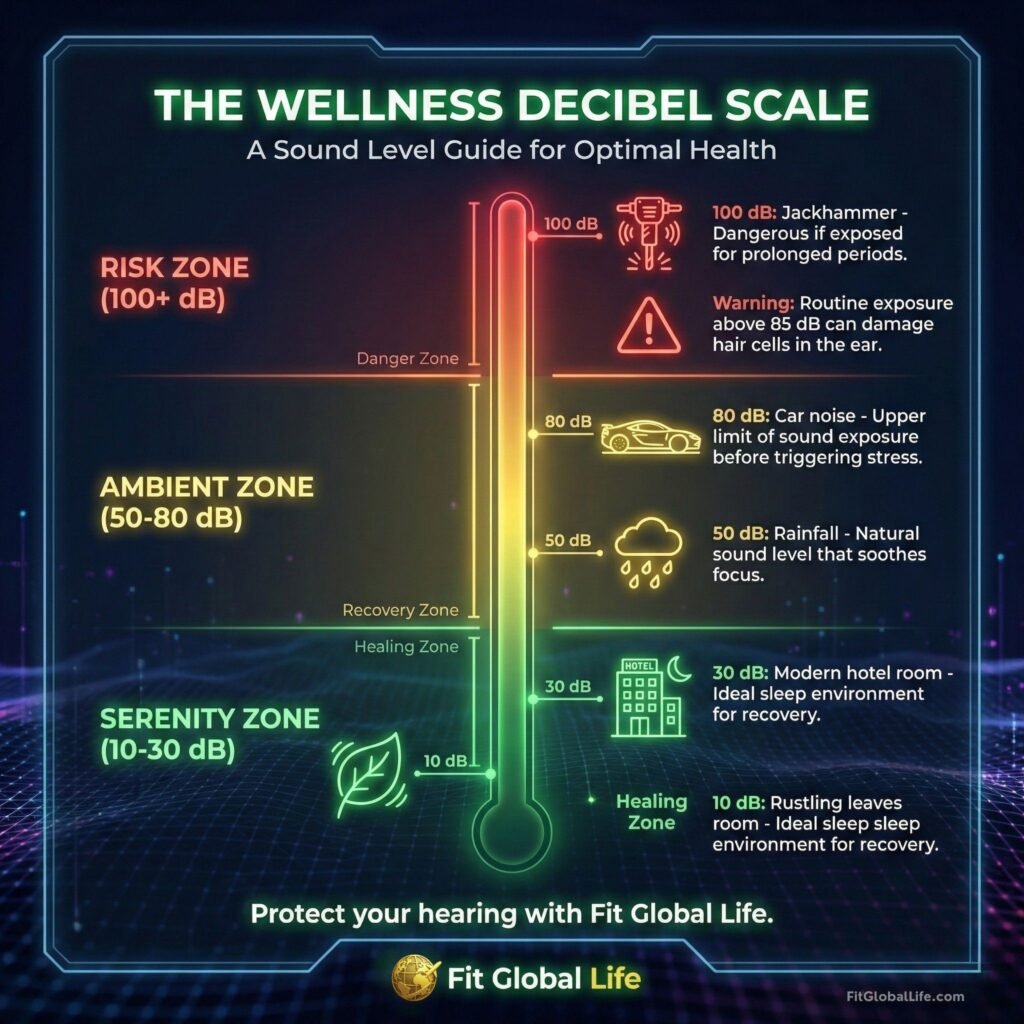
Infographic: The Decibel Scale of Wellness
(Saran Penempatan: Letakkan di bawah bagian “The Biological Cost of the Global Hum”)
| Noise Level (dB) | Source | Health Impact |
| 10 – 20 dB | Rustling Leaves / Quiet Park | Healing Zone: Deep nervous system repair. |
| 30 – 40 dB | Library / Silent Hotel Room | Recovery Zone: Ideal for deep sleep and focus. |
| 50 – 60 dB | Moderate Rainfall / Quiet Office | Neutral Zone: Safe for long-term exposure. |
| 70 – 85 dB | City Traffic / Vacuum Cleaner | Stress Zone: Cortisol begins to rise after 2 hours. |
| 95+ dB | Subway Train / Power Tools | Danger Zone: Immediate physiological stress response. |
FAQ: Frequently Asked Questions about Acoustic Tourism
Disclaimer
The information in this article is for educational purposes only and does not constitute medical advice. While silence has therapeutic benefits, it is not a substitute for professional mental health or medical treatment. If you have underlying health conditions, please consult a healthcare provider before making significant lifestyle changes or traveling to remote locations.
The Verdict: Is Silence the Ultimate Longevity Tool?
From an editor's perspective, the answer is a resounding yes (whispered). When we reduce noise stress, we allow our DNA to repair itself. We reduce the oxidative stress caused by chronic “fight-or-flight” responses. Acoustic tourism isn't a luxury; it’s a recalibration of the human spirit. In 2026, the loudest statement you can make is choosing to hear nothing.