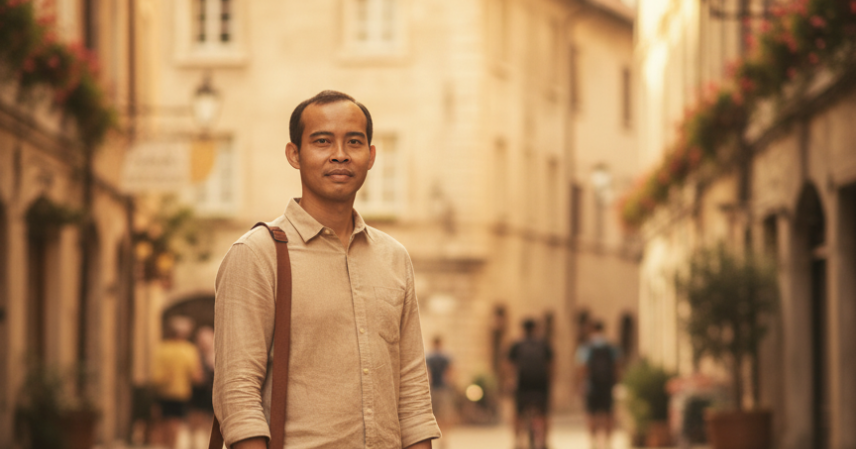
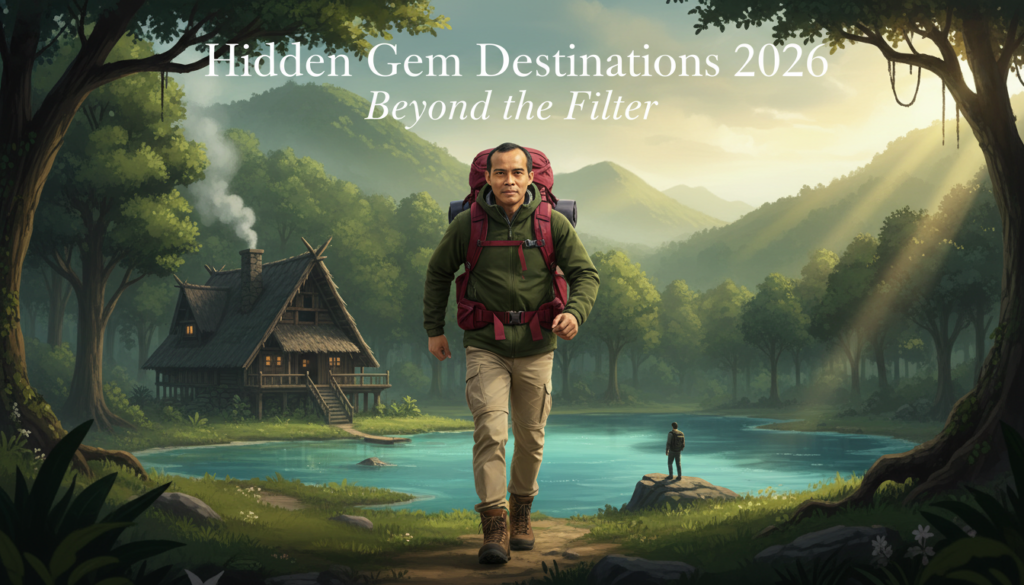
In early 2026, the global travel community reached a breaking point. After years spent pursuing the same “perfect” photo at the Gates of Heaven in Bali or the blue domes of Santorini, a “Post-Digital Nomad” movement has emerged. People are no longer asking, “Where can I take the best photo?” Instead, the question is, “Where can I find a place that still feels real?”
As an editor who has seen the devastating effects of overtourism firsthand, I believe Hidden Gem Destinations 2026 is centered on reclaiming the soul of travel. We are moving away from staged experiences and toward deep travel—a concept in which the quality of bonding is more important than the number of likes.
Beyond the Filter: Why We Are Abandoning “Viral” Travel
The “Instagrammability” of a destination has become its curse. When a location goes viral, the local infrastructure often collapses under the burden of “day-trippers” who contribute little to the local economy. In 2026, savvy travelers are looking for “Travel Dupes”—alternatives to famous spots that offer the same beauty without the spirit-breaking crowds.
According to Booking.com’s 2026 Predicts, over 65% of global travelers now prefer using AI to map out scenic, off-the-beaten-track routes customized to their unique desires rather than following a trending hashtag. This shift marks the official end of the “Checklist Travel” era.
Top 7 Hidden Gem Destinations 2026 for the Authentic Explorer
1. Mambilla Plateau, Nigeria: The African Switzerland
If you thought Nigeria was all vibrant urban centers and coastal heat, think again. The Mambilla Plateau sits at 1,800 m above sea level. It’s a land of rolling green meadows, misty waterfalls, and a climate that resembles the Swiss Alps more than the tropics. With upgraded access roads opening this year, it is one of the premier Hidden Gem Destinations of 2026 for travelers looking for high-altitude hiking and rare birdwatching in Gashaki-Gumti National Park.
2. Vis Island, Croatia: The Adriatic’s Last Secret
While Dubrovnik and Hvar are struggling with “tourist taxes” and overcrowding, Vis remains a calm refuge. Because it was a military base until 1989, it avoided the initial boom of Mediterranean mass tourism. In 2026, new walking and cycling paths will link UNESCO-protected vineyards to WWII submarine pens. It’s the ultimate “Slow Travel” destination.
3. Tien Shan Mountains, Kyrgyzstan: The Frontier of Trekking
Kyrgyzstan is the new Nepal. More than 90% of the country is covered in mountain ranges. The Intrepid 2026 Not Hot List features the Kyrgyz Nomad Trail, which has recently been expanded by an additional 1,000 km. Here, you don’t stay in hotels; you stay in yurts and share fermented mare's milk with nomadic families who have lived this way for centuries.
4. Sierra Norte, Mexico: Indigenous-Led Serenity
Located high above Oaxaca City, Sierra Norte exemplifies community-based tourism. Eight Zapotec villages operate a cooperative that limits visitor numbers to ensure the forest—and their culture—remains intact. This is a key entry for Hidden Gem Destinations 2026 because it represents the “Regenerative Travel” movement we so desperately need.
5. Oulu, Finland: The Arctic Cultural Capital
Named the European Capital of Culture 2026, Oulu is a city that fuses high-tech advancement alongside raw Arctic nature. Unlike the crowded Christmas markets of Rovaniemi, Oulu delivers a refined look at northern life, focusing on “Arctic Food Lab” experiences and indigenous Sami workshops.
6. Tiwai Island, Sierra Leone: A Primal Eco-Sanctuary
Sierra Leone is making a bold play for leadership in ecotourism. Tiwai Island, a newly designated UNESCO World Heritage site, acts as a haven for rare primates and flora. It’s off-grid, solar-powered, and reachable only by boat down the Moa River. If you want to see the world as it was 1,000 years ago, this is your spot.
7. Bacalar, Mexico: The Seven-Colored Lagoon
While not entirely “unknown,” Bacalar is an ideal alternative to the overcrowded beaches of Tulum. The lagoon’s water shifts through seven shades of blue, and the town keeps a low-key, boho-chic vibe. It is one of the few places in the Riviera Maya that still emphasizes eco-friendliness over massive resort development.
The Data Speaks: Why Crowded Spots Are Losing Their Luster
The flight from famous cities is quantifiable. Recent data from The Guardian suggests that “secondary cities” like Bologna (instead of Florence) or Oulu (instead of Berlin) are seeing a 24% increase in “High-Value, Low-Impact” travelers.
| Over-Instagrammed Spots | 88% | 34% |
| Community-Led Tourism | 12% | 48% |
| Off-Season Exploration | 21% | 55% |
| Off-Grid/No-Signal Zones | 5% | 22% |
Source: 2026 Global Travel Sentiment Report.
How to Find Your Own Hidden Gem Destinations 2026
The secret to discovering these places goes beyond social media. It lies in careful and focused research. As a professional editor, I suggest:
- Topographic Mapping: Use tools such as Google Earth to locate regions with limited infrastructure. Sparse roads usually mean minimal commercial development.
- Academic Journals: Look at ethnographic studies or environmental databases. They often mention pristine ecosystems or ancient villages long before travel bloggers do.
- Specific Queries: Stop searching for “best beaches.” Start searching for “uninhabited islands in the Andaman Sea” or “Zapotec community-run lodges.”
The Ethics of “Hidden” Travel: How to Visit Responsibly
When we visit Hidden Gem Destinations 2026, we carry a responsibility. These places are “hidden” for a reason—often because they lack the capacity to handle large crowds.
- Support Local: Stay in family-run guesthouses.
- Leave No Trace: In places like Tiwai Island, your footprint can literally alter the ecosystem.
- Ask Permission: Before taking a photo of a local in Kyrgyzstan or Sierra Norte, remember that they are people, not props for your feed.
Expert Tips: Planning Your 2026 Off-Grid Adventure
If you're prepared to shift toward these destinations, preparation is key. Unlike a trip to Paris, you can't wing it here.
- Connectivity: Expect to be offline. Download offline maps and carry a satellite messenger if you're heading into the Tien Shan mountains.
- Slow Down: Don't try to “see” ten things. Try to “experience” one. Stay in one village for a week rather than five villages in five days. This is the heart of Micro-Retirement travel, a significant trend for 2026.
Conclusion: The True Luxury is Silence
The world in 2026 is louder than ever, filled with AI-generated noise and digital saturation. In this environment, the ultimate luxury isn't a five-star hotel with gold-plated faucets; it's the sound of a wind in the Mambilla meadows or a quiet conversation in a Zapotec lodge.
Hidden Gem Destinations 2026 offers us a chance to reset our internal compass. Choose the road less traveled and perceive the world through a more transparent lens, released from the pressure to post the “perfect” post.
True transformation through travel rarely occurs in the presence of crowds.
FAQ: Frequently Asked Questions About Travel in 2026
1. Are these “Hidden Gem” spots safe for solo travelers?
Most are safer than major cities because of the tight-knit neighborhood systems. However, places like Sierra Leone or Kyrgyzstan require more logistics. Always check current travel advisories and use local, ethical guides.
2. Why focus on 2026 specifically?
2026 is a “turning point” year where many countries are launching 10-year sustainable tourism strategies (like Sierra Leone) or being crowned Cultural Capitals (like Oulu). It's the “sweet spot” before these places go mainstream.
3. Will these places eventually become overcrowded, too?
Unfortunately, yes—if we aren't careful. That’s why many of these Hidden Gem Destinations 2026 (like Sierra Norte) are adopting strict visitor caps to prevent the “Tulum-ification” of their homes.
4. How do I handle language barriers in remote areas?
In the Quiet Economy and the era of Deep Travel, language barriers are viewed as an essential element of the experience. AI translation tools are better than ever, but learning 20 common expressions in the local language (Zapotec, Kyrgyz, or Krio) goes a long way.
Disclaimer
The information in this article is for informational purposes only and does not constitute professional travel or legal advice. Travel conditions, including safety protocols, visa requirements, and accessibility in “hidden gem” locations, are subject to change; therefore, readers are encouraged to verify current status through official government advisories before planning a trip.
By visiting these off-the-beaten-path destinations, travelers assume all inherent risks, including those related to remote terrain and limited infrastructure. Fit Global Life and the author are not liable for any injury, loss, or damage incurred, and we strongly recommend securing comprehensive travel insurance and practicing responsible, regenerative tourism at all times.