
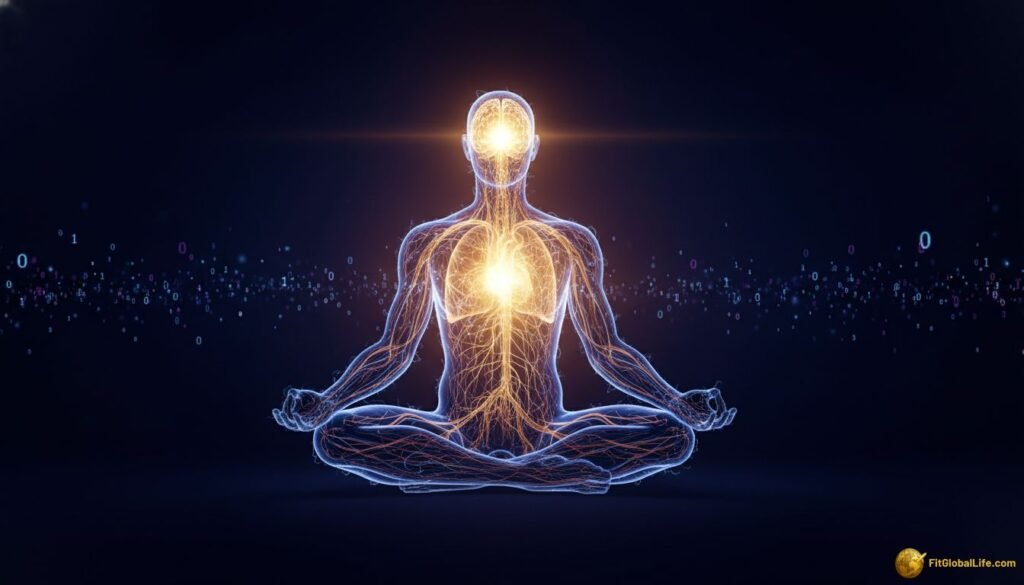
In the hyper-accelerated landscape of 2026, where AI-driven alerts and digital noise are constant, humans are facing a “sensory crisis.” We are experts at perceiving the outside world—scrolling, watching, and reacting. However, we have become dangerously illiterate in perceiving the world within. This lack of self-awareness is what causes chronic anxiety in our times.
To get back control, we need to look beyond our five senses. We need to learn how to use our “Sixth Sense”: interoception.
What is Interoception? The Biology of the “Gut Feeling”
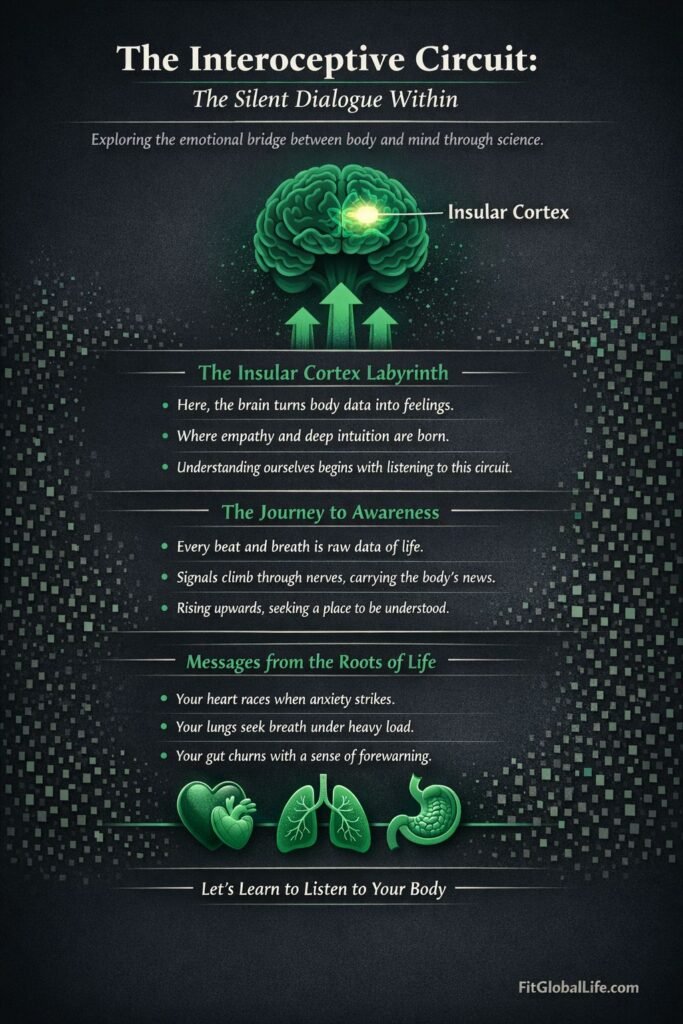
Interoception is the sense of the body’s internal state. While exteroception tells you about a car approaching or the smell of coffee, interoception is the silent data stream from your internal organs to your brain. It is the neural process of sensing, integrating, and interpreting signals from within—including your heartbeat, the expansion of your lungs, the acidity of your stomach, and the tension in your fascia.
This is not just “intuition.” It is a hard-wired biological system. The primary hub for this sense is the Insular Cortex, a deep fold in the brain that acts as a switchboard between physical sensations and emotional feelings. When you master interoception, you move from being a victim of your emotions to being the architect of your physiological state. This is a core component of “Cognitive Sovereignty,” which is the biggest trend of 2026.
The 2026 Stress Crisis: The Cost of Interoceptive Blindness
Why does this matter now more than ever? In 2026, stress has moved from “situational” to “structural.” According to data from the National Center for Biotechnology Information (NCBI) (.gov), individuals with low interoceptive accuracy—the ability to accurately sense internal signals—show a 45% higher risk of clinical anxiety and burnout.
When we lose touch with our internal signals, our brain loses its “early warning system.” We don't notice the subtle increase in heart rate or the tightening of the diaphragm until we are already in a full-blown panic attack. By then, the “logical” brain is offline. This is why you cannot “think” your way out of a panic attack; you must “sense” your way out. To stop this cycle, one must STOP Overthinking and return to the body.
9 Ways Interoception Heals Your Fatal Stress Today
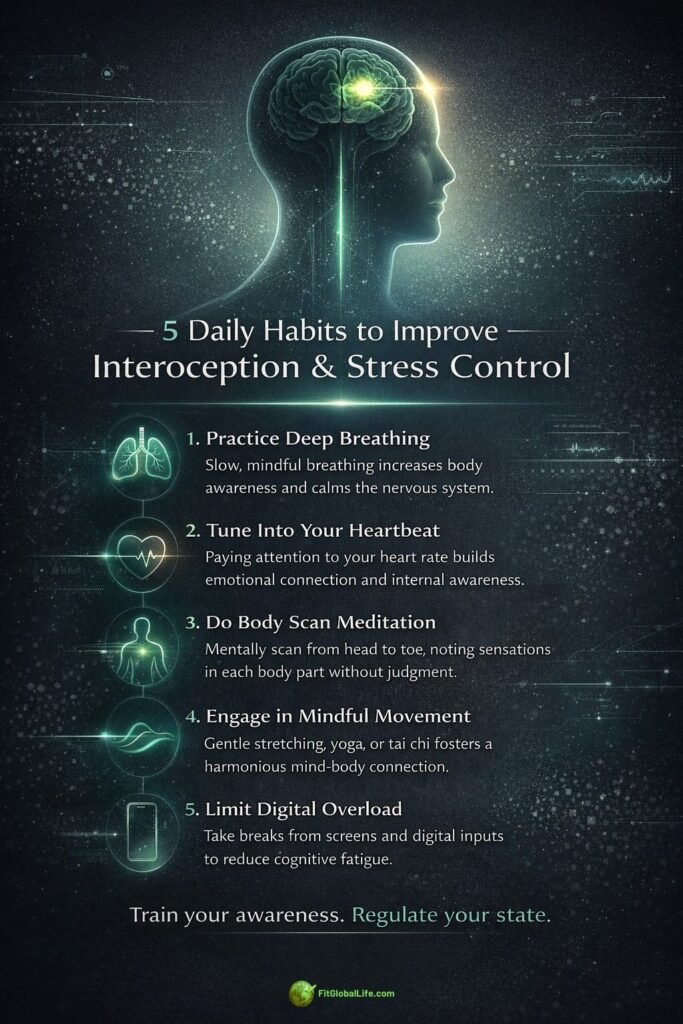
To master your stress, you must refine your interoceptive accuracy. Here are nine evidence-based techniques to sharpen your sixth sense.
1. Heartbeat Tracking (The Gold Standard)
One of the most researched ways to improve interoceptive awareness is the heartbeat detection task. Sit in silence and try to count your heartbeats without feeling your pulse with your hand.
- Why it works: It forces the insular cortex to filter out external noise and focus on internal mechanical signals. Studies from Stanford Medicine (.edu) suggest that practicing this for 5 minutes daily can significantly lower baseline cortisol levels.
2. Temperature Sensing and Thermogenesis
Your skin is an interoceptive organ. In 2026, we use Sub-Zero Sanctuaries to shock the system. By consciously observing how your body responds to extreme cold or heat, you “tune” your thermal interoceptors.
- The Goal: Notice the shiver before it becomes a shake. This subtle detection is the key to emotional regulation.
3. Vagus Nerve Toning
The Vagus Nerve is the superhighway of interoception, carrying 80% of the body's interoceptive data to the brain. Mastering Vagus Nerve Stimulation 2026 is essential for total stress control.
- Action: Do “Vocal Humming” to feel the vibration in your chest. This feeling in your body is an interoceptive anchor that tells your brain you're safe.
4. Somatic Release of Fascial Tension
Stress is often “stored” in the connective tissue. By practicing Somatic Release: Why Your Hip Mobility is the Hidden Key, you uncover internal signals that have been suppressed for years.
- Unique POV: It’s not about the stretch; it’s about the feeling of the stretch. Moving from “doing” a pose to “feeling” the tissue is the shift from exteroception to interoception.
5. Breath-Hold Observation
Breathwork is a classic tool, but for interoception, try “Air Hunger” exercises. Take a breath out and wait until you feel the first urge to breathe.
- Insight: The gap between the urge to breathe and the need to breathe is where you find your stress threshold.
6. The “Body Scan” with a Focus on Viscera
Standard mindfulness often focuses on the skin or limbs. Interoceptive body scans focus on the organs. Can you feel your stomach digesting? Can you feel your bladder?
- Why? This deep internal focus strengthens the neural pathways between the gut and the brain, enhancing the Body-Mind Connection.
7. Digital Deceleration and Sensory Filtering
In an AI-driven world, we are constantly overstimulated. Digital Deceleration is not just about less screen time; it's about creating “sensory voids” where interoception can be heard over the digital hum.
8. Micro-Dosing Movement
Instead of a 1-hour gym grind, the Micro-Dosing Movement suggests 5-minute “exercise snacks.”
- Interoceptive Twist: During these 5 minutes, focus entirely on the proprioceptive-interoceptive feedback—the burn in the muscle and the rush of blood.
9. Mapping Your “Emotional Somatograms.”
Every emotion has a physical signature. Anger might be heat in the face; fear might be a hollow chest.
- The Practice: When you feel stressed, stop and “map” where the sensation lives. By naming the physical sensation, you reduce the emotional charge. This is the ultimate Mind-Body Recovery technique.
The Insula: Your Brain's CEO of Stress Control
The Insular Cortex doesn't just receive signals; it makes predictions. If your insula “predicts” that a fast heartbeat means a heart attack, you panic. If it “predicts” that a fast heartbeat suggests you're excited about a presentation, you do well.
According to a study in Nature Reviews Neuroscience, “Interoceptive Inference” is what sets great achievers apart from people who are always stressed out. This is the brain's ability to figure out why the body is reacting the way it is. When you learn how to use interoception, you give your brain better information, which helps it make better predictions and makes your life less stressful.
Why Mastering the “Sixth Sense” is the Ultimate 2026 Status Symbol
In the past, status was about what you owned. In 2026, the new luxury is Internal Peace. The elite are no longer investing just in things, but in The Invisible Luxury: How the Global Elite Are Investing in Time, Not Things.
“Sovereign” means that the stock market, social media algorithms, or political unrest don't control how you feel inside. It is dictated by your ability to breathe, sense, and regulate. This is the true meaning of Wellness in 2026: From Aesthetic to Functional Health.
Conclusion: Turning Inward to Move Forward
Mastering interoception is not a one-time event; it is a daily dialogue with your biology. As we move deeper into the age of AI and synthetic environments, our biological signals are our only tether to reality. By listening to the “whispers” of your body today, you won't have to hear it “scream” in a crisis tomorrow.
The path to total stress control starts with a single heartbeat. Are you listening?