
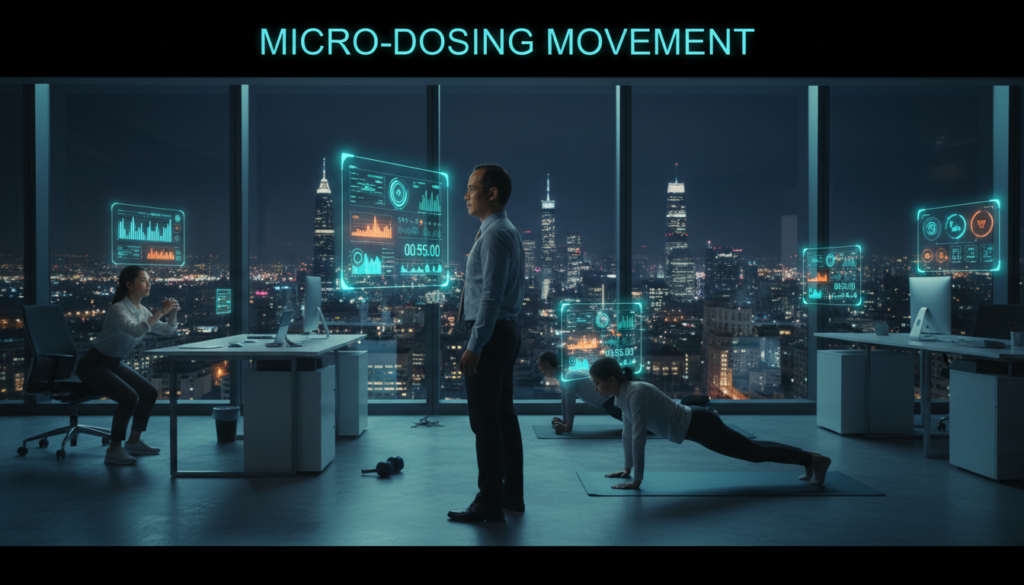
Introduction: The End of the “All-or-Nothing” Way of Thinking About Fitness
For years, we’ve been brainwashed by the “no pain, no gain” dogma. We thought that if we didn’t spend at least an hour sweating in a fluorescent-lit gym, our efforts were wasted. I fell into this trap myself in early 2024—spending two hours in transit and training, only to sit at my desk for the remaining 10 hours, feeling sluggish and mentally drained.
Science has changed by 2026. The Micro-Dosing Movement is happening right now.
This isn’t just a trend; it’s a biological necessity for the modern digital worker. Just as we use Matering ChatGPT to break down complex tasks into manageable prompts, we are now breaking down physical health into “exercise snacks.” The result? Better metabolic health, higher cognitive clarity, and a body that stays in a constant state of “active readiness.”
What is the Micro-Dosing Movement?
Micro-Dosing Movement (often scientifically referred to as “Exercise Snacking”) involves short, vigorous bursts of physical activity—ranging from 1 to 5 minutes—distributed throughout the day. Instead of one long, taxing session, you integrate high-intensity or high-intent movements into your existing workflow.
The Biology of “Exercise Snacking”
When you perform a 2-minute set of “air squats” or a “power plank” every hour, you are doing more than just burning calories. You are signaling your mitochondria to stay active. Research published in the Journal of Applied Physiology shows that these frequent signals prevent the metabolic “shutdown” that occurs during prolonged sitting.
H2: The Science: How 300 Seconds Can Rewrite Your Metabolic Health
Why is five minutes often better than sixty? It comes down to frequency over volume.
GLUT4 Translocation: The Glucose Sponge Effect
Every time you move your large muscle groups, a protein called GLUT4 moves to the surface of your muscle cells. This acts like a sponge, soaking up glucose from your bloodstream without needing a massive insulin spike. By micro-dosing movement every hour, you keep your blood sugar levels stable throughout the day, preventing the “afternoon slump” that plagues most office workers.
EPOC and the Afterburn of Micro-Bursts
Excess Post-exercise Oxygen Consumption (EPOC) is usually associated with long HIIT sessions. However, research from 2026 shows that several micro-bursts can have a “compounding EPOC” impact. Five 5-minute bursts can actually keep your metabolic rate higher over a 24-hour period than a single 45-minute jog.
Why Traditional 1-Hour Workouts Often Fail in the AI Era
In an era where we use a 5000+ Prompts Startup Toolkit to accelerate our business, our bodies haven’t kept up with the pace of digital acceleration. Traditional workouts often lead to “Sedentary Compensation”—where you feel so tired from your morning gym session that you move less for the rest of the day.
The Micro-Dosing Movement solves the issue by never pushing you to the point of exhaustion. It keeps your nervous system “primed” rather than “fried.” This is the same principle we apply to Epigenetic Eating; it’s about sending the right signals at the right time.
[INFOGRAPHIC] The Micro-Dosing Movement Pyramid
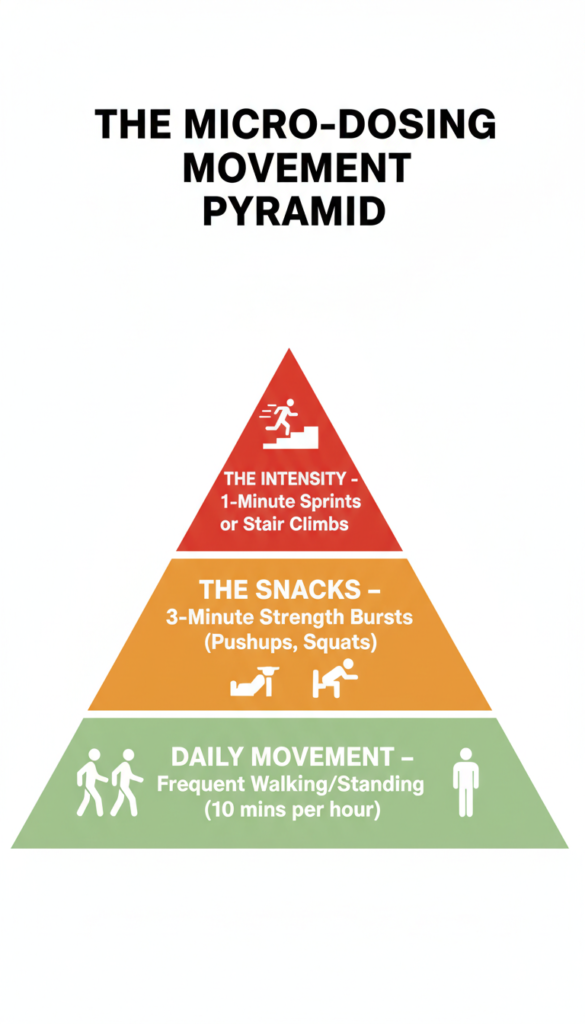
Just as certain foods can flip genetic switches, movement acts as a primary epigenetic signaling molecule. Frequent micro-movements have been shown to upregulate genes associated with mitochondrial biogenesis (the creation of new energy factories in your cells) and downregulate genes associated with systemic inflammation.
By micro-dosing, you are essentially telling your DNA that you are an “active hunter-gatherer” rather than a “stationary observer.” This prevents the “storage mode” that leads to visceral fat accumulation.
Step-by-Step Guide: How to Micro-Dose Your Daily Movement
Ready to start? Here is how to architect your day for maximum biological output:
The Morning Metabolic Primer (2 Minutes)
Before you check your emails, perform 2 minutes of “Sun Salutations” or “Jumping Jacks.” This resets your cortisol rhythm and tells your brain that the day has officially begun.
Also read related articles on morning movement routines.
The Afternoon Cognitive Reset (3 Minutes)
Around 2:00 PM, when your brain fog starts to set in, do a 3-minute “Wall Sit” or “Slow-Motion Pushups.” This force-pumps oxygenated blood to the prefrontal cortex, enhancing your ability to handle complex tasks, such as mastering ChatGPT for your projects.
The Evening Nervous System Down-Regulation (2 Minutes)
Before dinner, perform 2 minutes of deep, lateral lunges or “Cat-Cow” stretches. This signals your nervous system to shift from Sympathetic (Fight-or-Flight) to Parasympathetic (Rest-and-Digest).
Essential Tools and Wearables for Tracking Micro-Progress in 2026
You can’t manage what you don’t measure. In 2026, we recommend:
- Smart Rings: (Oura/Samsung) to track your “Active Minutes” vs. sedentary heart rate.
- Haptic Reminders: Set your smartwatch to vibrate every 50 minutes.
- AI Health Coaches: Using tools integrated with your Startup Toolkit logic to remind you to move when your screen time exceeds a certain limit.
FAQ: Common Myths About Short-Burst Training
Medical Disclaimer
Please Read: The Micro-Dosing Movement strategies discussed here are for educational purposes. While short bursts of exercise are generally safe, if you have underlying heart conditions, respiratory issues, or joint injuries, please consult a medical professional. Always listen to your body; “snacking” should feel energizing, not painful.