
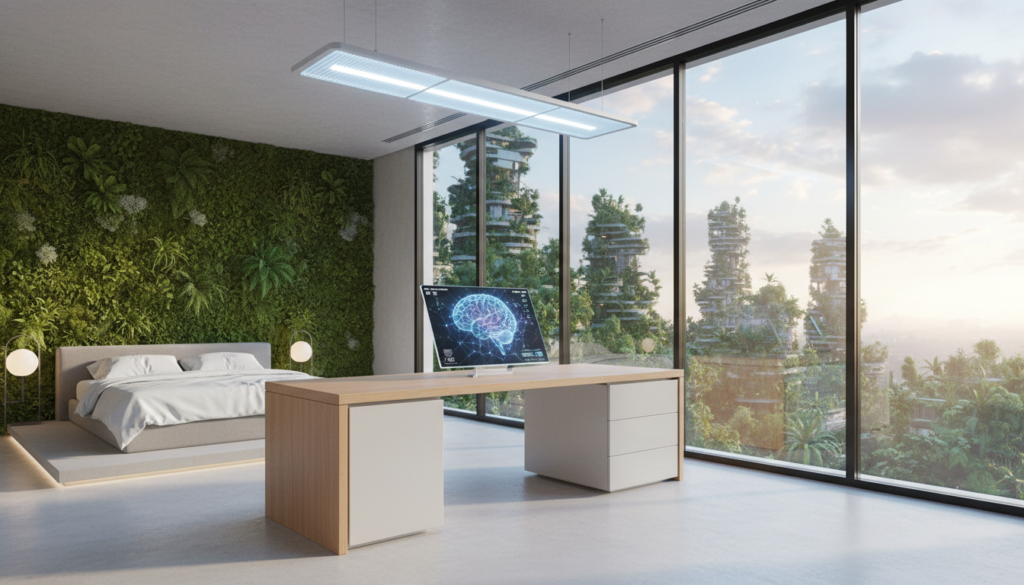
In the fast-paced world of 2026, we've finally moved on from the “Self-Help Industrial Complex.” We don't care about generic 10-step morning routines or “hustle” culture sayings that don't take our biology into account. Instead, the top 1% of performers have shifted to a much more powerful discipline: neuro-architecting your morning.
As an editor who has tracked the intersection of tech and wellness for over a decade, I’ve seen every trend come and go. But neuro-architecture isn’t a trend—it’s the final frontier of human optimization. It is the discipline of deliberately structuring your physical environment to activate certain neurological responses so that your brain is “primed” for high-output work before you even take your first sip of coffee.
If you feel sluggish, distracted, or anxious in the morning, it’s likely not a “willpower” problem. It’s an architectural one. Your space is literally whispering instructions to your neurons. If you haven’t mastered neuro-architecting your morning, your environment is probably telling your brain to stay in a state of low-level stress.
1. The Science of Spatial Cognition: How Walls Affect How We Think
The main idea behind neuro-architecture is how the hippocampus, which helps us navigate and remember, processes physical boundaries. “Spatial Cognition” is a term that describes what happens when we talk about neuro-architecting your morning.
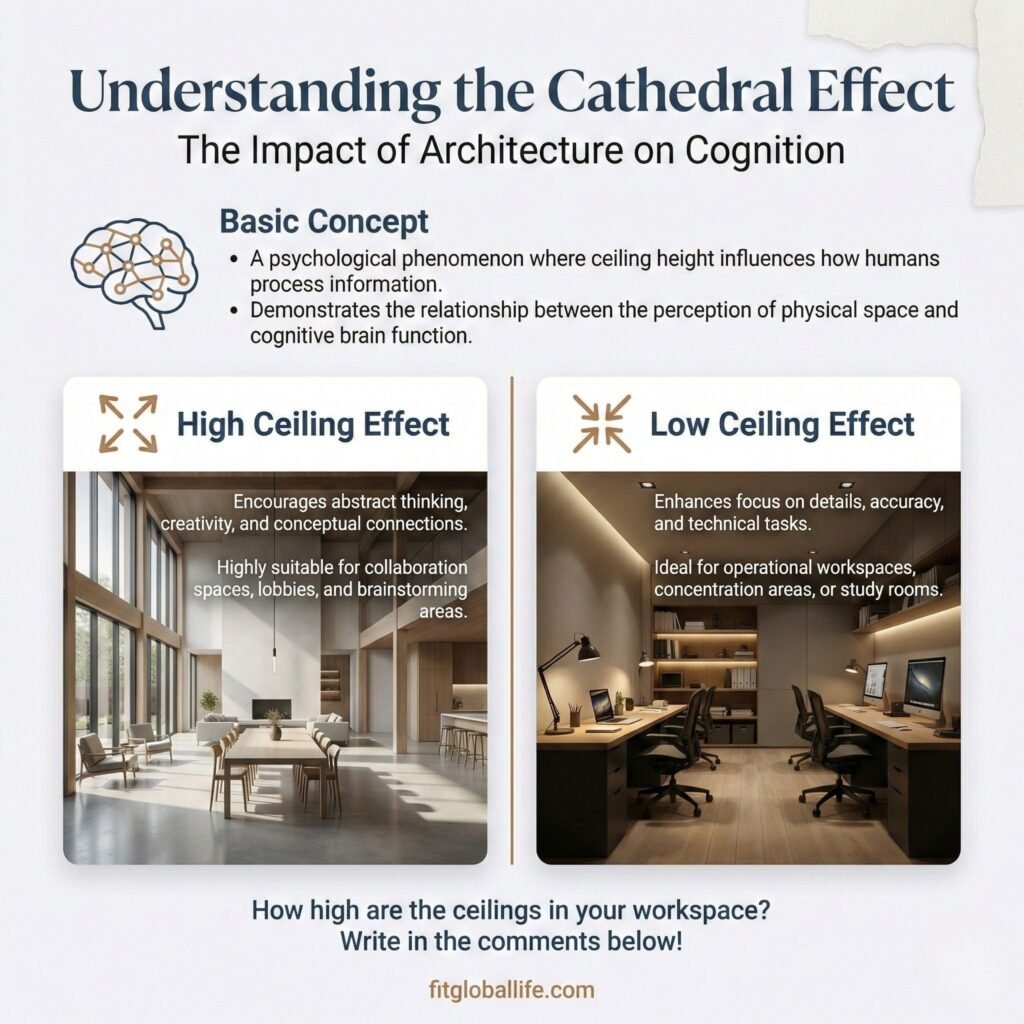
The Effect of the Cathedral
The Academy of Neuroscience for Architecture (ANFA) has long argued that the height of a ceiling can change how we think. The “Cathedral Effect” happens when high ceilings activate the right side of the brain, which helps with abstract, creative, and “big picture” thinking. On the other hand, lower ceilings tend to stimulate the left hemisphere, which is better suited to jobs that require attention to detail and analysis.
My Personal Insight: In my 2026 home, I've set aside a high-ceilinged living room for my “Blue Sky” strategy meetings and a comfortable, low-ceilinged nook for technical editing. If you try to neuro-architect your morning brainstorming in a small basement with low ceilings, you are biologically limiting your creativity.
2. Circadian Command: The Photobiology of Waking Up
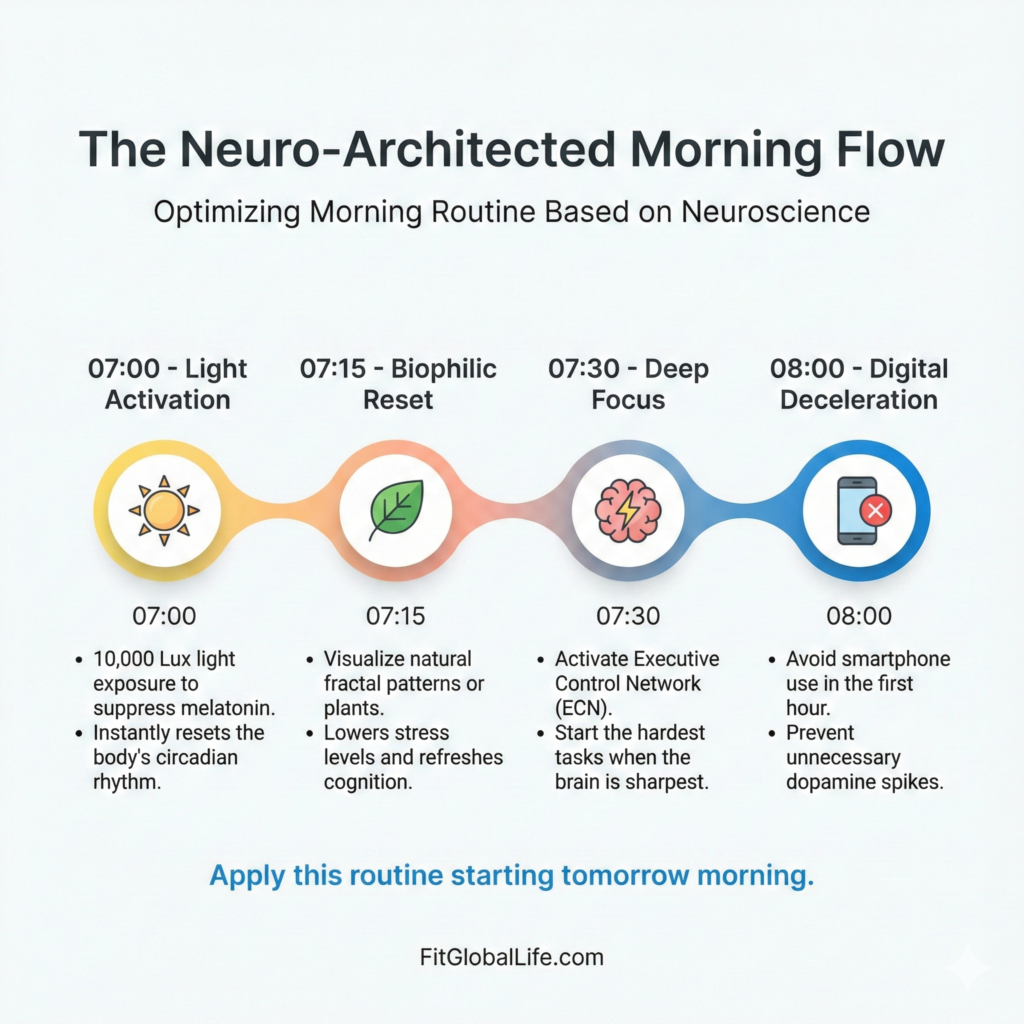
Light is the most powerful “Zeitgeber” (time-giver) for our bodies. To master neuro-architecting your morning, you must view your lighting not as furniture, but as a pharmacological intervention.
In 2026, we utilize Melanopic Lux—a measurement of how much light is actually hitting the melanopsin-containing cells in our retinas. These cells communicate directly with the Suprachiasmatic Nucleus (SCN), our master clock.
The 10,000 Lux Standard
To suppress melatonin and trigger a healthy cortisol spike (the “Cortisol Awakening Response”), you need approximately 10,000 lux of cool-temperature light (around 6500 K) within the first 30 minutes of waking. This isn't just “feeling awake”; it's a biochemical necessity for preventing the “afternoon slump.”
If your bedroom has blackout curtains and you immediately check your phone (which emits high-intensity but low-volume light), you are confusing your SCN. You are architecting a brain that is permanently “jet-lagged.”
Pro Tip: Incorporate Circadian Lighting at Home systems that mimic the sun’s trajectory. By neuro-architecting your morning with automated 6500K bursts, you synchronize your hormones with your calendar.
3. The Acoustic Horizon: Silence vs. Sonic Priming
In our 2026 world of “Acoustic Tourism,” we’ve realized that silence is the new luxury. However, absolute silence can sometimes be as distracting as loud noise for a brain wired for survival.
When neuro-architecting your morning, you must manage your “Acoustic Horizon.” This is the auditory range your brain monitors for threats.
- The Urban Hum: Low-frequency traffic noise increases cortisol levels by up to 15%, according to studies published in The Lancet.
- Pink Noise vs. White Noise: While white noise covers all frequencies, Pink Noise (1/f noise) has more power at lower frequencies. It mimics natural sounds such as rainfall and wind. A meta-analysis from 2025 indicated that Pink Noise increases “Neural Synchrony,” which makes it easier to switch from sleep mode to work mode.
My Experience: I've discovered that playing a 60bpm instrumental track at my morning workspace helps me get into a “Flow State.” Now, my brain connects that precise sound profile with deep work.
4. Biophilic Synergy: The “Nature Pill” for Your Neurons
We are biologically prehistoric creatures living in a digital-first world. Neuro-architecting your morning requires a heavy dose of Biophilia—the innate human tendency to seek connections with nature.
Fractal Patterns
Nature is built on fractals (self-repeating patterns). When our eyes process fractals—found in wood grain, leaves, or even specific “bio-mimetic” wallpapers—our alpha wave activity increases. This is the state of “relaxed alertness.”
A study by the University of Oregon found that viewing fractal patterns for just 40 seconds can reduce stress levels by 60%.
How to Implement:
- Visual Anchors: Place a large, leafy plant (like a Monstera) in your direct line of sight from your morning desk.
- Air Quality: Use HEPA filters and plants that maximize oxygen output. Carbon dioxide (CO₂) levels above 1,000 ppm can reduce cognitive function by 15%. If your morning space is stuffy, your “neuro-architected” routine is dead on arrival.
5. Frictionless Flow: Design Out the “Default Mode Network.”
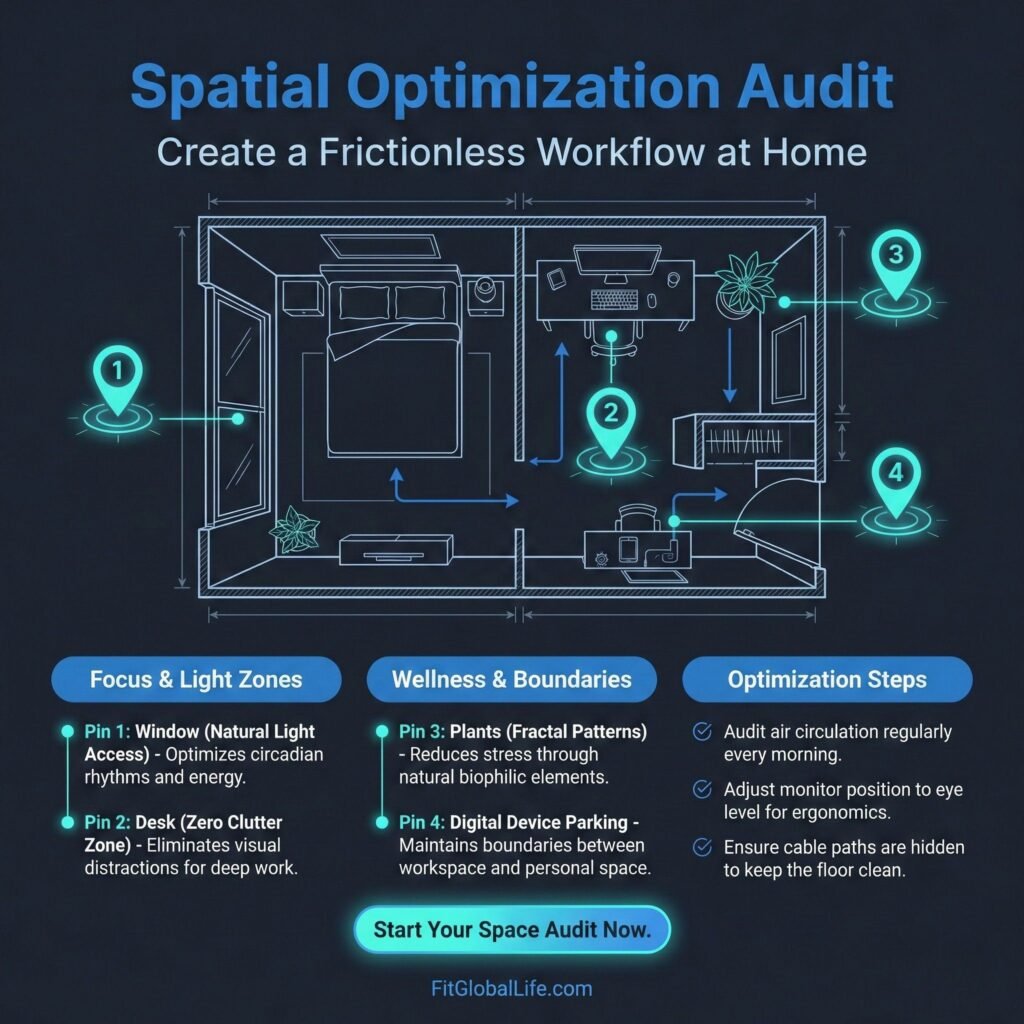
The biggest enemy of neuro-architecting your morning is “Friction.” Every time you have to search for your gym shoes or move a pile of laundry to sit at your desk, you are burning “Decision Capital.”
Your brain prefers the “Path of Least Resistance.” If the path to a bad habit (checking your phone) is easier than the path to a good one (writing in your journal), the bad habit wins every time.
The “Frictionless Flow” Checklist:
- The Visual Trigger: Your Nootropic Nutrition stack should be pre-set on the counter.
- Digital Deceleration Zones: Create a physical boundary. The phone stays in a “charging locker” outside the bedroom. By removing the distraction physically, you prevent the “Default Mode Network” (DMN) from hijacking your focus before your “Executive Control Network” (ECN) has even activated.
6. The 2026 “Neuro-Score”: A New Real Estate Standard
We are seeing a shift where high-performers are no longer asking about square footage; they are asking about the “Neuro-Score” of a property. This includes:
- EMF Shielding: Reducing electromagnetic interference in sleep zones.
- VOC-Free Materials: Ensuring the paint and furniture aren't off-gassing chemicals that cause brain fog.
- HCL (Human Centric Lighting): Integrated systems that adjust Kelvin temperatures automatically.
If you are serious about neuro-architecting your morning, you have to treat your home as a piece of hardware. You wouldn't try to run the world's most advanced AI on a 20-year-old server; why try to run a 2026 brain in a 1990s environment?
7. Step-by-Step: Your Weekend Neuro-Architecture Audit
Ready to transform your space? Follow this protocol:
- The Light Audit: Use a lux meter app. If your morning spot is under 2,000 lux, you need a therapy lamp.
- The Clutter Purge: Clutter is “visual noise.” It forces the brain to process irrelevant stimuli constantly. Clear your desk every night.
- The Olfactory Anchor: Choose a scent (Cypress, Lemon, or Peppermint). Diffuse it only during your first 90 minutes of work. You are “wiring” your brain to associate that scent with peak performance.
- The Movement Circuit: Ensure there is enough floor space for 5 minutes of Vagus Nerve Stimulation or light stretching. You won't move if you have to move stuff to do it.
Want this audit in a printable format?
Download the Neuro-Architected Morning Blueprint (PDF) and follow it every morning.
Summary: From Living to Performing
It's not about luxury to neuro-architect your morning; it's about staying alive in a world where AI is taking over. Your physical space is the link between what your body can do and what you do every day.
You are “hacking” your own neurochemistry by changing light, music, height, and nature. Stop struggling with your surroundings and start making one that works for you.
Frequently Asked Questions (FAQ)
Disclaimer
The information provided in this article is for educational and informational purposes only. “Neuro-architecting” involves environmental changes that can affect biological rhythms. Always consult with a medical professional or an environmental health specialist before making significant changes to your living environment, especially if you have pre-existing sleep disorders, light sensitivity, or psychological conditions. Fit Global Life is not responsible for any adverse effects resulting from the application of these techniques.