

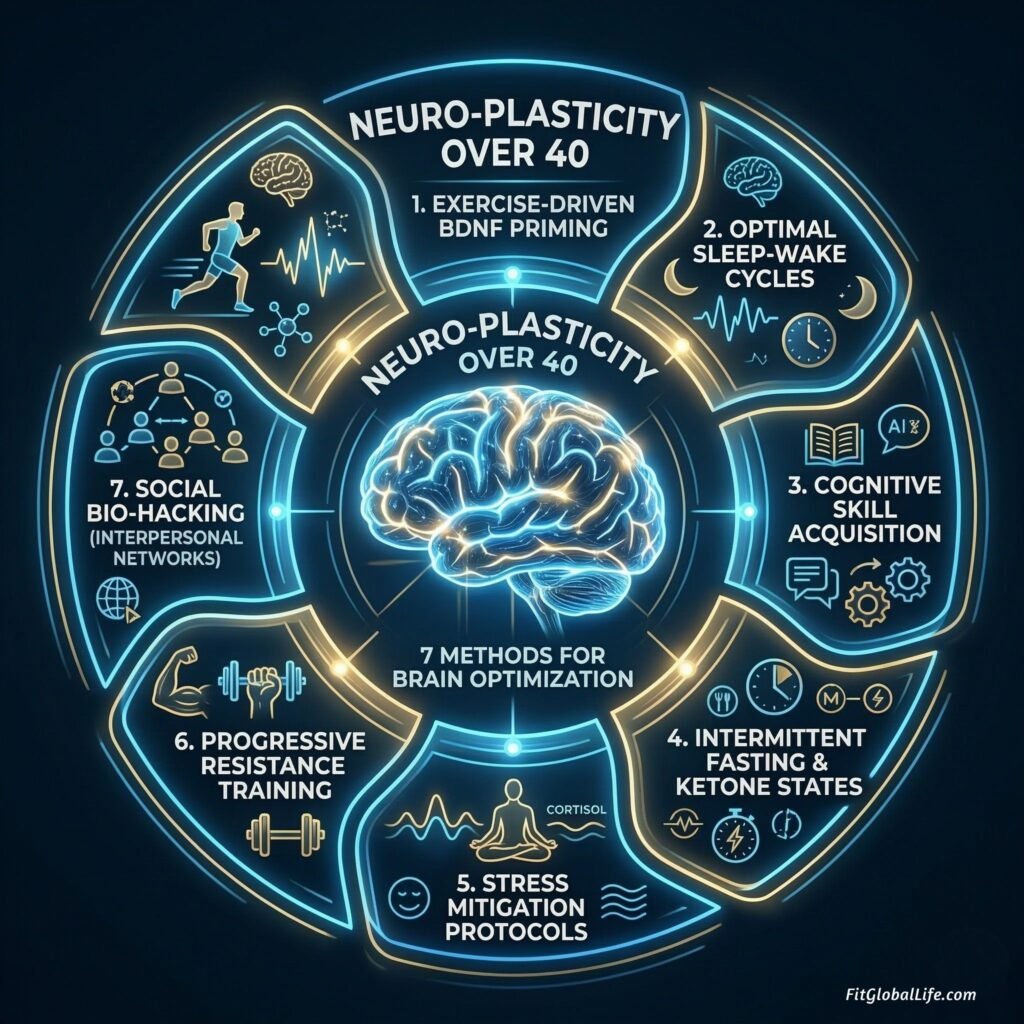
Neuro-Plasticity over 40 is no longer a biological mystery; it is the new way for professionals to stay in their jobs longer. In 2026, when the economy moves quickly, the best way to get ahead of the competition is to let go of old ways of thinking and learn new skills. A lot of people who study in the subject believe that the brain's “wiring” is set in stone after age 40. But new neuroscience shows that the mature brain has a unique structural stability that, when combined with the correct triggers, can lead to deep neuronal remodeling.
If you've been improving your physical foundation through Mitochondrial Recovery: Why Cellular Energy Matters, you've already set the stage for this cognitive progression. Rewiring neurons requires a lot of energy, and if the cells don't have enough energy, the brain will revert to its most efficient, well-known paths. When you learn Neuro-Plasticity Over 40, you're basically training an old dog new, valuable tricks that will help you make a successful job change.
Shattering the Myth: Why Your Brain is Primed for Change After 40
For decades, the prevailing dogma was that neurogenesis—the creation of new neurons—ceased in early adulthood. We now know this is false. The hippocampus continues to produce new cells throughout life, provided the environment is hormonally and nutritionally optimized. In fact, the “mature” brain is better at “pattern recognition” and “systemic thinking” than its younger counterparts.
The challenge of Neuro-Plasticity Over 40 isn't a lack of capacity; it is a lack of intensity. As we age, we often stop seeking the “productive struggle” that forces the brain to adapt. A career pivot requires you to move from a state of “Expertise” (relying on old myelinated paths) to a state of “Beginner’s Mind” (building new ones). This transition is precisely what triggers the most significant Neuro-Plasticity Over 40 responses.
Method 1: Radical Epigenetic Priming via BDNF Activation
Brain-Derived Neurotrophic Factor (BDNF) is often referred to as “Miracle-Gro” for the brain. It is the main protein that helps old neurons stay alive and new ones proliferate. You need to raise your BDNF levels to get Neuro-Plasticity Over 40.
The best method to do this is with very strong physiological stresses, such the temperature changes in Sub-Zero Sanctuaries: Arctic Cold-Exposure. When the body gets frigid, the brain makes more BDNF to protect neuronal networks. When you combine this with high-intensity interval training (HIIT), you enter a “Neuro-Primed” state in which your brain is more open to learning the difficult languages of AI, data science, or new ways of leading.
Method 2: The “Deep Work” Protocol and Cognitive Endurance
In 2026, you will need to stay focused on a career change. This is a skill that is quickly vanishing in the age of 15-second content. You need to build up your Cognitive Endurance in order to rewire your brain. This means teaching your prefrontal cortex to ignore the “dopamine pings” that come with digital notifications.
Implementing a “Deep Work” protocol—two 90-minute blocks each day with zero interruptions—forces the brain to strengthen the connections between the prefrontal cortex and the hippocampus. This is a critical pillar of Neuro-Plasticity Over 40. By mastering your focus, you are physically thickening the myelin sheath around your new skill-specific circuits, making them faster and more permanent.
Method 3: Precision Neuro-Nutrition and the Gut-Brain Axis
Your brain is a metabolically expensive organ, consuming 20% of your daily energy. To support Neuro-Plasticity Over 40, your nutrition must shift from “maintenance” to “construction.” This aspect is where Post-Biotic Power: Gut Health 2.0 becomes essential. The gut-brain axis is the highway through which inflammatory signals or neuro-supportive compounds travel.
A diet rich in anthocyanins, omega-3 fatty acids, and specific ketones provides the raw materials for synaptic repair. Furthermore, monitoring your Glucose-Longevity Connection via CGM helps ensure you aren't experiencing “brain fog” from insulin spikes, which are known to inhibit neural plasticity in older adults.
Method 4: Using circadian rhythms to fix synapses
During the day, neural connections are “tagged,” and during sleep, they are “cemented.” If you don't optimize The Architecture of Sleep, you're basically undoing the cognitive advantages you made when you changed careers. We know that REM cycles are the times when the brain tries out new skills to discover the best neural path.
To maximize Neuro-Plasticity Over 40, your sleep environment must be a sanctuary for synaptic repair. Using air ionization and electromagnetic shielding ensures that the Glymphatic Flush occurs without interference. This phase is the time when the brain moves information from the fragile short-term storage of the hippocampus to the permanent long-term storage of the cortex.
Method 5: High-Intensity Skill Acquisition (HISA)
The adult brain requires alertness and focus to trigger plasticity. The release of neuromodulators such as acetylcholine and norepinephrine makes this happen. High-Intensity talent Acquisition (HISA) means picking a talent that is very different from what you're used to, like learning a new coding language or musical instrument, and then practicing it with full attention for short, intense bursts.
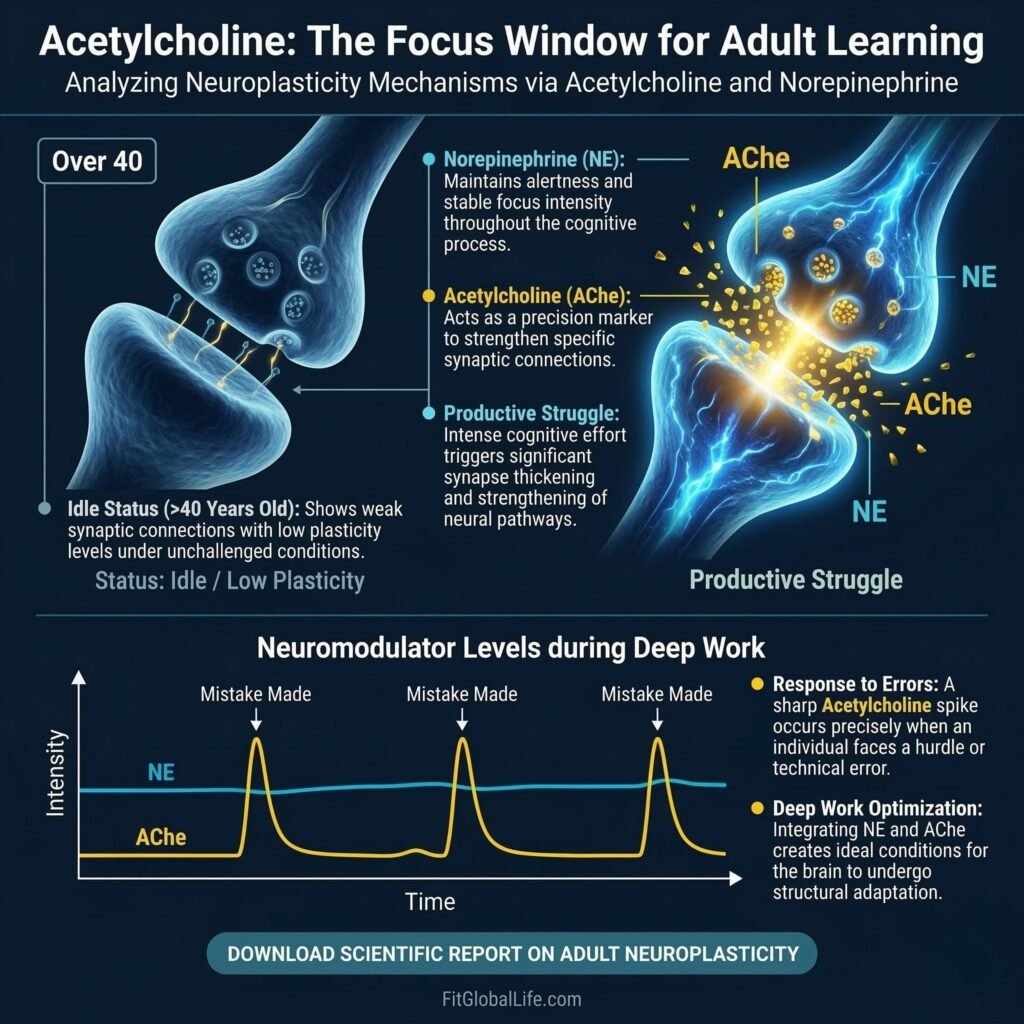
This “productive struggle” creates the chemical environment necessary for Neuro-Plasticity Over 40. When you make a mistake and feel that “frustration,” that is actually the signal for the brain to release Acetylcholine, marking those specific synapses for change. Don't avoid the frustration; lean into it.
Method 6: The “Faraday Mind” – Reducing Digital Cognitive Load
As we move into The Sovereign Health Era, we must treat our cognitive attention as a finite, sovereign resource. “Synaptic thinning” happens when you are constantly distracted by digital devices. This weakens brain networks since your attention is split.
To get Neuro-Plasticity Over 40, you need to use “Digital Cold Storage” to help you focus. This involves turning off all unnecessary notifications and using devices that won't track or interrupt your “Deep Work” sessions. By getting rid of unnecessary information, you free up more “bandwidth” for the intricate rewiring you need to change careers.
Method 7: Collaborative Learning and Social Bio-Hacking
We are social animals, and our brains are made to learn with other people. Social Bio-Hacking means being part of a “Mastermind” group that is also undergoing a change in how they think. Oxytocin released during group learning has been demonstrated to make the brain more open to new knowledge.
In 2026, we call this “Deep Community” learning. It is the number one indicator of cognitive longevity. When you learn a new skill with others, you are not just acquiring knowledge; you are creating a social reinforcement loop that makes Neuro-Plasticity Over 40 more sustainable and less cognitively draining.
Conclusion: The New Prime – Your Brain as Your Greatest Asset
The narrative that your best cognitive years are behind you is a relic of the past. By applying these 7 proven methods, you turn Neuro-Plasticity Over 40 from a hope into a biological reality. Whether you are pivoting to a new industry or launching a late-stage startup, your mature brain—with its ability to recognize patterns and its strategic depth—is your greatest asset.
Rewiring your brain is an act of Sovereign Health.Taking control of your biological future means resisting the usual decline that accompanies aging. The future of work will be shaped by people who can learn, unlearn, and relearn, regardless of their age. It is controlling your biological destiny and refusing to accept the “standard” decline of aging. The future of work belongs to those who can learn, unlearn, and relearn, regardless of their chronological age.
Frequently Asked Questions (FAQ)
Medical Disclaimer
Disclaimer: The information on Fit Global Life regarding neuro-plasticity and career performance is for educational purposes only. It is not medical or psychological advice. “Rewiring the brain” involves stressors that may not be suitable for everyone. Always consult with a health professional before starting new intensive protocols.