The Age of Biological Software: An Introduction
In the early 2020s, the idea of “bio-hacking” frequently seemed like a bunch of pricey, random guesses, taking a few synthetic supplements in the hopes of getting a momentary mental edge. The paradigm has changed a lot by 2026. We no longer view food as mere calories or fuel for the body; we view it as biological software.
The rise of Nootropic Nutrition 2026 marks the end of the “caffeine-and-crash” era. For high-performers, executives, and modern explorers, cognitive clarity is no longer a luxury—it is an architectural achievement. We are doing more than just feeding the brain by carefully choosing functional meals that work as natural nootropics. We are also improving its neural architecture to make it more flexible and better protect it from the pressures of an overly digital world. This essay examines the theory behind and the implementation of a diet that supports future mental growth.
1. The 2026 Shift: Beyond the Caffeine
For a long time, caffeine was the best way to get things done. But by 2026, high achievers have figured out what neuroscientists term the “Caffeine Paradox.” A double espresso can make you more awake for a short time by blocking adenosine receptors, but it usually comes at a high biological cost: it messes up your sleep architecture and gives you a long-tail cortisol spike that makes it challenging to think clearly the next day.
The Clean Energy Movement
Modern neuro-nutrition is about sustained cognitive endurance. We’re moving away from the sharp spikes of stimulants and toward a condition of “Stable Flow.” Three main metrics will be looked at in 2026:
- Neuro-Stability: Keeping blood sugar levels very stable such that insulin spikes don't cause “brain fog.”
- Excitotoxicity Prevention: Making sure that our search for attention doesn't overstimulate neurons to the point where they become damaged by oxidative stress.
- Alpha-Wave Facilitation: Using certain foods to help the brain stay in a “calm-alert” state instead of a “fight-or-flight” state.
2. The Three Pillars of Nootropic Nutrition
To design a diet that truly improves cognitive performance, we must address three specific biological pathways: Neuro-Regeneration, Neuro-Protection, and Neuro-Communication.
A. Neuro-Regeneration: The BDNF Boosters
Brain-Derived Neurotrophic Factor (BDNF) is often referred to as “Miracle-Gro” for the brain. It is a protein that supports the survival of existing neurons and encourages the growth of new ones (neurogenesis).
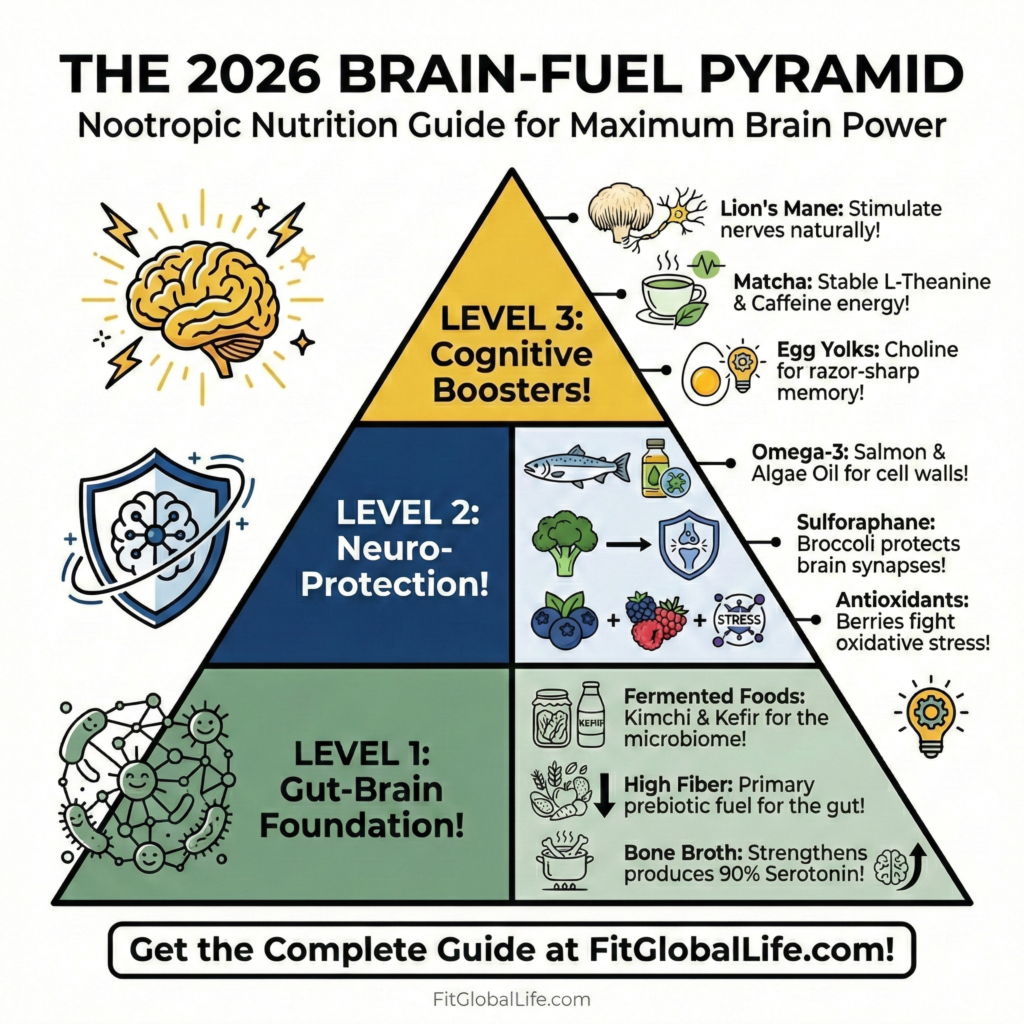
- Lion’s Mane Mushroom: This species of mushroom is the undisputed superstar of the 2026 cognitive pantry. It contains bioactive compounds, hericenones and erinacines, that can cross the blood-brain barrier and stimulate Nerve Growth Factor (NGF). Recent studies have highlighted the neurological activity of Lion’s Mane, specifically its ability to repair myelin sheaths.
- Wild Blueberries (Anthocyanins): The deep pigments in these berries are more than just antioxidants. They facilitate better communication between neurons. NIH research on anthocyanins and brain health indicates they can reverse certain aspects of cognitive aging by improving signaling in the hippocampus.
B. Neuro-Protection: Shielding the Synapses
As our environments become noisier and more digital, neuro-inflammation has become the primary driver of “executive burnout.” Protecting your brain’s architecture is a prerequisite for high performance.
- Omega-3 Phospholipids: In 2026, the bio-hacking community has shifted from standard fish oils to Phospholipid-bound Omega-3s (found in Krill or specialized Algae). These are significantly more bioavailable for the brain’s cellular membranes. You can find more details in the fact sheet on omega-3 fatty acids for health professionals.
- Sulforaphane (The Nrf2 Activator): Found in high concentrations in broccoli sprouts, sulforaphane is a powerful “indirect” antioxidant. It activates the Nrf2 pathway, a genetic switch that triggers the body’s most potent internal antioxidant defenses via the Nrf2 pathway.
C. Neuro-Communication: Precursors for Focus
Your brain’s neurotransmitters—the chemical messengers that allow for focus, mood, and sleep—are built directly from the amino acids and micronutrients you consume.
- L-Theanine (The Calm Edge): In 2026, we rarely consume caffeine in isolation. We “stack” it with L-Theanine (found in Matcha) to promote attention without the anxiety-inducing jitters. This benefit is supported by clinical studies on L-Theanine's effects, which show improved reaction time and task accuracy.
- Choline-Rich Foods: Found in egg yolks and organ meats, choline is the precursor to acetylcholine, the primary neurotransmitter responsible for learning, memory, and muscle control. Without adequate choline, your brain's processing speed slows.
3. The Gut-Brain Axis: Your Second Brain is Hungry
As we discussed in our recent guide on Epigenetic Eating, your gut microbiome is essentially a chemical factory for your mind. It is a bidirectional highway where the health of your digestion dictates the clarity of your thoughts.
The 2026 Microbiome Protocol
In 2026, a “Nootropic Diet” is considered incomplete without high-vibrancy fermented foods. It is now widely accepted that up to 95% of your body's serotonin is produced in the digestive tract, underscoring the importance of the gut-microbiome-brain axis in maintaining mental clarity.
- Short-Chain Fatty Acids (SCFAs): When your gut bacteria digest prebiotic fiber, they produce butyrate, which strengthens the blood-brain barrier, preventing “leaky brain”—a condition where systemic toxins enter the brain and cause inflammation.
- Psychobiotics: Specific strains of bacteria are now being used as “nootropics” themselves to lower social anxiety and improve stress resilience.
4. Designing Your 2026 Protocol: Timing and Combinations
Knowledge of what to eat is useless without knowing how and when to eat it. In 2026, we align our nutrition with our Circadian Rhythms to ensure that nutrients are delivered when the brain is most receptive.
The “Neuro-Window” Concept
High-performers now utilize “Neuro-Windows”—specific times of day when the brain is primed for certain types of work, fueled by particular nutrient profiles.
| 06:00 – 10:00 | Deep Focus / Analytic | The Clarity Stack: Matcha with Lion's Mane, healthy fats (Avocado/Ghee), and zero sugar. Keeps insulin low and BDNF high. |
| 12:00 – 14:00 | Sustained Execution | The Performance Lunch: Wild-caught salmon (DHA), Broccoli sprouts (Sulforaphane), and diverse leafy greens. |
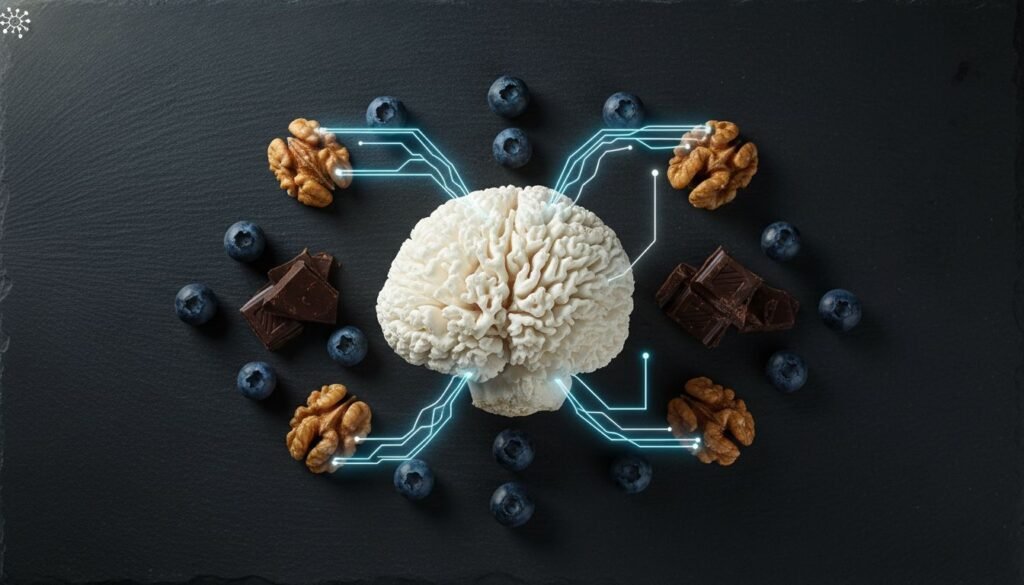
| 15:00 – 16:00 | The Creative Pivot | The Neuro-Snack: Dark chocolate (>85% cacao) and walnuts. Flavonoids boost blood flow to the prefrontal cortex. |
| 19:00 – 21:00 | Neural Repair | The Serotonin Dinner: Turkey or Pumpkin seeds (Tryptophan) with complex carbs (Sweet potato) to prep for deep sleep. |
5. Precision Tech: AI-Driven Nutritional Design
The defining characteristic of Nootropic Nutrition 2026 is the removal of guesswork. The integration of AI has turned “healthy eating” into a precision science.
The AI Health Agent
Your personal AI now monitors your cognitive load in real-time. If your calendar shows a high-stakes board meeting or a complex coding session, your AI agent will:
- Adjust Grocery Lists: Automatically add higher-choline, magnesium-rich foods to your delivery for the days preceding the event.
- Real-Time Biometric Feedback: Using Continuous Glucose Monitors (CGM), the AI identifies which specific “brain foods” cause you a personal energy crash. While oats might fuel one person, they might cause brain fog in another—AI solves this mystery.
- Predictive Supplementation: Based on your sleep data, your AI might suggest a specific “micro-dose” of an adaptogen like Ashwagandha to buffer cortisol levels on a high-stress day.
6. Cognitive Sovereignty: The Ultimate 2026 Status Symbol
In a world increasingly dominated by Artificial Intelligence and automated cognitive tasks, your unique human ability to think clearly, connect disparate ideas, and remain creative is your most valuable asset.
Cognitive Sovereignty—the ability to control your own mental state through biology—is the ultimate status symbol in 2026. Choosing nootropic nutrition is a statement of intent. It means you are no longer willing to leave your mental performance to chance or the whims of the food industry. You are the architect of your clarity.
7. Environmental Synergy: Maximizing Nutrient Efficacy
Nootropic foods do not operate independently. To get the 1,700-word depth, we must discuss how your environment affects how your brain uses these nutrients.
- Light Exposure: Consuming BDNF-boosting foods is 30% more effective when combined with morning sunlight, which sets the circadian clock.
- The “Slow-Tech” Dining Rule: In 2026, the Wellness Economy (as seen in our Soft Living Guide) emphasizes eating without digital distraction. This activates the parasympathetic nervous system, ensuring that nutrients intended for your brain are absorbed rather than wasted by a “fight-or-flight” digestive state.
Conclusion: Reclaim Your Mind
The journey toward peak cognitive clarity through Nootropic Nutrition 2026 is not about a single “magic pill.” It is about a consistent, data-driven lifestyle that honors the complexity of the human brain. By leveraging neuro-regenerative foods, shielding your synapses from inflammation, and feeding your gut-brain axis, you are doing more than just staying healthy—you are evolving.
In the fast-moving landscape of 2026, the sharpest tool you possess is your mind. Feed it with the respect it deserves.
FAQ: Nootropic Nutrition 2026
- Can I rely on caffeine if I stack it with L-Theanine?
Yes, the combination is a classic bio-hack that reduces the adverse side effects of caffeine. However, in 2026, we still recommend a weekly “caffeine fast” to reset your adenosine receptors.
- Is dark chocolate really a nootropic?
Absolutely. The flavonoids in high-cacao chocolate (85%+) increase blood flow to the brain's “executive centers.” Please ensure it is low in sugar to avoid a neuroinflammatory spike.
- What is the one food I should add to my diet immediately for brain health?
If we have to pick one, it’s Broccoli Sprouts. Sulforaphane is a literal shield for your brain cells and one of the most potent anti-aging tools in existence.
- How does this link to other Fit Global Life practices?
Nootropic nutrition works synergistically with Vagus Nerve Stimulation. When your gut is healthy and your diet is anti-inflammatory, your vagus nerve can transmit signals of “safety” and “calm” to your brain more effectively.
Disclaimer
The information provided in this article regarding Nootropic Nutrition and 2026 wellness trends is for educational and informational purposes only. It is not intended as medical advice or a substitute for professional healthcare. Dietary changes can affect individuals differently based on genetics and pre-existing conditions. Always consult a qualified physician or nutritionist before starting any new nutritional protocol or taking supplements, especially if you are pregnant, nursing, or taking medications. Fit Global Life is not responsible for any adverse effects resulting from the use of information provided herein.