For the past decade, the wellness industry sold us a simple dream: swallow a capsule of live bacteria (probiotics), and your gut issues will vanish. But as we sit in 2026, the data is clear—most of those expensive “live” cultures never even made it past your stomach acid.
Welcome to the era of Post-Biotic Power.
In our previous discussion on Mitochondrial Recovery, we explored how cellular energy is the ultimate metric of health. But what fuels the signals that tell your mitochondria to turn on? The answer lies in the metabolic byproducts of your microbiome—the postbiotics. We are moving away from being “gardeners” of bacteria and becoming “engineers” of cellular signals.
The Death of the “Live Bacteria” Myth: Why 2026 is the Year of the Post-Biotic
The fundamental problem with the probiotic craze of the 2010s and early 2020s was the “transit issue.” Most probiotics were fragile, heat-sensitive, and easily destroyed by the harsh environment of the human digestive tract.
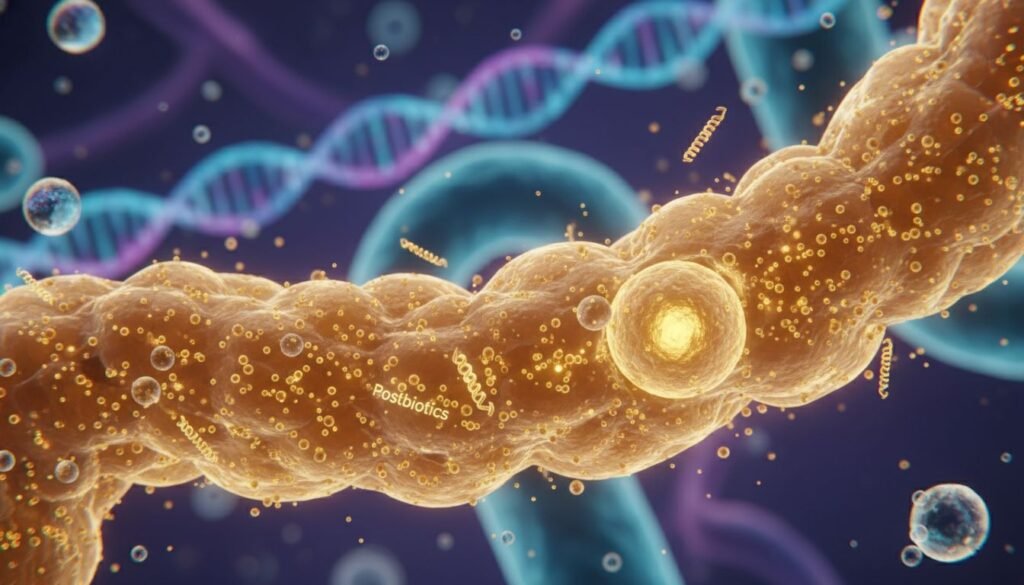
In 2026, we realized that the benefit of probiotics wasn't necessarily the bacteria themselves, but the chemical “exhaust” they produced while alive. This “exhaust”—comprising compounds such as enzymes, peptides, and short-chain fatty acids—is what we now call Postbiotics.
Probiotics vs. Postbiotics: The Delivery Problem
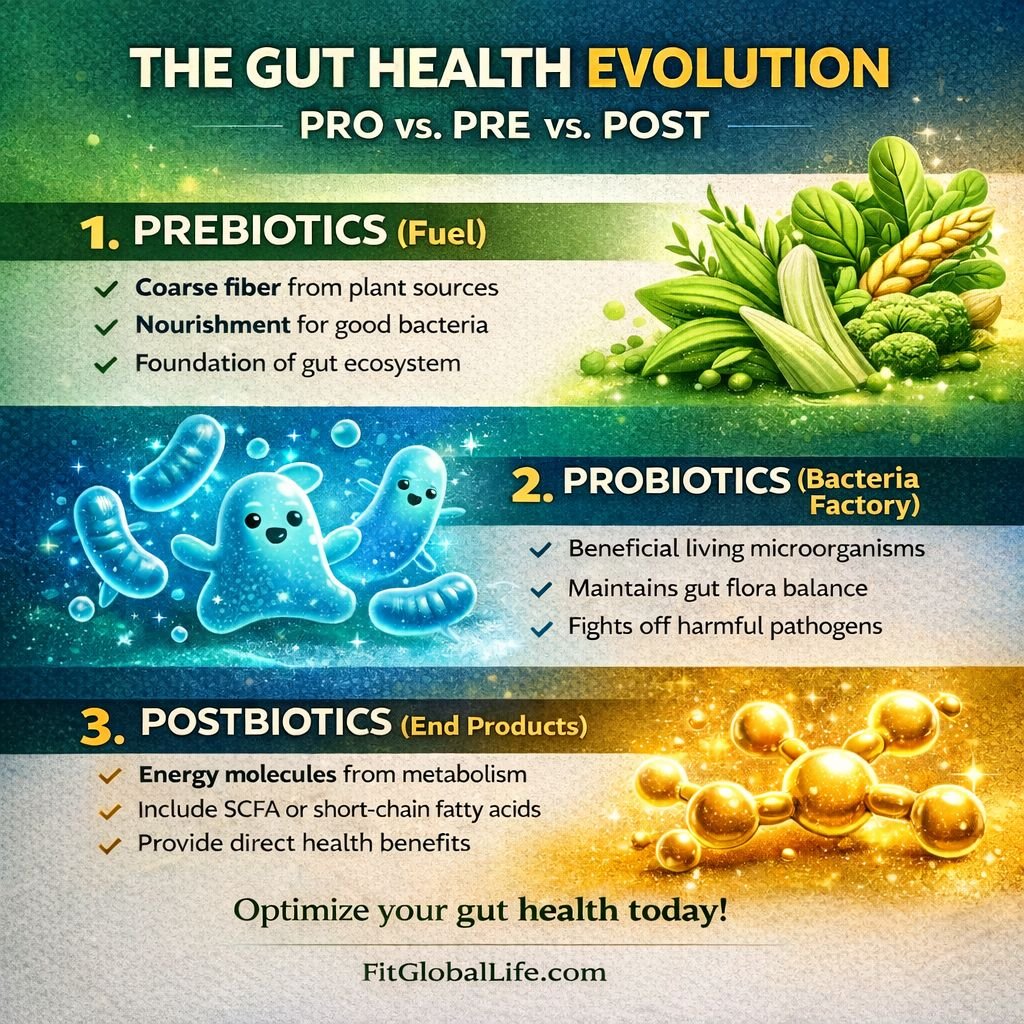
Think of it this way: Probiotics are the workers, but Postbiotics are the actual products the workers build. If you want a house, you don't necessarily need more workers; you need the bricks and mortar. By consuming postbiotics directly, we bypass the uncertainty of whether “live” bacteria will survive and colonize your gut. We go straight to the biological effect.
What Exactly is Post-Biotic Power? (The Ghost in the Machine)
Technically defined, postbiotics are “bioactive compounds produced by food-grade microorganisms during a fermentation process.” They are inanimate, stable, and highly targeted.
Beyond Fiber: The Role of Short-Chain Fatty Acids (SCFAs)
The most powerful player in the Post-Biotic Power arsenal is Butyrate. This short-chain fatty acid is the primary fuel source for the cells lining your colon (colonocytes). Without enough butyrate, your gut lining becomes “leaky,” allowing toxins to enter your bloodstream and trigger systemic inflammation—the very “inflammaging” we discussed in our Sovereign Health deep dive.
The Gut-Mitochondria Connection: How Postbiotics Fuel Your Cellular Engines
This is where the science gets truly fascinating for 2026 biohackers. Research now shows a direct “cross-talk” between your gut postbiotics and your mitochondria.
When your gut microbes produce a postbiotic called Urolithin A (derived from pomegranate and berries), it triggers mitophagy—the recycling of old mitochondria. This means that Post-Biotic Power isn't just about digestion; it’s a fundamental driver of cellular longevity. If your gut isn't producing the right postbiotics, your Mitochondrial Recovery will stall, no matter how much red light therapy you do.
5 Key Postbiotics You Need to Know for 2026
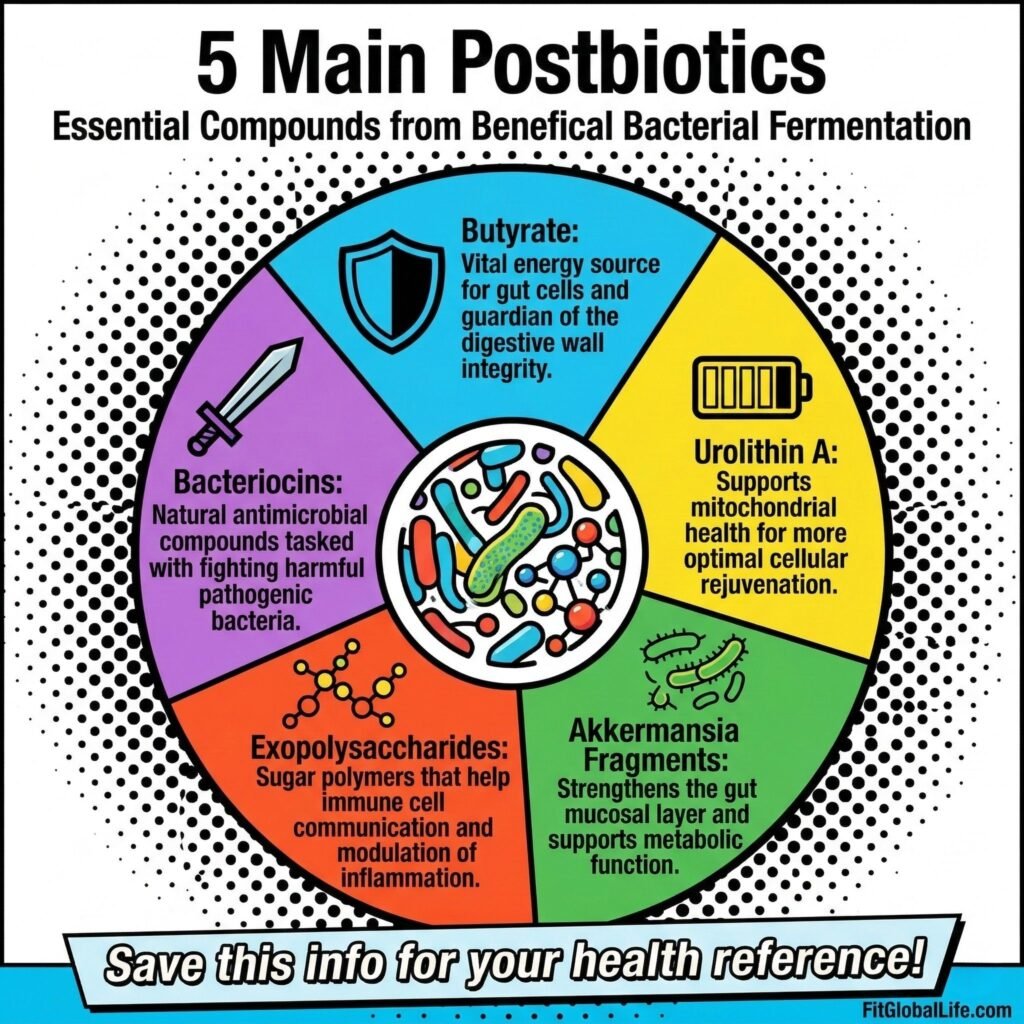
To master your internal chemistry, you must recognize these five postbiotic powerhouses:
- Butyrate: The “sealant” for leaky gut and a powerful anti-inflammatory.
- Urolithin A: The main substance that makes mitochondria regenerate themselves.
- Akkermansia Muciniphila Fragments: These bacteria strengthen the gut barrier and help with glucose metabolism, which is an important part of the Glucose-Longevity Connection, even when they are “dead.”
- Exopolysaccharides: Carbohydrate polymers that change how the immune system works.
- Bacteriocins: Natural “antibiotics” produced by good bacteria to kill off pathogens like E. coli.
How to Harvest Post-Biotic Power: A Functional Nutrition Protocol
We are moving beyond basic “Superfoods” and toward Molecular Gastronomy for Longevity. This is how you may get the most out of your postbiotic production:
1. The Evolution of Fermentation: Going Beyond Kimchi
We don't simply eat fermented foods for the “live cultures” in 2026. We eat them for the postbiotic brine, which is the fermented liquid.
- Protocol: Drink 2 ounces of high-quality sauerkraut brine or kimchi juice every day. This is a concentrated shot of organic acids and bacteriocins that are shelf-stable and ready for immediate absorption.
2. Targeted Prebiotics: Feeding the Right Ghosts
You cannot have Post-Biotic Power without the right “raw materials.” This means moving beyond generic fiber.
- Resistant Starch: Cooked and cooled potatoes or rice create resistant starch, which is the preferred “food” for butyrate-producing bacteria.
- Polyphenols: Dark berries, cacao, and green tea provide the precursors for Urolithin A.
3. Supplementation: When “Dead” Bacteria are Better
The supplement shelf of 2026 looks different. Look for “Heat-Killed” or “Tyndallized” probiotics. These are basically “Postbiotic Supplements” in which the bacteria have been killed on purpose to preserve their beneficial proteins and enzymes. They are more stable, safer for people with weak immune systems, and often better at getting the immune system to respond.
Postbiotics and metabolic flexibility are the future of weight management.
One of the most shocking things to learn in 2026 is that being overweight is commonly a “postbiotic deficiency.” Some postbiotics, such as those from Akkermansia, signal the brain to regulate hunger and improve insulin sensitivity.
When we improve our Post-Biotic Power, we're not just “dieting”; we're modifying the chemical signals that tell our bodies how to store fat. This is why Constant Glucose Monitoring (CGM) has become a staple for non-diabetics who want to see how their postbiotic levels affect blood sugar spikes in real time.
Conclusion: From Gardeners to Engineers
The shift from probiotics to Post-Biotic Power represents the maturation of human health. We are no longer hoping that a random pill of bacteria will “fix” us. Instead, we are taking control of the molecular byproducts that dictate our energy, our immunity, and our aging process.
By focusing on postbiotics, you are providing your body with the final product it needs to thrive. You are moving from a state of “trial-and-error” to a state of biological precision.
In our next exploration, we will look at how this internal waste management system connects to The Lymphatic Revolution, ensuring that once your postbiotics have done their job, the debris is cleared efficiently.
FAQ
Disclaimer for Medical Purposes
The information on Fit Global Life about Post-Biotic Power and gut health is strictly for educational purposes. This is not medical advice. If you have SIBO or any complicated digestive problem, you should always talk to a doctor before starting a new supplement.