We’ve learned how to live the “always-on” lifestyle in the fast-paced world of 2026. Our cities are always in a fake twilight, and our eyes are always glued to the blue light that AI assistants emit. But a radical counter-movement is rising. While the 2010s were about “Digital Detox,” 2026 is about Biological Reclamation.
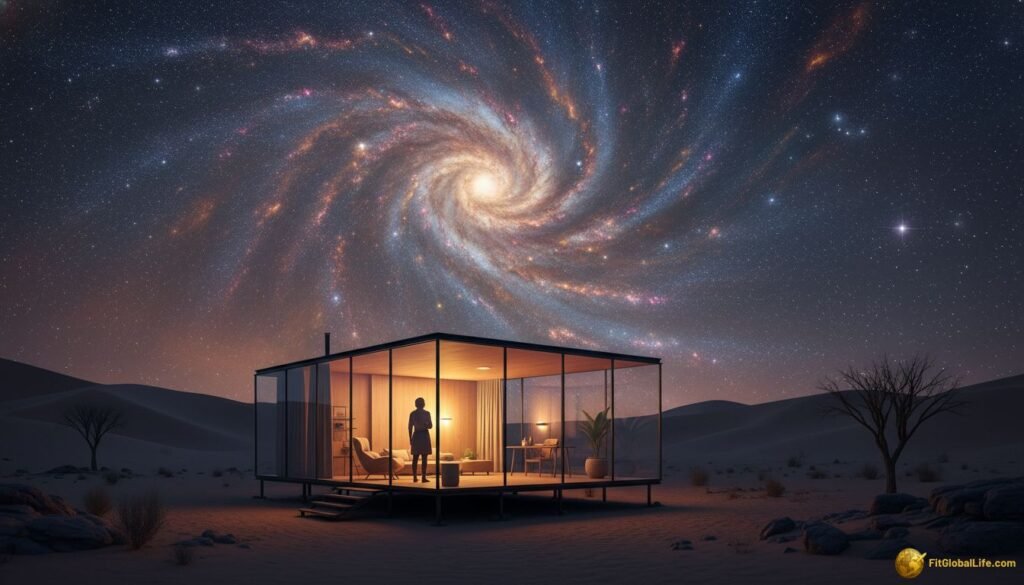
We are seeing a global exodus from the neon glow of the metropolis toward the ink-black sanctuaries known as Dark Sky Reserves. This isn’t just about pretty stars; it’s about a desperate, biological need to reconnect with the cosmic rhythm that governed human health for millennia. Astro-Tourism is no longer a niche hobby for astronomers—it is the ultimate luxury for the modern soul.
The Vanishing Night: Why Light Pollution is 2026’s Silent Health Crisis
By 2026, over 85% of the world’s population lives under “skyglow,” a persistent haze of artificial light that prevents the Milky Way from being seen by the naked eye. According to the International Dark-Sky Association, light pollution is not just an astronomical nuisance; it is a profound environmental disruptor.
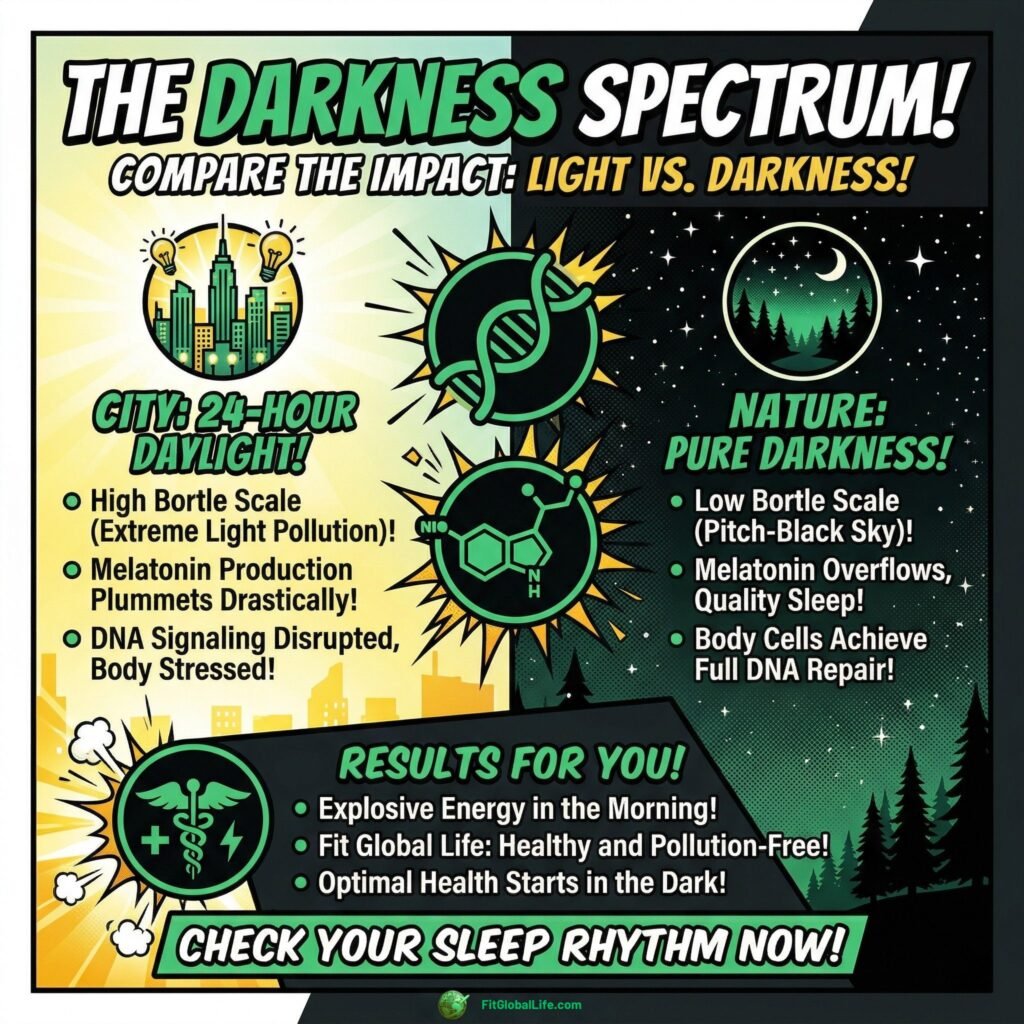
Artificial Light at Night (ALAN) is a biological toxin. It suppresses the production of melatonin, the “vampire hormone” that only emerges in total darkness to repair our cells and fight off inflammation. When we lose the night, we lose our ability to regenerate. This is why understanding 7 shocking critical insights everyone must understand in 2026 is vital—one of those insights is that our modern environments are secretly eroding our cellular resilience.
The Neurobiology of Constant Light
When our retinas are exposed to artificial light after sunset, the suprachiasmatic nucleus (SCN) in the brain is tricked into thinking it is still daytime. This keeps cortisol levels artificially elevated when they should be plummeting to allow for deep tissue repair. In 2026, “Circadian Dysregulation” is recognized as a primary driver of metabolic syndrome and chronic fatigue. We are living in a state of permanent biological “jet lag” without ever leaving our zip codes.
The Science of Starlight: How Astro-Tourism Heals Your Circadian Rhythm
The primary driver of the Astro-Tourism boom is Circadian Restoration. In our previous guide on Circadian Lighting at Home, we discussed how to mimic natural light patterns indoors. However, even the best indoor tech cannot replicate the biological reset that a night in a Dark Sky Reserve triggers.
1. Melatonin Resurgence
True darkness is the only way to achieve peak melatonin secretion. In a 2025 study published in the Journal of Pineal Research (NIH source), participants who spent 72 hours in a Dark Sky environment showed a 35% increase in melatonin levels and a significant reduction in systemic inflammation markers. This is why Sleep Tourism Is the New Luxury in 2026—the best cure for insomnia isn’t a pill; it’s the stars.
2. The Strength of Cosmic Awe
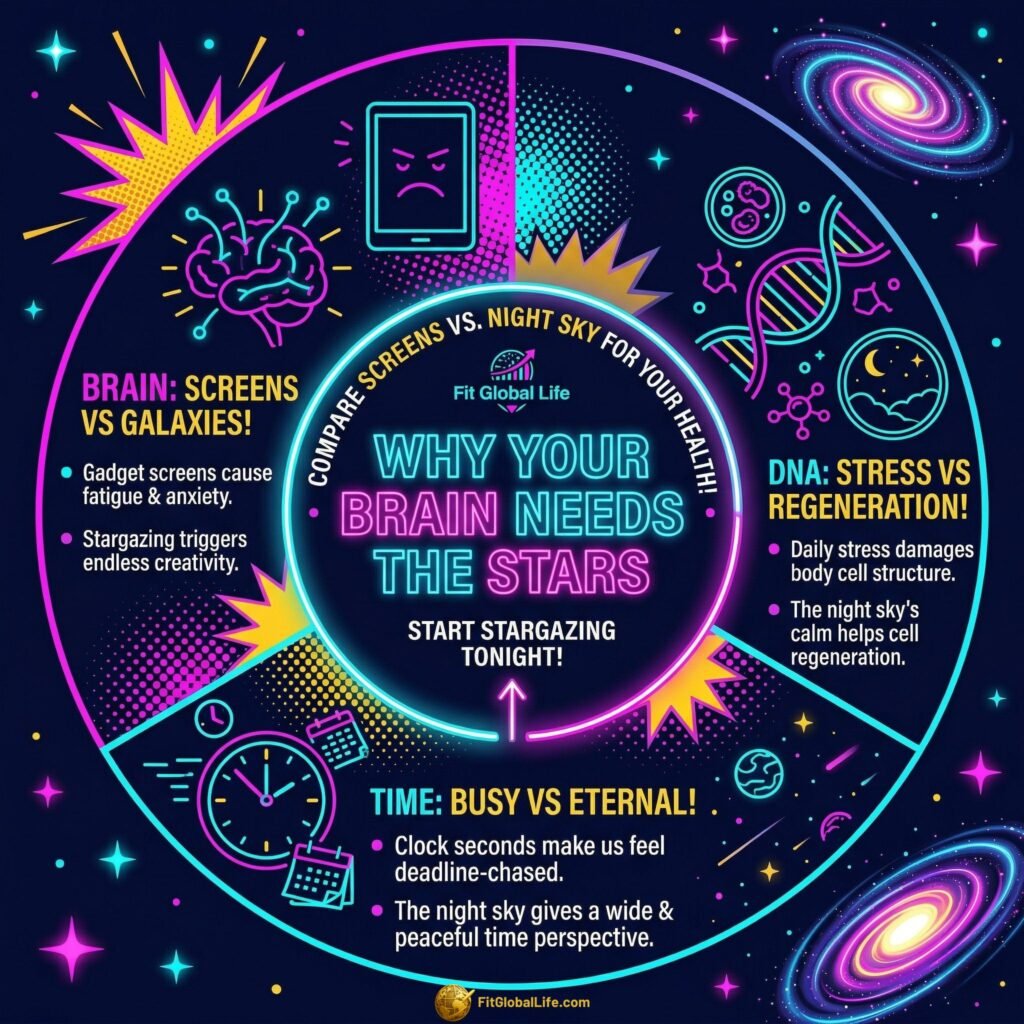
When you look at the expanse of space, it makes you feel “Awe” in your mind. This feeling has been shown to lower levels of cytokines (stress markers) and halt “ruminative thinking” (overthinking). When you understand how small you are in the grand scheme of things, the things that worry you out every day, like emails, deadlines, and AI notifications, don’t bother you as much. This reclaiming of perspective is one of the main reasons why “Cognitive Sovereignty” is the biggest trend of 2026.
3. The Vagus Nerve and Sensory Decoupling
“Sensory Decoupling” is something we encounter in Dark Sky Reserves. This occurs when the brain is removed from the high-frequency visual and auditory “chatter” of urban life. This silence works in tandem with the darkness to provide a total nervous system reset. This is the heart of The Silent Revolution: Why Acoustic Tourism is the Ultimate Longevity Hack for 2026. By quieting the external world, we allow the internal world—specifically the Vagus Nerve—to return to a state of ventral-vagal safety.
5 Global Dark Sky Reserves You Must Visit in 2026
If you are looking to escape the grid and heal your biology, these five locations represent the pinnacle of Astro-Tourism.
- Aoraki Mackenzie, New Zealand: The first Reserve in the Southern Hemisphere. Its gold-rated status offers a view of the Galactic Center that is so bright it can cast a shadow on the ground. The Southern Cross and the Magellanic Clouds are visible with a clarity that feels high-definition.
- NamibRand Nature Reserve, Namibia: Located in one of the least populated places on Earth, this is where you go for “True Unplugging.” The dunes of the Namib Desert provide a stark, beautiful foreground to a sky that seems to vibrate with ancient energy.
- Pic du Midi, France: A high-altitude sanctuary in the Pyrenees where the air is so thin and clear that the stars appear to be within reach. The observatory here was used to map the moon for the Apollo missions, and that legacy of discovery still hangs in the air.
- Central Idaho Dark Sky Reserve, USA: A rugged, mountainous escape that perfectly pairs with high-altitude wellness for a total metabolic reset. The cold, crisp air of the Sawtooth Mountains acts as a natural lens, sharpening every constellation.
- Kerry Dark Sky Reserve, Ireland: One of the few places in Europe where you can still experience the “Primal Night.” Bordered by the Atlantic Ocean on one side and mountains on the other, it offers a dramatic, misty darkness that feels deeply ancestral.
The Economy of Darkness: Investing in Time and Silence
In 2026, the global elite are moving away from tangible assets toward experiential ones. As noted in the exploration of The Invisible Luxury: How the Global Elite Are Investing in Time, Not Things, the most expensive commodity is now a night free from digital interference and light pollution.
When you choose a Dark Sky Reserve, you are investing in your own long-term healthspan. You are giving your cells the gift of a 100% natural environment, which is the cornerstone of sovereign living. We are seeing real estate values in “Dark Zones” skyrocket as people realize that the ability to see the stars is a fundamental human need that has been stripped from our modern cities.
The Ethics of Regenerative Astro-Tourism: More Than Just Sightseeing
We don’t just “visit” these locations in 2026; we help keep them going. This is the era of Regenerative Travel: 5 Ethical Destinations Where Your Trip Truly Gives Back. When you book an Astro-Tourism trip, you are supporting local communities that have chosen to dim their lights and protect the nocturnal ecosystem over industrial development.
Furthermore, many of these destinations are now integrated with carbon-offset protocols. The goal is to ensure that our journey to see the stars doesn’t contribute to the carbon haze that obscures them. This is more than sustainability; it is an act of active healing for the planet’s remaining wild spaces.
The Biological Payload: Why Starlight Matters for Longevity
Starlight is not just “light”; it is a spectrum that humans have evolved under for 200,000 years. New research in 2026 indicates that specific frequencies of light from a truly dark sky can influence our cellular energy. This connection is why Mitochondrial Recovery is becoming the only metric that matters for those seeking to live to 120.
When we remove the interference of artificial LED glare, our mitochondria—the powerhouses of our cells—can finally engage in high-efficiency repair cycles. A week under the stars isn’t just a holiday; it’s a cellular tune-up. Without “Blue Light Toxicity,” the brain can flush out metabolic waste through the glymphatic system better than at any other time.
Conclusion: Reclaiming the Stars for Human Liberty
The rise of astro-tourism in 2026 reveals that we are now starting to understand how much our phony world costs. We are starting to understand that the night sky is more than simply a pretty sight; it is an important aspect of our human history and health. When you look for Dark Sky Reserves, you’re not just going on vacation; you’re also rebelling against a culture that wants you to be “always on.”
You are reclaiming your right to darkness, your right to sleep, and your right to be awestruck by the infinite. It is time to look up and remember who we are.
FAQ: Frequently Asked Questions
1. Is special equipment needed for Astro-Tourism?
No. While telescopes are great, the primary benefit of Dark Sky Reserves is the view with the naked eye. Your eyes need about 20-30 minutes to adjust to the darkness fully. Avoid looking at your phone during this time!
2. Can I visit these places year-round?
Yes, though winter nights are often clearer due to lower humidity and longer periods of darkness. Always check the "Moon Phase" before booking; a full moon is so bright it will act like a natural streetlamp, obscuring the fainter stars.
3. Is light pollution reversible?
Absolutely. Unlike many forms of pollution, light pollution can be solved instantly by flipping a switch or using shielded, warm-colored LED lights. Many communities are now adopting "Dark Sky Friendly" lighting as a standard.
4. How does this connect to longevity?
By restoring your circadian rhythm and lowering stress through cosmic awe, you are protecting your cellular energy production and slowing the rate of biological aging. It is a fundamental "reset" for the human machine.
Disclaimer
This article provides information for travel and wellness inspiration. Please consult with travel authorities and health professionals regarding remote travel safety and the impact of extreme environments on your specific health conditions.