

What Is a Sauna Longevity Protocol?
A sauna longevity protocol is not just “sit in a hot room and hope your biology becomes premium.” It is a structured use of heat exposure, recovery, hydration, and timing to create a mild stress signal that the body can adapt to. The keyword is mild. Longevity culture in 2026 is moving away from random biohacking stunts and toward repeatable routines that improve resilience without stealing energy from the rest of life. Sauna belongs in that conversation because heat is simple, measurable, and deeply human. People gathered around heat long before wearables started congratulating us for breathing.
In practical terms, the protocol asks four questions. How hot is the room? How long is the session? How often is the habit repeated? How well does the body recover afterward? These details matter because the difference between hormesis and overdoing it is not philosophical; it is physiological. A 12-minute session after a normal training day is a different stimulus from 35 minutes of dehydration after alcohol: same room, very different outcome.
Hormesis is the idea that a small, controlled stressor can trigger adaptive repair. Exercise is the classic example: lifting weights temporarily damages muscle fibers, but recovery makes them stronger. Sauna uses heat as the stimulus. The body responds by increasing heart rate, widening blood vessels, sweating, shifting autonomic tone, and activating cellular stress-response pathways. The goal is not to “detox” in a vague influencer way. The goal is to practice thermal resilience and pair that practice with sleep, movement, nutrition, and recovery.
The strongest evidence around saunas and longevity comes from population studies, especially Finnish research. A large JAMA Internal Medicine cohort study found that more frequent sauna bathing was associated with lower risks of sudden cardiac death, fatal coronary heart disease, fatal cardiovascular disease, and all-cause mortality. Association does not prove causation, and that caveat deserves a front-row seat. Still, when a relaxing practice repeatedly shows signals across cardiovascular, nervous-system, and recovery pathways, it becomes worth examining with adult-level nuance.
This article treats sauna as a supportive lifestyle tool, not a magic tunnel to age 120. The best version of the habit sits beside Zone 2 training for metabolic fitness, protein and minerals for tissue repair, sleep architecture for hormonal balance, and stress regulation for nervous system health. Sauna is one piece of the longevity stack. It is not the stack.
Why Hormetic Heat Became a 2026 Longevity Trend
The wellness market loves novelty, but the sauna did not become relevant because it is new. It became relevant because modern life is weirdly hostile to natural stress cycles. Many people are mentally overstimulated, physically underchallenged, sleep-deprived, temperature-controlled, and chronically tense. We sit in cooled rooms, stare into bright screens at midnight, and call it normal. Then we wonder why recovery feels broken. Heat therapy appeals because it reintroduces a primal stressor in a controlled environment.
The 2026 longevity conversation is less about getting gadgets and more about developing adaptive capacity. Is your cardiovascular system resilient to stress? Can your nervous system switch from alert to calm? Can your cells respond to damage and repair efficiently? Can your habits survive travel, work pressure, and aging? Sauna is attractive because it touches several of these questions at once. It is not passive in the biological sense; it is passive only because you are not moving much. Internally, your body is busy.
The difference between heat adaptation and reckless heat exposure
Heat adaptation is gradual, repeatable, and recoverable. Reckless heat exposure is ego with sweat on it. A proper sauna longevity protocol starts with shorter sessions, exits before dizziness, avoids alcohol, respects medication and cardiovascular history, and uses hydration as part of the ritual. The point is to leave the sauna feeling calmer, looser, and restored—not like your soul got air-fried.
This is where many online claims become sloppy. Heat can be beneficial, but extreme heat is still a stressor. People with uncontrolled hypertension, recent cardiovascular events, a history of fainting, pregnancy, certain neurological conditions, or medications that affect sweating and blood pressure should get medical guidance before experimenting. The American Heart Association’s safety guidance specifically warns people with high blood pressure not to alternate between cold water and saunas, as rapid temperature swings can increase blood pressure.
Why “passive” heat is not lazy wellness
During a hot sauna session, the body redirects blood to the skin to dissipate heat. Heart rate rises. Sweat production increases. Blood vessels dilate. The cardiovascular system is not asleep; it is working. A Mayo Clinic Proceedings review summarizes evidence that sauna bathing may affect cardiovascular, circulatory, immune, and autonomic pathways, including improved endothelial function, reduced arterial stiffness, and lower systemic blood pressure in some contexts. That does not mean sauna replaces exercise. It means heat may share some downstream signals with exercise, but it lacks the mechanical loading that bones, muscles, and tendons still need.
That distinction is crucial. Sauna is a complement to movement, not a loophole out of it. It may support recovery after training, but it will not build glutes, skillons, balance, or aerobic capacity on its own. Think of it as a recovery amplifier and cardiovascular nudge, not a subscription plan for immortality.
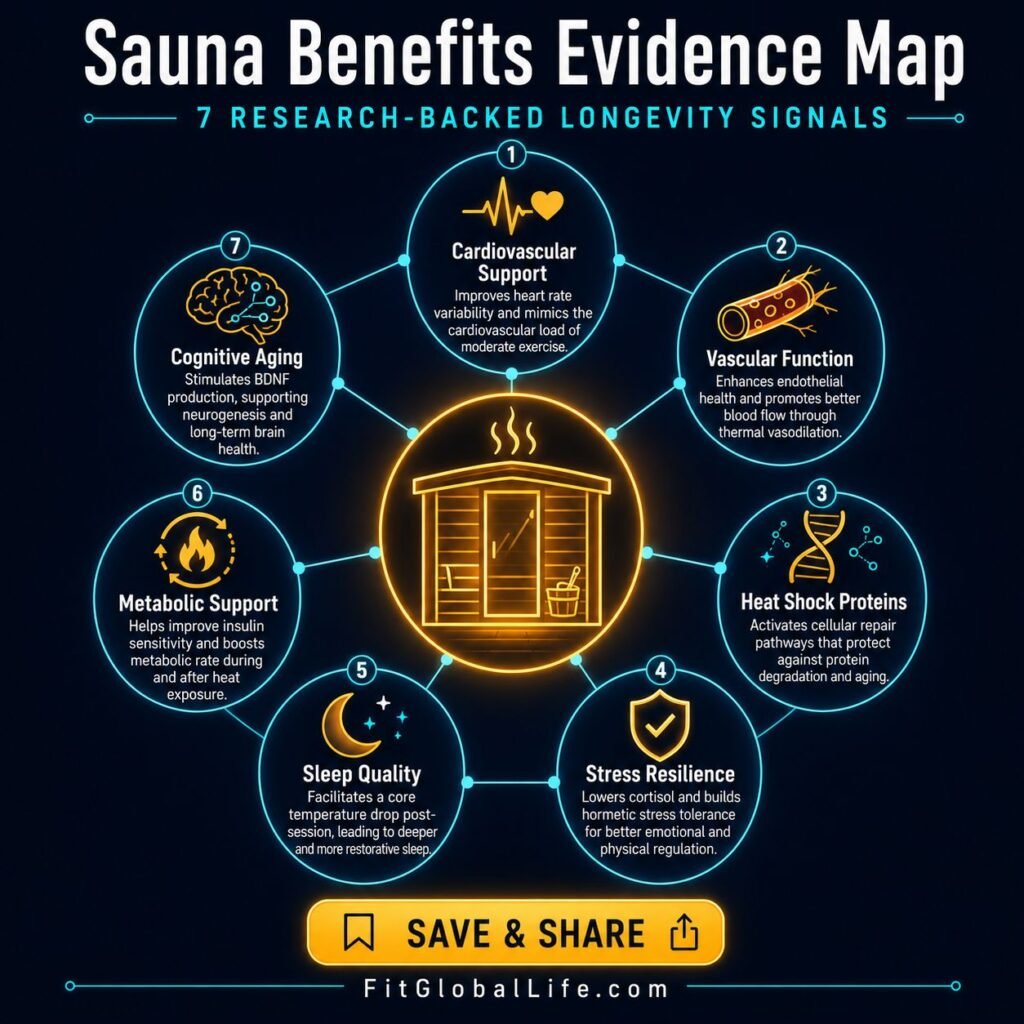
7 Powerful Reasons Sauna Sessions May Support Longevity
1. Sauna bathing trains the cardiovascular system without replacing exercise
One of the most compelling reasons the sauna has entered longevity protocols is its cardiovascular signal. Traditional Finnish sauna typically uses dry heat around 70-100°C, though many modern facilities run lower depending on design. As the body warms, circulation shifts, heart rate increases, and the vascular system dilates. In plain English, the heart and blood vessels are asked to respond to a controlled challenge.
The Finnish cohort data are famous because the relationship appeared dose-responsive: people who used the sauna more frequently tended to have lower cardiovascular and all-cause mortality risk than those who used it once weekly. But this is where responsible E-E-A-T writing matters. Frequent sauna users may also have different lifestyles, social patterns, income, stress levels, or health behaviors. Researchers adjusted for many factors, but observational studies cannot erase every confounder. The honest takeaway is not “sauna prevents death.” The honest takeaway is: regular sauna use is associated with promising cardiovascular outcomes and deserves a place in a broader heart-health lifestyle.
For readers already building a base of longevity habits such as daily walking, resistance training, regular sleep, and high-quality nutrition, the sauna can serve as the “quiet session” that supports vascular flexibility. It is especially useful for people who need a relaxing recovery tool on days when intense exercise would be too much.
2. Heat stress may activate cellular defense systems
At the cellular level, heat is not just warmth; it is information. When cells experience thermal stress, they can increase production of heat shock proteins, a family of proteins involved in protecting and refolding damaged proteins. In longevity language, this matters because aging is partly a story of declining repair capacity, accumulated cellular damage, and reduced resilience.
An NIH clinical review notes that sauna facilities often make broad claims. Still, the clinical evidence is strongest when claims remain specific to cardiovascular responses, relaxation, pain-related outcomes, and some markers of physiological adaptation. Heat shock proteins are biologically plausible, but the human translation is still being studied. So the sharp version is this: sauna may stimulate protective pathways, but we should not oversell a molecular mechanism as guaranteed life extension.
This is also why sauna pairs well with mitochondrial recovery. Mitochondria are sensitive to stress, inflammation, nutrient status, oxygen demand, and recovery. Heat exposure may be one small signal within a broader cellular energy environment. The protocol is more effective when heat is paired with protein adequacy, mineral sufficiency, sleep, and moderate aerobic activity.
3. Regular sauna use may support blood pressure and vascular function
Blood pressure is not just a number at the clinic; it is a daily measure of vascular load. A sauna session can temporarily lower blood pressure because heat dilates blood vessels. Over time, repeated heat exposure may support vascular function, though the exact magnitude and durability vary by population and protocol.
This benefit is also where caution is most important. If someone already has low blood pressure, is dehydrated, takes blood-pressure medication, uses diuretics, or feels faint easily, the sauna can become too much. A good protocol includes a pre-session check-in: Have I eaten enough? Am I hydrated? Did I drink alcohol? Did I train hard today? Do I feel sick? Longevity is not built by ignoring warning lights.
Readers who care about nervous system stability may recognize the connection to vagus nerve regulation. Heat can raise physiological arousal during the session, then help some people downshift afterward as they cool. The value is in the full curve: warm stress, calm exit, gradual cooling, hydration, and rest.
4. Heat exposure can support recovery, pain relief, and mobility
People often fall in love with sauna for a less glamorous reason: they feel better afterward. Warmth increases skin blood flow, relaxes muscle tone, and can make stiff joints feel less stubborn. For active adults, the sauna can become a bridge between hard training and restorative sleep. For desk-bound professionals, it can feel like a reset button for neck, back, and hip tension.
This does not mean every pain condition needs heat. Acute injuries, inflammatory flares, dizziness, fever, and certain medical conditions may require a different approach. But for general stiffness and recovery, heat is practical. It lowers the barrier to movement. A person who feels looser after the sauna may be more willing to stretch, walk, or do gentle mobility work. That second-order effect matters.
The best recovery protocol is not just sauna; it is sauna plus easy movement, breathing, hydration, and sleep. FitGlobalLife readers who enjoyed the logic of a breathwork reset can use 2 to 4 minutes of slow nasal breathing after the heat session. This turns the sauna from a “hot room” into a deliberate recovery ritual.
5. Sauna rituals may help the nervous system downshift
Longevity is not only about biomarkers; it is also about how often the body feels safe enough to repair. Chronic stress keeps people in a high-alert state. The sauna ritual can become a boundary: phone away, heat on, attention inward, breath slower, body present. In a culture where attention is being auctioned every five seconds, that is not small.
There is also a behavioral advantage. Sauna creates friction against multitasking. You cannot comfortably answer 48 messages in a traditional sauna. You sit. You sweat. You notice. This makes the practice a cousin of mindfulness, but with a physical anchor. For some readers, especially those who struggle with seated meditation, the body-first approach is easier.
This naturally links to silent meditation retreats and the broader shift toward low-noise wellness. The future of elite recovery may look less like more stimulation and more like subtracting noise. Heat, silence, darkness, breath, and sleep are not flashy. That is partly why they work.
6. Better sleep may come from a smarter cool-down
A sauna session raises body temperature, but the cooling phase afterward may help some people feel sleepy. Sleep onset is associated with a drop in core body temperature. A warm bath or sauna in the evening can create a temperature contrast: heat exposure first, then gradual cooling, then bed. Done well, this feels like the body receiving a clear signal that the day is ending.
Timing matters. For some people, a sauna too close to bedtime is relaxing. For others, it is stimulating. A practical starting point is to finish the session 60-120 minutes before sleep, hydrate, shower, cool gradually, and keep lights low. This can pair with bedroom architecture for REM sleep and circadian lighting because temperature and light are two major environmental cues.
The sleep angle is also where people should stop chasing extremes. A 15-minute sauna that improves sleep is better than a 35-minute heroic session that leaves you thirsty at 2 a.m. Longevity rewards repeatability. The body does not care that you looked intense on social media. The body cares whether the habit helped recovery.
7. Sauna use may complement brain-health habits
The brain benefits of sauna are intriguing but need careful language. A PubMed dementia study reported that more frequent sauna bathing was inversely associated with dementia and Alzheimer’s disease risk in middle-aged Finnish men. That is a meaningful signal, but not a prescription. It does not prove that sauna alone protects the brain, and the study population limits generalization.
Still, the connection is biologically plausible through cardiovascular health, inflammation, sleep, stress reduction, and social ritual. The brain is not floating separately from the body. Better blood flow, better sleep, better metabolic health, and lower chronic stress all support cognitive resilience. Sauna may be one habit that helps those systems coordinate.
For 2026 readers tracking AI-longevity data through wearables and dashboards, sauna is a useful reminder that data should serve lived recovery. If your HRV crashes, sleep gets worse, and headaches appear after sauna, the protocol is not “working” just because a longevity influencer said heat shock proteins. Your body gets a vote.
The 2026 Sauna Longevity Protocol: A Practical Weekly Blueprint
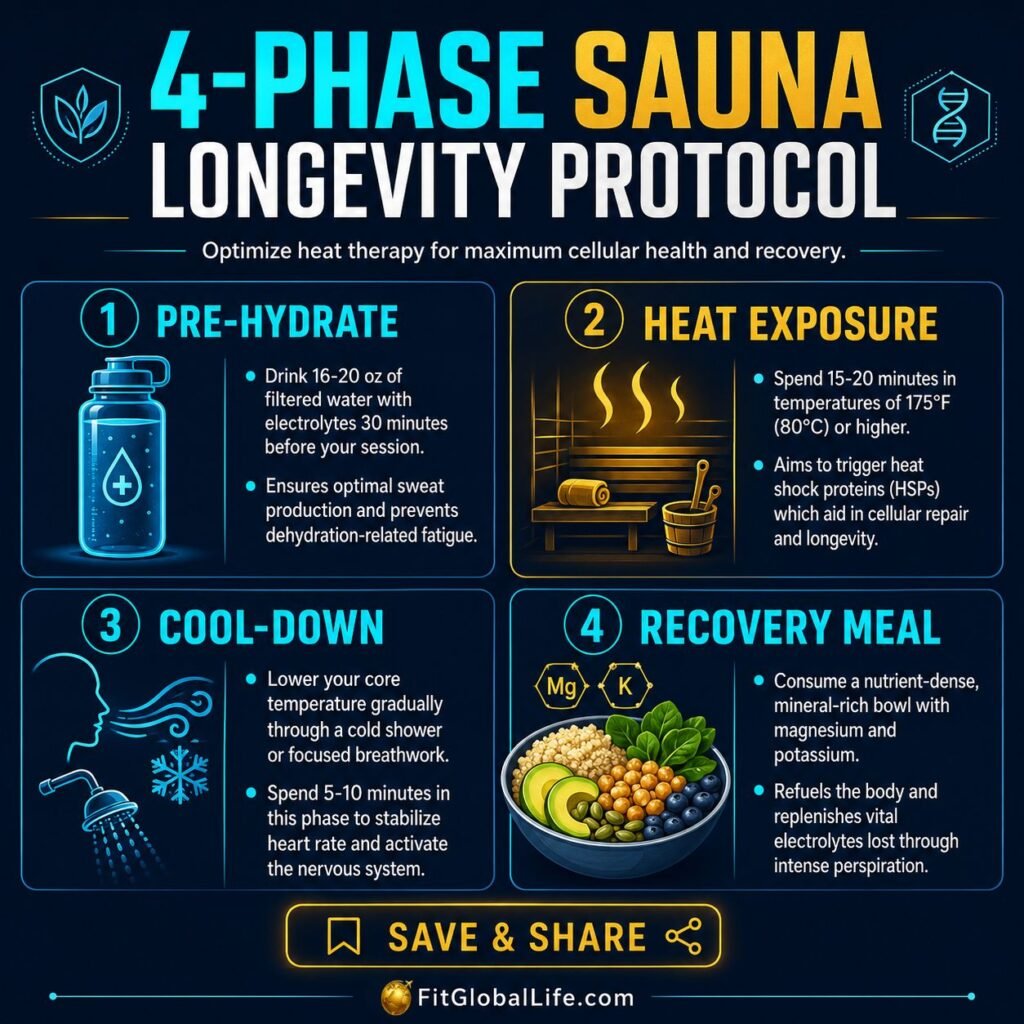
The safest way to build a sauna habit is progressive overload, just like training. Start with less than you think you need. Build only when your body responds well. Track simple signals: sleep quality, resting heart rate, dizziness, thirst, mood, exercise recovery, and energy the next morning. A protocol should make your week easier to recover from, not harder.
Beginner, intermediate, and advanced session design
Beginner protocol: 1-2 sessions per week, 8-12 minutes each, comfortable heat, no cold plunge, no alcohol, and a full cool-down. This is for people new to sauna, those returning after a long break, or those unsure about their heat tolerance. The win is consistency, not intensity.
Intermediate protocol: 2-4 sessions per week, 12-20 minutes each, with one optional second round after a full cool-down. This is where many people find the sweet spot. It supports relaxation and recovery without turning the sauna into another performance sport.
Advanced protocol: 4-6 sessions per week, 15-25 minutes depending on heat level, conditioning, and recovery. Advanced does not mean reckless. It means the person has adapted, knows their warning signs, hydrates well, and does not combine sauna with dehydration, illness, or alcohol.
Weekly protocol table
| Level | Frequency | Session length | Best for | Notes |
| Beginner | 1-2x/week | 8-12 min | New users, older adults, returners | Use lower bench, cool slowly, no cold plunge. |
| Intermediate | 2-4x/week | 12-20 min | Healthy adapted users | Best balance of consistency and recovery for most people. |
| Advanced | 4-6x/week | 15-25 min | Experienced users with good tolerance | Avoid dehydration; monitor sleep, dizziness, and HRV. |
| Recovery day | 1 optional session | 10-15 min | Stress relief and mobility | Pair with breathwork, hydration, and early bedtime. |
For most readers, the intermediate pattern will be enough. More is not automatically better. A person training hard, sleeping poorly, or dealing with work stress may need fewer sauna sessions, not more. The protocol should bend around real life.
Hydration, minerals, and post-sauna recovery
Sweat is not just water. It contains sodium and other electrolytes, though amounts vary widely. After a longer or hotter session, plain water may not be enough for everyone. A practical recovery plan includes water, a pinch of salt or electrolyte drink when appropriate, mineral-rich meals, and avoiding alcohol. If you are fasting, dieting aggressively, or eating low-carb, be extra cautious because fluid and sodium shifts can be more noticeable.
This is where nutrition helps for heat adaptation. Protein helps repair tissue. Carbohydrates can support training recovery. Minerals support nerve and muscle function. Gut health matters too, because hydration and mineral absorption do not happen in a vacuum. Readers exploring microbiome health can think of sauna as one lifestyle stressor that needs a nourished internal environment.
Sauna vs Infrared Sauna vs Steam Room: Which One Fits Your Goal?
Not all hot rooms feel the same. Traditional Finnish sauna uses hot, dry air and often brief bursts of steam from water on rocks. An infrared sauna uses radiant heat to warm the body at lower air temperatures. Steam rooms are moist heat, which can make you feel more intense when you breathe and sweat because humidity doesn’t allow for evaporation. The best choice depends on tolerance, access and goal.
| Heat format | Typical feel | Potential strengths | Best caution |
| Traditional Finnish sauna | Hot, dry air; intense but familiar | Strongest epidemiological evidence base; clear cardiovascular stimulus | Start short and avoid alcohol or dehydration. |
| Infrared sauna | Lower air temperature; radiant heat | Often easier for beginners; may feel gentler | Evidence base is growing but not identical to Finnish sauna studies. |
| Steam room | Humid heat; heavy sweating sensation | May feel soothing for some airways and skin | Humidity can feel harder to tolerate; exit early if breathing feels strained. |
| Hot bath / hot tub | Water immersion heat | Accessible and relaxing; body warms evenly | Water pressure can increase cardiac workload; use extra caution with heart conditions. |
Most long-term epidemiological evidence comes from the traditional Finnish sauna, so it is the safest evidence anchor. Infrared sauna may be useful and comfortable, but the evidence base is not identical. Steam rooms can be pleasant, especially for people who enjoy humidity, but some find them harder to tolerate. The practical rule: choose the format you can use consistently and safely.
For travelers, heat rituals vary by culture: Finnish sauna, Turkish hammam, Korean jjimjilbang, Japanese sento, Russian banya, and modern wellness clubs. A respectful traveler does not treat these spaces like content props. If you visit biohacking retreat-culture destinations, learn the etiquette before you go. Heat is often social, sacred, or deeply local—not just a backdrop for a towel selfie.
Who Should Be Careful or Skip Sauna Sessions?
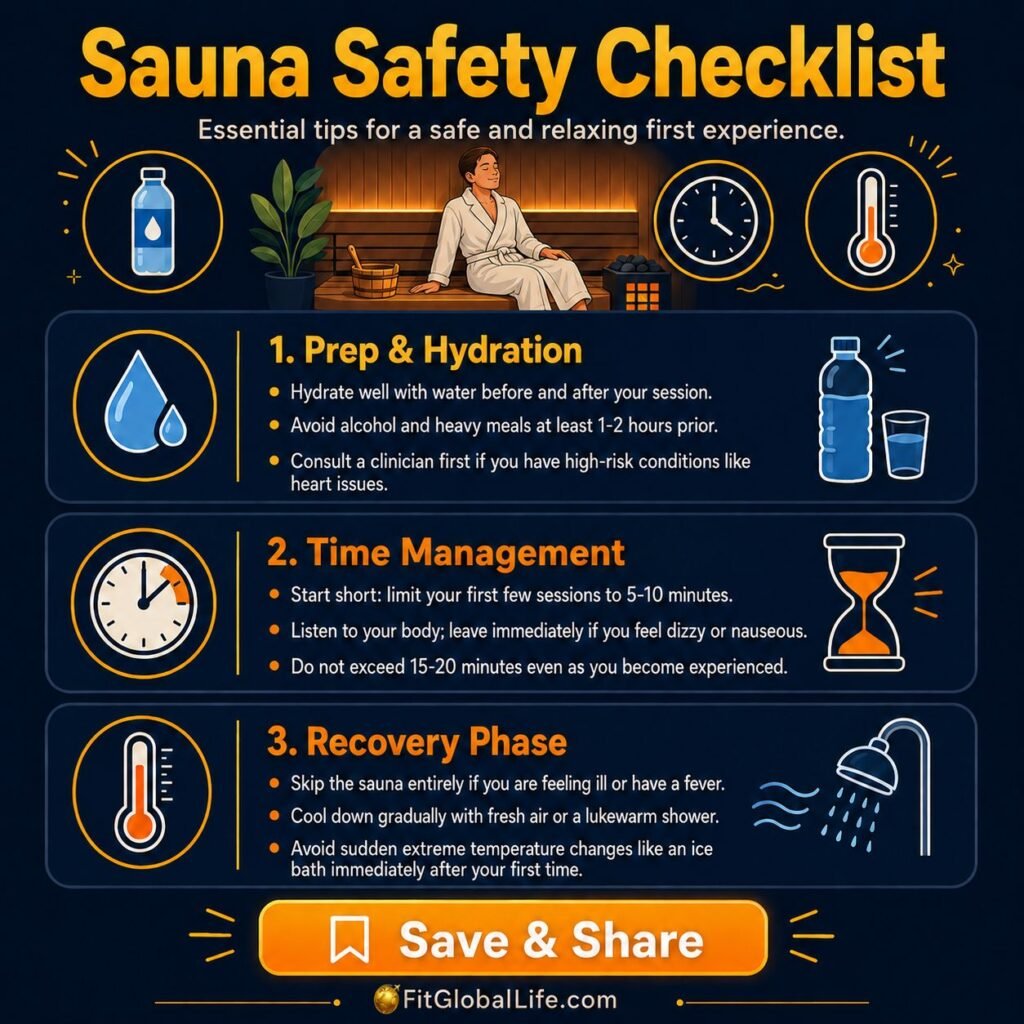
Sauna is safe for many healthy adults when used sensibly, but it is not automatically safe for everyone. People with unstable heart disease, recent heart attack or stroke, uncontrolled hypertension, severe aortic stenosis, frequent fainting, severe dehydration, fever, acute infection, pregnancy, or medications that impair sweating or blood-pressure regulation should consult a qualified clinician before using a sauna. This is not fearmongering. It is basic risk management.
The UCLA Health sauna safety guidance recommends hydration, shorter starting sessions, and avoiding alcohol before or during sauna use. That advice sounds boring until you remember that most wellness injuries happen when basic rules are ignored. Alcohol plus heat is a terrible duo because it can worsen dehydration, judgment, and blood-pressure instability.
Older adults should be especially conservative at the start. Heat tolerance changes with age, medications, hydration status, and cardiovascular conditioning. The right protocol may be 5-10 minutes, seated low, with a slow exit and no cold plunge. That is not “weak.” That is intelligent. Longevity is the art of still being in the game later.
The Biggest Sauna Mistakes That Make the Protocol Backfire
Mistake 1: Treating sauna like a suffering contest
The goal is not to survive the longest session. The goal is to create a recoverable stress signal. If you feel dizzy, nauseated, confused, chilled, or unusually weak, leave. Sit down. Cool gradually. Hydrate. The internet may reward extremes, but your vascular system has no interest in your personal brand.
Mistake 2: Combining sauna with alcohol
This is the classic “sounds relaxing, behaves badly” mistake. Alcohol can increase dehydration risk and impair judgment. It also makes it easier to miss early warning signs. If sauna is part of your longevity protocol, keep it clean. Use the session after training, before a calm evening, or as part of a recovery day—not as an after-party accessory.
Mistake 3: Using cold plunges before you are adapted
Hot-cold contrast can feel amazing, but it is not mandatory. Cold shock sharply increases breathing, heart rate, and blood pressure. For some people, especially those with cardiovascular concerns, that is not a cute little wellness moment. Build heat tolerance first. Add contrast only when appropriate, and do it gradually. Readers interested in temperature extremes can compare this with cold-exposure retreats where supervision and context matter.
Mistake 4: Ignoring sleep feedback
A sauna session that makes sleep worse is not helping your longevity protocol. Move it earlier, shorten it, lower the temperature, or reduce frequency. Your sleep report is not decoration. It is feedback.
Mistake 5: Believing that sauna cancels a chaotic lifestyle
Sauna cannot erase a diet built on ultra-processed snacks, chronic sleep debt, zero movement, and endless stress scrolling. It can support a healthy lifestyle, not launder a broken one. In that sense, sauna belongs beside digital detox habits and simple recovery routines. Less chaos in, better adaptation out.
How to Stack Sauna With Sleep, Nutrition, Breathwork, and Movement
The highest-value sauna protocol is not isolated. It is stacked. Here is a practical weekly rhythm: strength training two to three times, Zone 2 cardio two to four times, sauna two to four times, mobility most days, consistent sleep timing, and one intentional low-stimulation block. This is not glamorous. It is effective because it addresses multiple aging pathways: heart and blood vessel health, muscle mass, metabolic health, nervous system recovery, tissue repair.
A sauna can be a good way to recover after exercising. Keep it moderate if the workout was intense. After a light cardio day, it may feel restorative. On rest days, the sauna can anchor a quiet evening. Before bed, use a longer buffer and dim the light afterward. Pairing sauna with the science of self-care means choosing the smallest repeatable ritual that improves your next day.
Nutrition should not be treated as an afterthought. A mineral-rich meal after a sauna can include vegetables, legumes, or fermented foods, high-quality protein, and adequate fluid intake. If you sweat heavily, include sodium. If you use a sauna in the morning, do not skip breakfast if you feel shaky. The protocol should be responsive, not robotic.
For creators and professionals, the sauna can also become an attention boundary. No phone. No notes app. No productivity podcast. Just heat, breath, and awareness. In a world obsessed with optimization, the most radical optimization may be letting the nervous system stop performing.
A useful “minimum effective dose” stack looks like this: 12-15 minutes in the sauna, five minutes of quiet cooling, 500-750 ml of water, a mineral-aware meal, two minutes of nasal breathing, and lights dimmed if it is evening. Repeat two to three times per week for four weeks, then reassess. Did sleep improve? Did soreness drop? Did resting heart rate stay stable? Did energy improve? If yes, continue. If no, adjust.
What the Research Can and Cannot Say
A trustworthy sauna article has to separate evidence from enthusiasm. The strongest sauna data are observational, meaning researchers followed people over time and looked for patterns between sauna use and outcomes. These studies are valuable because they can include large groups and long follow-up periods. They are also limited because people who use saunas frequently may differ from people who do not. They may be more socially connected, more active, wealthier, less stressed, or more embedded in a culture where sauna is a normal recovery ritual rather than a luxury accessory.
Randomized controlled trials can answer more causal questions, but they are harder to run for long-term outcomes like cardiovascular mortality, dementia, or healthspan. You cannot easily randomize thousands of people to decades of sauna use and control every part of their lives. This is why the best interpretation is layered: use cohort studies for long-term signals, short-term trials for physiological mechanisms, and personal feedback for individual tolerance.
This is also why the phrase “secret to longevity” should be read as editorial framing rather than literal medical certainty. Sauna is not a secret cure. The “secret” is that heat can be a structured stressor in the same family of adaptive practices as exercise, fasting windows, breathwork, and cold exposure. The body responds to signals. Some signals are destructive when too large and adaptive when properly dosed. That is the entire hormetic game.
For FitGlobalLife readers, the useful question is not “Will sauna make me live forever?” The useful question is “Can sauna become a low-friction habit that improves my recovery, sleep, cardiovascular conditioning, and stress rhythm?” That question is practical enough to test. Give it four weeks, keep the dose modest, and track real signals instead of chasing mythology.
A 30-Day Sauna Longevity Protocol Ramp-Up
Week one is the nervous system introduction. Use one or two short 8-10-minute sessions. Sit lower in the sauna if the heat feels intense. Breathe through the nose if possible. Leave while you still feel good. Cool down slowly for at least five minutes. Drink water. Do not add a cold plunge. Do not stack it after alcohol or severe sleep deprivation. The goal of week one is to teach your body that heat is manageable.
Week two is consistency. Move to two 10-15-minute sessions if week one felt easy. Add a short post-sauna walk or gentle stretching. Notice how your sleep behaves. Some people sleep more deeply after a sauna; others need the session earlier in the evening. Adjust timing before you adjust intensity. This is where most people miss the point: the protocol is not the written plan, it is the plan plus feedback.
Week three is integration. Add a third session only if recovery is strong. Try one session after an easy cardio day, one after a mobility or rest day, and one in the evening before a low-stimulation night. Compare the effects. You may discover that sauna after intense lifting feels too draining, while sauna after Zone 2 work feels perfect. Or the opposite. Your biology is not a spreadsheet template.
Week four is personalization. Choose the frequency that improved your life without adding stress. For many people, that will be two or three sessions per week. For some, it will be one. For highly adapted users, it may be four or more. The winning dose is the one you can sustain without sleep disruption, dehydration, headaches, or obsessive tracking. Longevity habits should make you more alive, not more neurotic.
At the end of 30 days, review five signals: sleep quality, morning energy, training recovery, stress reactivity, and hydration comfort. If at least three improved and none worsened, the sauna is likely a keeper. If the results were mixed, reduce the dose. If you feel worse, stop and reassess with a clinician if needed. This is the anti-hype framework: test, listen, adjust.
The Social Side of Heat: Why Sauna Works Better as a Ritual
One underrated reason sauna may matter for longevity is that it can become a social ritual. In Finland and other heat-bathing cultures, the sauna is not always a solitary chamber for optimization. It can be a place for family, friendship, quiet conversation, or respectful silence. That matters because social connection is one of the most consistent lifestyle pillars associated with healthy aging. A healthy habit that also reduces loneliness is doing more than warming skin.
Modern wellness sometimes turns every practice into a private performance: track it, score it, post it, optimize it, monetize it. Sauna invites a different rhythm. Sit with people. Say less. Let the body settle. Share water afterward. Leave your phone outside. This may sound soft, but nervous systems are social. A calm room with trusted people can change the entire meaning of the heat stress.
That is why the future of sauna longevity protocols may not be limited to luxury clubs and biohacking campuses. The more interesting future is community recovery: apartment saunas, wellness centers, retreat spaces, gyms, and hotels that teach safe heat etiquette instead of selling extreme suffering. Heat becomes more powerful when it is accessible, repeatable, and culturally respectful.
Conclusion: Heat Is a Tool, Not a Miracle
Sauna earned its place in the 2026 longevity conversation because it is simple, ancient, and biologically interesting. It can challenge the cardiovascular system, support relaxation, improve perceived recovery, and possibly contribute to long-term health when practiced consistently and safely. The evidence is promising, especially for cardiovascular associations, but it is not a blank check for exaggerated claims.
The mature view is this: a sauna longevity protocol works best as part of a larger life architecture. Move your body. Build muscle. Protect sleep. Eat mineral-rich food. Manage attention. Regulate stress. Use heat as a deliberate dose of discomfort that helps the body remember how to adapt.
If you are healthy, start small. If you have medical risks, ask your clinician. If you feel worse, adjust. The secret is not suffering in silence; the secret is listening early enough that your body does not need to shout. Heat can be a teacher. Just do not turn the classroom into a barbecue.
FAQ
Most beginners can start with one to two sessions per week and build toward two to four sessions if recovery is good. Some Finnish observational studies show stronger associations at higher frequencies, but more is not automatically better for every person.
A practical range is 8-12 minutes for beginners and 12-20 minutes for many adapted users. Session length depends on temperature, humidity, personal tolerance, hydration, and medical status.
Infrared sauna may be useful and more comfortable for some people, but much of the strongest long-term research comes from the traditional Finnish sauna. Choose the format you can use consistently and safely.
No. Sauna can substitute some of the cardiovascular benefits of moderate exercise but not resistance training, aerobic conditioning, balance, mobility or the metabolic benefits of movement.
Not necessarily. The hot-cold contrast can be stressful, especially for those with blood pressure or cardiovascular issues. Build heat tolerance first and seek medical guidance if you have risk factors.
Disclaimer
This article is for educational and editorial purposes only and does not replace medical advice, diagnosis, or treatment. Sauna use may be inappropriate for people with certain cardiovascular, neurological, pregnancy-related, medication-related, or heat-sensitivity risks. Speak with a qualified healthcare professional before starting sauna sessions if you have a medical condition, take medication, are pregnant, or have any concerns about heat exposure. Stop immediately if you feel dizzy, faint, confused, nauseated, unusually weak, or unwell.