
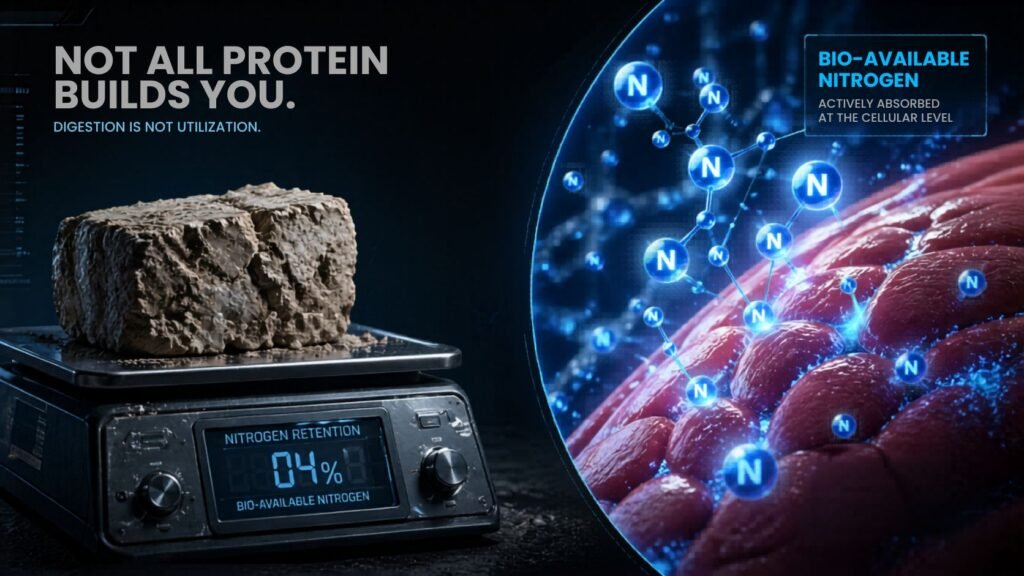
For decades, the global fitness and wellness industry has been stuck in a simple, mathematically flawed way of thinking: “Eat more protein to build more muscle.” If you go to any gym or open any health-tracking app anywhere in the world, you'll see people obsessively counting their macronutrients and trying to reach the arbitrary goal of one gram of protein per pound of body weight. They eat a lot of chalky whey drinks, highly processed protein bars, and too much meat because they think that eating a lot of food will help their cells expand.
But as an investigative editor who works in the high-performance health field of 2026, I have seen clinical bio-data that breaks this common myth. Thousands of individuals who meticulously hit their protein macros are still experiencing muscle wasting, chronic fatigue, heavy kidney loads, and severe digestive distress. Why? Because counting grams of protein is like measuring fuel by the gallon without ever checking whether your engine has the spark plugs required to burn it.
The era of blind macronutrient counting is officially dead. The new frontier of human optimization rests on a single, vital concept: Bio-Available Nitrogen. This isn't just another bio-hacking buzzword designed to sell supplements; it is a fundamental biological reality that is completely rewriting how elite athletes, longevity experts, and everyday high-performers approach human tissue repair. If you do not understand your bio-available nitrogen status, your high-protein diet might actually be accelerating your biological aging. In this comprehensive guide, we will dismantle the old protein myths and show you exactly how to rebuild your body from the cellular level up.
The 2026 Shift: Why “Grams of Protein” is a Flawed Metric
To understand why we must look beyond standard protein metrics, we need to examine the chemical structure of macronutrients. Carbohydrates and fats are relatively simple; they are composed entirely of carbon, hydrogen, and oxygen. Protein is unique because it contains a fourth, highly volatile element: nitrogen. It is this nitrogen that serves as the primary building block for human muscle tissue, neurotransmitters, DNA, and immune cells.
When you eat a piece of grilled chicken, a bowl of lentils, or a scoop of whey powder, you are not absorbing “protein” directly into your bloodstream. Your digestive system—starting with hydrochloric acid in your stomach and ending with proteolytic enzymes in your small intestine—must break down that complex protein molecule into individual amino acids. Only then can these isolated amino acids cross the intestinal barrier. The mainstream fitness industry assumes this biological process operates at 100% efficiency. As any gastroenterologist will tell you, it absolutely does not.
The Nitrogen Illusion: What Supplement Companies Hide
Here is the closely guarded secret the multi-billion-dollar supplement industry actively avoids discussing: a large share of the protein you consume is never used for muscle protein synthesis (MPS). Instead, it undergoes a highly destructive metabolic process called deamination.
When your body cannot properly utilize a food's amino acid profile—because the protein quality is poor, your gut is compromised, or you lack the specific enzymes required—the liver steps in and removes the nitrogen from the amino acid. The remaining carbon skeleton is converted into glucose (sugar) for energy or stored directly as adipose tissue (fat).
The stripped nitrogen, meanwhile, converts to highly toxic ammonia. Your liver and kidneys must then work overtime to convert this toxic ammonia into urea via the urea cycle, which you eventually excrete in your urine. This metabolic burden is immense. According to researchers studying renal function at the National Institutes of Health (NIH), high-protein diets with poor assimilation rates significantly increase glomerular filtration rates, placing heavy strain on the kidneys over time.
This means you can easily consume 50 grams of standard protein from a cheap shake, but if the bio-available nitrogen yield is low, you are essentially eating expensive sugar while simultaneously stressing your renal system. As we've explored in our research on tracking our biological data to predict our health spans, the true markers of aging are intrinsically linked to how well we manage metabolic waste. A diet high in unusable protein is a recipe for accelerated cellular exhaustion.
What Exactly is Bio-Available Nitrogen?
Bio-available nitrogen refers to the exact, measurable amount of nitrogen from dietary protein that actually reaches your cells and is successfully synthesized into new human tissue. It is the critical difference between what you swallow and what you actually assimilate.
This metric accounts for several critical variables that the standard “gram” completely ignores. For instance, it evaluates the exact amino acid profile. Does the protein contain all essential amino acids in the exact ratios human DNA requires for synthesis? If one essential amino acid is missing, the entire chain breaks down, and the remaining amino acids are sent to the liver for deamination. It also takes into account digestive friction, which is how much energy and enzymes the body requires to break down protein connections.
Digestion versus cellular utilization
We need to make a clear difference between digestion and cellular use. A protein can be easily digested—especially in the form of highly processed isolates—passing through the digestive tract without causing bloating or discomfort. However, digestion alone does not guarantee that the body can effectively utilize the amino acids at the cellular level.
Protein quality, amino acid composition, and physiological state all influence how much of that protein is actually retained and used by the body. This is where the concept of nitrogen balance becomes critical. As explained in the FAO’s foundational work on protein and nitrogen metabolism, nitrogen balance is widely used as an indicator of whether the body is in an anabolic (building) or catabolic (breaking down) state.
- Positive nitrogen balance indicates tissue growth and repair
- Negative nitrogen balance reflects protein breakdown and loss of lean body mass
According to the WHO/FAO/UNU report on human protein requirements, maintaining a positive nitrogen balance depends not only on total protein intake, but also on how efficiently that protein is digested and utilized.
Simply consuming a lot of protein doesn't mean that your nitrogen balance will be good. A comprehensive examination of nitrogen balance technique indicates that protein quality, metabolic stress, disease, and training load significantly influence nitrogen retention.
The quality of protein is equally as essential as how much you eat. Research on protein digestibility and amino acid availability talk about new approaches to evaluate proteins, including DIAAS. These research reveal that not all proteins have the same physiological value, even if you eat the same amount of each.
When the body is under a lot of stress, it may stay in a catabolic condition even if it consumes enough or even a lot of protein. Research on metabolic stress and protein utilization shows that systemic factors can make it tougher for the body to use amino acids the right way.
This illustrates that modern diet has a huge problem: eating a lot of low-quality or poorly used protein doesn't necessarily help muscles develop or heal. Instead, it could cause the body to not hold onto nitrogen well and not get the best physiological results.
Why Bio-Available Nitrogen is the Best Way to Measure Muscle
The change in focus to bio-available nitrogen is revolutionary because it puts quality, gut health, and overall efficiency ahead of volume. The goal shifts from “eating a lot” to “not wasting anything.”
The Idea of Net Nitrogen Utilization (NNU)
In the cutting-edge field of functional nutrition, we use a clinical scale termed Net Nitrogen Utilization (NNU) to measure bio-available nitrogen. NNU tells us the exact percentage of a protein source that acts as an anabolic building block versus what becomes catabolic, toxic waste.
For context, let's look at the data. Human breast milk—the ultimate, evolutionarily perfected growth fluid—has an NNU of 99%. Whole, pasture-raised organic eggs sit at roughly 48% NNU. Meat, fish, and poultry hover around 32% NNU. This means that when you eat a premium grass-fed steak, nearly 68% of the protein is treated as waste, requiring significant cellular energy to process and excrete.
Most commercial whey protein isolates have an astonishingly low NNU, often dropping below 18%. This explains the rampant phenomenon of “protein bloat,” the dreaded “meat sweats,” and the chronic lethargy many fitness enthusiasts experience after a high-protein meal. They are fundamentally starving their cells of bio-available nitrogen while suffocating their digestive tract with metabolic garbage.
This idea is especially important for people who eat a lot of plant-based proteins. If you're a vegan or vegetarian, you need to know about NNU. Plants have strong defenses against amino acids in the digestive tract, such as anti-nutrients like phytic acid, lectins, and oxalates. This greatly reduces the amount of nitrogen they can use unless they are prepared correctly through traditional methods such as soaking, sprouting, or fermentation.
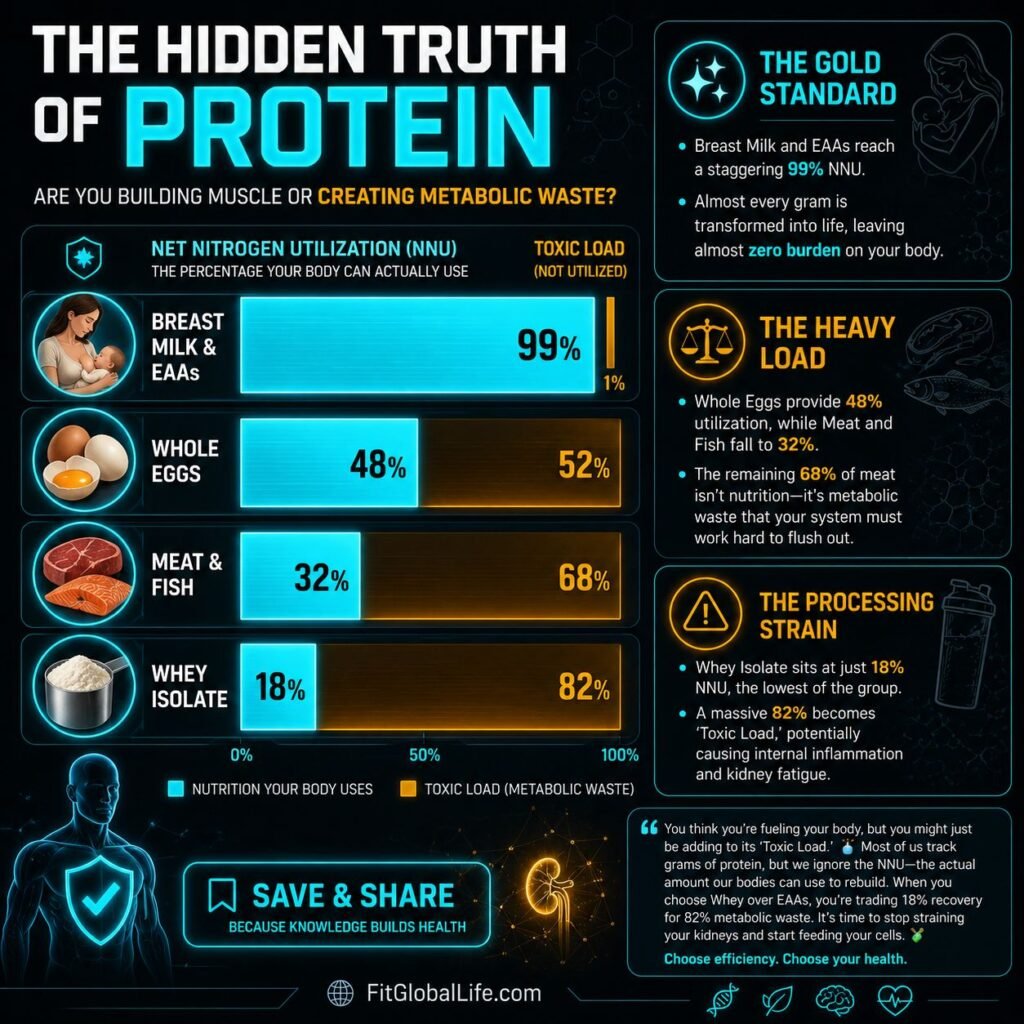 Are you eating muscle building blocks or just expensive metabolic waste?
Reducing Metabolic Waste and Kidney Load
By shifting your dietary focus to high-yield bio-available nitrogen, you achieve something remarkable: you can eat significantly less total dietary protein while building substantially more muscle.
When you prioritize foods and supplements that yield an exceptionally high NNU, you produce virtually zero metabolic waste. Your liver doesn't have to deal with toxic ammonia. Your kidneys don't have to filter excessive urea. This frees up massive amounts of systemic energy.
As I continually emphasize to my clients when discussing the importance of optimizing mitochondrial recovery and cellular energy, your mitochondria simply cannot produce optimal ATP (energy) if they are bogged down by cellular exhaust. Maximizing bio-available nitrogen clears the biological pathways, allowing your body to redirect energy from digestion and waste management directly into muscle repair, deep sleep, and immune defense.
7 Ways to Maximize Your Bio-Available Nitrogen Intake
Transitioning to a bio-available nitrogen framework requires abandoning the “more is better” mentality and adopting a “precision over payload” mindset. This is the final 2026 protocol for using nitrogen in the best way possible.
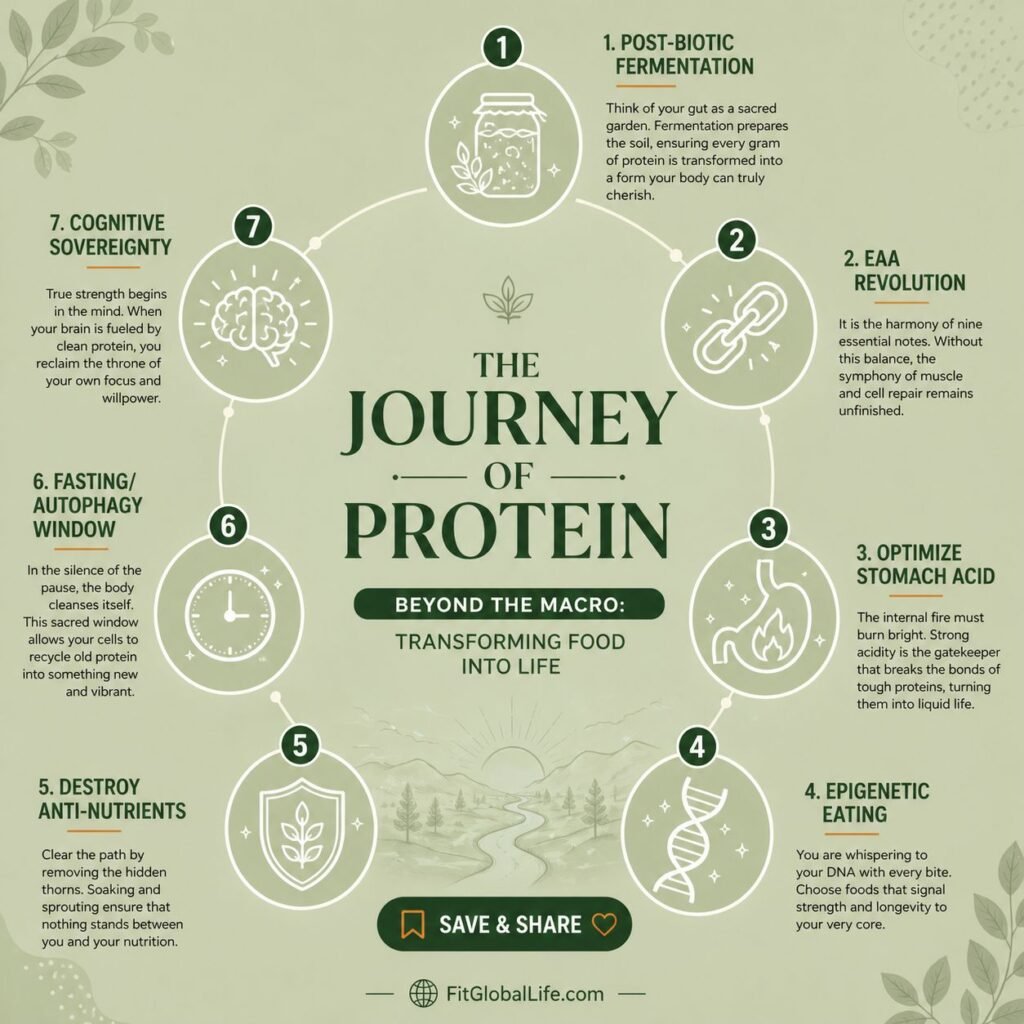 The protocol for zero-waste muscle hypertrophy.
1. Use Post-Biotic Fermentation. Your microbiome has a direct effect on your nitrogen salvage processes. If you have an imbalanced gut flora (dysbiosis), pathogenic bacteria will ferment undigested protein into toxic byproducts like putrescine and cadaverine. To optimize absorption, you must utilize post-biotic power for gut health. Consuming pre-digested, fermented proteins (like high-quality organic tempeh, natto, or kefir) means the bacteria have done the enzymatic heavy lifting outside the body, massively increasing the bio-available nitrogen before it even touches your lips.
2. The Essential Amino Acid (EAA) Revolution Instead of consuming intact proteins with low NNU, the longevity elite are turning to free-form Essential Amino Acids (EAAs) that are perfectly calibrated to human genetic requirements. Because they are already broken down into their simplest form, they require absolutely zero digestion. They bypass the stomach entirely and enter the bloodstream in under 20 minutes, offering a near 99% Net Nitrogen Utilization.
3. Optimize Stomach Acid (HCl) Production You cannot extract bio-available nitrogen without adequate stomach acid. Chronic stress, aging, and the over-prescription of antacids leave most adults severely deficient in Hydrochloric Acid (HCl). Without HCl, pepsinogen cannot convert to pepsin, meaning whole proteins remain intact and rot in the gut. Supplementing with Betaine HCl or utilizing bitter herbs before meals is a game-changer for protein assimilation.
4. Practice Epigenetic Eating Nitrogen utilization is not a one-size-fits-all equation. Tailoring your dietary inputs through epigenetic eating allows you to understand your specific genetic variants. Someone with a specific APOE gene variant, for example, may have a radically different nitrogen utilization profile for dairy proteins compared to someone with a different genetic makeup. Test, don't guess.
5. Destroy Plant Anti-Nutrients If you consume legumes, grains, or seeds for protein, you must neutralize the anti-nutrients. Sprouting your lentils, soaking your oats in an acidic medium (like apple cider vinegar), and pressure-cooking beans destroys the phytic acid that otherwise binds to the bio-available nitrogen, allowing your body to actually access the amino acids.
6. Timing and the Autophagy Window Shoving protein down your throat every two hours stops your body from entering autophagy—the cellular cleaning process. By compressing your eating window and allowing your gut to rest, you upregulate receptor sensitivity. When you finally break your fast with high-NNU foods, your body acts like a sponge, maximizing the uptake of bio-available nitrogen.
7. Master Cognitive Sovereignty Around Food Digestion is entirely dependent on your nervous system. If you eat while stressed, your body diverts blood away from the gut, shutting down enzyme production. By maintaining cognitive sovereignty under stress and eating in a parasympathetic (rest-and-digest) state, you chemically alter how your body receives and processes nitrogen.
Conclusion: The Sovereign Step Forward
The days of mindlessly scooping processed powder into a plastic shaker bottle are officially over. We are entering an era of absolute biological precision. Muscle hypertrophy, extreme longevity, and elite cognitive performance in 2026 are not awarded to those who consume the most mass; they are awarded to those who waste the least. By taking sovereign control of your personal health data, abandoning the outdated “grams of protein” metric, and adopting a strict, uncompromising focus on bio-available nitrogen, you will save your kidneys, optimize your cellular energy, and unlock a level of physical vitality that standard macronutrient tracking could never provide. The future of muscle isn't about eating more; it's about absorbing better.