
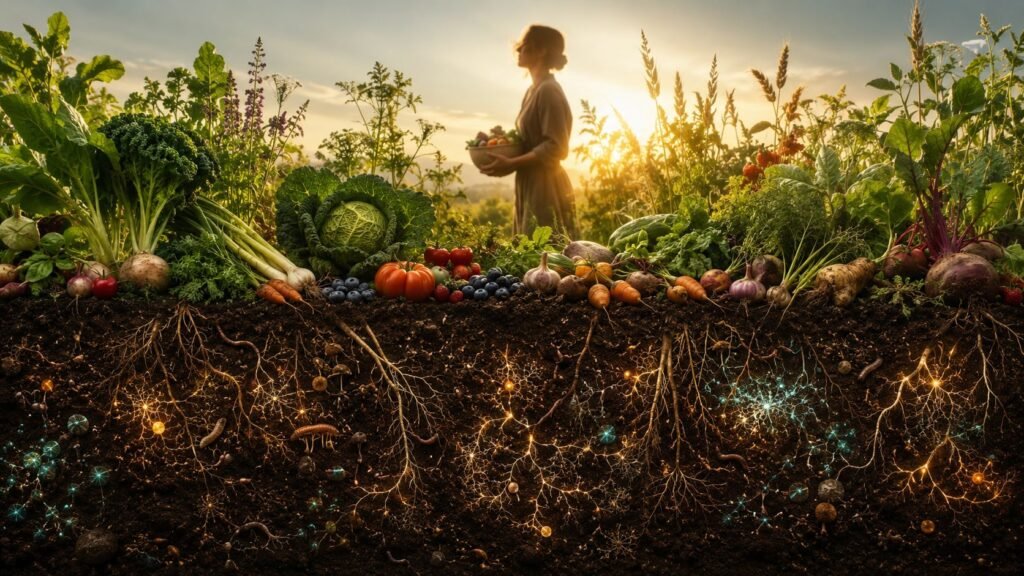
Most people think vitamin intake begins at the grocery store, the supplement aisle, or the nutrition label printed on the back of a food package. But the story starts much earlier. It begins beneath the crop, beneath the roots, beneath the farmer’s boots, in the living architecture of regenerative soil. If the soil is biologically alive, mineral-rich, covered, rooted, and diverse, the food above it has a better chance of becoming more than calories in a nice outfit.
That may sound poetic, but it is deeply practical. Your spinach does not manufacture minerals out of nowhere. Your carrots do not become nutrient-rich by aesthetic confidence alone. Tomatoes do not become vibrant simply because they look good under supermarket lighting. Plants depend on soil chemistry, microbial life, water cycles, organic matter, root structure, mineral availability, seed genetics, harvest timing, and ecological stress signals. When that underground system weakens, food can still look normal while quietly losing nutritional complexity.
This is where modern nutrition often gets awkward. We are excellent at counting calories, protein grams, carbohydrates, supplement dosages, and wearable data. We are less fluent in asking where those nutrients came from, how they entered the plant, and whether the agricultural system that produced them is rebuilding or depleting the biological foundation of food. A food label can tell you what should be present. Soil health helps explain why the real nutrient story can vary.
Globally, micronutrient intake is already a serious issue. A 2024 analysis in The Lancet Global Health estimated widespread inadequacy in the intake of several essential micronutrients, including calcium, iodine, iron, vitamin E, vitamin C, folate, riboflavin, and vitamin B6. The study estimated especially high global inadequacy for iodine, vitamin E, calcium, and iron when fortification was not included. In plain English: the world is not just struggling with too much cheap energy from food; it is also struggling with too little nutritional depth. See the global micronutrient inadequacy data for the broader context.
That is why regenerative soil deserves a seat at the nutrition table. Not as a magic cure. Not as a trendy label. Not as another expensive phrase placed on packaging to make kale feel like it went to private school. But it is a serious framework for understanding why soil health, crop diversity, microbial ecology, and food quality are connected.
If you already care about whole-food eating rules that go beyond ultra-processed convenience, this article takes the next step: not just “eat whole foods,” but asks whether those foods come from a living system capable of producing nutrient-dense ingredients, because the future of nutrition may be not only personalized but also ecological.
Why Regenerative Soil Belongs in a Nutrition Conversation
For decades, nutrition advice has mostly focused on the eater: eat more vegetables, reduce added sugar, avoid excessive refined carbohydrates, consume enough protein, increase fiber, check vitamin D levels, and maybe take a multivitamin if your diet has gaps. That advice is not useless. It is just incomplete. It treats the eater as the beginning of the story, when the eater is actually downstream from a field, a seed, a water cycle, a farmer, and a soil ecosystem.
A carrot is not a fixed nutritional object. A tomato is not a spreadsheet cell. A wheat kernel is not identical across farms, climates, seed varieties, harvest windows, storage systems, and soil conditions. Food composition databases are useful, but they are averages. USDA FoodData Central is an essential resource for nutrient profiles. Yet, even official databases represent food categories rather than the exact biological history of every apple, leaf, tuber, or grain in your kitchen.
This matters because vitamin intake is not only about what you choose. It is also about what the food contains by the time it reaches you. The nutrition label can tell you what is expected. Soil health helps explain why food can vary. Two vegetables with the same name can carry different stories, depending on how they were grown, harvested, transported, stored, and prepared.
A widely cited 2004 study by Donald Davis and colleagues compared USDA food composition data for 43 garden crops between 1950 and 1999 and reported apparent declines in several nutrients. The authors discussed possible causes, including changes in cultivated varieties, yield-focused breeding, and agricultural practices. It does not prove that every modern crop is nutritionally inferior. Still, it raises a useful question: what happens when food systems prioritize yield, shelf life, uniformity, and speed over biological richness? The paper is available through PubMed’s summary of nutrient changes in garden crops.
Regenerative soil enters this conversation because it asks a different question. Instead of only asking, “How much food can this acre produce?” it also asks, “Can this acre become more alive over time?” That shift is enormous. In conventional nutrition thinking, food is often separated from ecology. In regenerative nutrition thinking, food quality is inseparable from the landscape that produced it.
This is especially relevant for readers who already think about the mineral crisis behind modern healthy diets. Minerals are not decorative nutrients. Magnesium, zinc, selenium, iron, iodine, copper, calcium, and potassium influence energy metabolism, thyroid function, oxygen transport, immunity, muscle contraction, neurological function, and antioxidant defense. Vitamins and minerals do not work in isolation either. Vitamin C supports non-heme iron absorption. Magnesium participates in hundreds of enzymatic reactions. Zinc supports immune and cellular processes. Nutrients are a network, not a solo act.
So when soil systems are depleted, compacted, eroded, chemically overloaded, biologically simplified, or stripped of organic matter, the conversation about nutrition becomes bigger than personal discipline. Your plate is downstream from a farm system. That is the tea, but with compost.
The Hidden Vitamin Problem: Overfed, Yet Under-Nourished
Modern food culture has a strange contradiction. Many people consume more calories than they need, yet still fall short on essential micronutrients. This condition is often described as hidden hunger: inadequate intake of vitamins and minerals, even when energy intake is sufficient. It can happen in a person eating mostly cheap, refined foods, but it can also happen in people who think they eat “clean” while repeating the same narrow food pattern every week.
The World Health Organization’s micronutrient overview notes that micronutrient deficiencies can have serious health consequences. Iron, folate, vitamin B12, and vitamin A deficiencies are especially important in global health conversations. The point is not to panic every reader into buying supplements; the point is to recognize that micronutrients are not optional bonus points. They are the metabolic infrastructure.
The 2024 Lancet Global Health modeling analysis estimated that more than half of the global population had inadequate intake of several key micronutrients. Again, intake inadequacy is not the same as clinical deficiency. But the direction is clear: modern diets are not reliably delivering the micronutrient density humans need. When a society has calories everywhere and still struggles with nutrients, something upstream is broken.
Several forces collide. Ultra-processed foods dominate many diets. Affordability shapes choices. Many people eat too few legumes, vegetables, fruits, nuts, seeds, herbs, fermented foods, and minimally processed animal-source foods. Supply chains prioritize durability and convenience. Crops can vary in nutrient density based on variety, season, soil, farming practice, harvest timing, storage, and preparation.
That last point is the one wellness culture often misses. It is easy to say, “Eat more vegetables.” It is harder to ask whether those vegetables were grown in soil with enough organic matter, microbial diversity, trace minerals, and root interactions to support dense nutrition. The advice is not wrong; it simply needs a deeper layer.
This is why the future of nutrition should combine personal food choices with ecological literacy. A plate of colorful plants is a good start. But a plate of colorful plants from biologically active soil may be a stronger long-term goal. It does not require food purity paranoia. It requires curiosity. Instead of asking only, “Is this food healthy?” ask, “What system produced this food?” That question changes everything.
What Regenerative Soil Actually Means
Regenerative soil is not dirt with better branding. Soil is a living system made of minerals, organic matter, water, air, roots, fungi, bacteria, protozoa, nematodes, arthropods, earthworms, and countless interactions most of us never see. Soil is not an inert container for plants. It is an active biological interface where geology, climate, microbes, roots, water, carbon, and farming decisions meet.
The FAO’s overview of soil biodiversity describes soil organisms as key drivers of nutrient cycling, organic matter dynamics, soil structure, water regimes, nutrient acquisition, and plant health. That one sentence should make every nutrition writer pause. If soil organisms influence nutrient acquisition by vegetation, then soil biology indirectly influences the nutrient story of human diets.
Regenerative soil refers to soil managed in ways that rebuild biological function rather than extract yield from it. The exact definition varies, which is why the term needs to be used carefully. But most regenerative farming systems emphasize principles such as minimizing soil disturbance, keeping soil covered, maintaining living roots, increasing plant diversity, integrating animals where appropriate, improving water infiltration, and rebuilding organic matter.
The USDA Natural Resources Conservation Service soil health guidance describes soil health management systems as approaches that can minimize disturbance and maximize nutrient cycling. These practices are not just environmental niceties. They shape how nutrients move through soil, roots, crops, and eventually human meals.
Regenerative Is Not the Same as Organic
Regenerative and organic are related, but they are not identical. Organic certification mainly focuses on what is not allowed, including synthetic pesticides, herbicides, fertilizers and genetically modified organisms, depending on the legal framework. Regenerative agriculture is primarily about results: over time, is the soil becoming more alive, more robust, more biodiverse, more carbon-rich and water-efficient?
A farm can be organic but still have poor soil structure if it relies on heavy tillage. A farm may use some conventional tools yet still follow soil-building practices such as cover cropping, diverse rotations, compost, integrated livestock, reduced disturbance, and careful monitoring. That does not mean labels are meaningless. It means labels are only the beginning of the conversation, not the final boss.
For nutrition readers, this distinction matters. Organic may reduce certain exposures and support specific farming standards, but regenerative asks whether the farm system is rebuilding the soil engine that influences nutrient cycling. The smartest approach is not to worship labels. It is to understand practices.
The Soil Food Web Is a Nutrition Engine
The soil food web is the biological marketplace where plants and microbes trade resources. Plants exude carbon-rich substances from their roots. Those chemicals are used by soil bacteria as energy. In response, bacteria assist in nutrient availability, root protection, soil aggregate formation and plant metabolism. Mycorrhizal fungi can increase the effective range of plant roots and help the plant get water and nutrients like phosphorus and some micronutrients, under certain conditions.
This is where nutrition becomes beautifully weird. Your vitamin intake may be shaped by microbial transactions that happened underground weeks or months before harvest. Tiny fungi doing tiny fungi things, and suddenly your salad has a different nutrient story. Nature has better backend engineering than most apps.
A 2022 peer-reviewed study comparing regenerative and conventional farms reported higher levels of certain minerals, vitamins, and phytochemicals in several regenerative crop comparisons, while also clearly noting that the study was preliminary and more research is needed. The open-access paper on soil health and nutrient density is useful because it is promising without pretending the science is finished.
How Soil Health Changes Vitamin Intake
The link between regenerative soil and vitamin intake is not one single pathway. It is a chain of interacting mechanisms. Think of soil health as the upstream operating system of nutrition. If the operating system is broken, the apps may still open, but performance suffers.
1. Microbes Aid in Unlocking Minerals
Plants need to draw minerals from the soil. But minerals are not necessarily in forms that roots may readily absorb. Nutrient availability is affected by soil pH, moisture, organic matter, microbial activity, root exudates, fungal networks and compaction. Minerals may be present in a soil but it may not be capable of supplying them properly to plants if its biological and chemical setting is inadequate.
Microbes convert nutrients into forms available to plants. They are involved in nitrogen cycling, phosphorus solubilization, sulfur cycling and micronutrient mobilization. They also affect root growth and soil structure. When soil biology is diverse and active, plants often have better access to a wider nutrient pool. This does not mean microbes are magic employees working overtime for your smoothie. It means biology matters.
For humans, this matters because plant mineral content influences dietary mineral intake. Also minerals participate in processes with vitamins. Magnesium is needed for energy metabolism. Zinc is important for immunological function, cellular repair. Iron helps in transport of oxygen. Selenium is a component of antioxidant enzymes. Calcium is important for bone health, muscle contraction and nerve communication. These minerals don’t replace vitamins, they help the body use nourishment more efficiently.
If you are already exploring bioavailable nitrogen as a deeper muscle metric, regenerative soil adds another layer: nutrients become valuable only when they are biologically accessible, not merely present on paper. Bioavailability is not a supplement-only conversation. It begins in the soil, roots, digestion, and metabolism.
2. Organic Matter Aids Nutrient Recycling
Soil organic matter is a savings bank of biological things. This assists with nutrient retention, habitat for microorganisms, water retention, temperature buffering and soil structure stabilization. The loss of organic matter can result in increased dependence on inputs and reduced capacity for nitrogen cycling in soil.
The FAO’s guidance on soil organic matter emphasizes retaining and recycling organic matter and plant nutrients while reducing losses from leaching, runoff, and erosion. That is not only an agricultural issue. It is a nutrition issue. A food system that leaks nutrients from the landscape eventually forces consumers to fill the gap with fortified products, supplements, and medical interventions.
When soil loses organic matter, nutrient cycling becomes less resilient. The fertilizer helps, but cannot duplicate the whole intricacy of a living soil system. Nitrogen, phosphorus, and potassium can push growth, but human nutrition depends on far more than NPK. We need trace minerals, antioxidants, polyphenols, carotenoids, fiber, prebiotic compounds, and phytochemicals that interact with metabolism in complex ways.
That is why functional nutrition should not stop at adaptogens, supplements, and meal timing. Truly functional nutrition begins with functional soil. A nootropic drink is cute. A food system that rebuilds mineral cycling is grown-up wellness.
3. Plant Diversity Expands the Nutrient Spectrum
Monoculture simplifies landscapes. Many regenerative systems employ crop rotations and intercropping, hedgerows, cover crops, and diverse plants to further promote soil biology and decrease ecological fragility. Diversity above ground feeds diversity below ground. Different roots release different compounds. Different plants host different microbial relationships. Different crop cycles create different habitat rhythms.
For humans, diversity matters too. Different plants concentrate different nutrients and phytochemicals. Dark leafy greens, legumes, root vegetables, berries, herbs, seeds, nuts, brassicas, mushrooms, sea vegetables, fermented foods, and whole grains each bring different compounds to the table. A repetitive “healthy” diet can still become nutritionally narrow if it relies on the same foods every week.
This is why a regenerative plate is not just organic lettuce and good intentions. It is a diverse eating pattern that mirrors biodiversity in the field. If your current nutrition strategy is mostly about macros, add the diversity layer. A protein target is useful, but micronutrient range comes from variety.
This aligns naturally with plant-based protein for active lifestyles, especially when plant proteins are paired intelligently with mineral-rich foods, vitamin C sources, herbs, fats, and fermented sides to improve overall nutrient usability. Legumes, for example, become more nutritionally useful when paired with citrus, greens, spices, and healthy fats rather than eaten as isolated beige fuel.
4. Resilient Farms Can Reduce Nutritional Fragility
Regenerative farming does not simply mean “no chemicals ever.” The more meaningful goal is to reduce dependence on inputs by strengthening biological resilience. When soil structure improves, water infiltration improves. When microbial diversity improves, nutrient cycling can improve. When plant diversity improves, pest pressure may become easier to manage. When roots stay in the ground longer, soil organisms have more continuous food sources.
From a nutrition standpoint, resilience matters because stressed agricultural systems often chase yield at the expense of complexity. A resilient farm may produce food that reflects a richer ecological context. It may also be better positioned to handle drought, heavy rain, heat, and supply disruptions, which increasingly matter for food quality and access.
This is why regenerative nutrition also fits into the wider FitGlobalLife conversation around planet-friendly self-care. Real wellness should not make the individual healthier while silently harming soil, water, farm workers, and future food security. The best version of self-care widens the circle.
5. Balanced Plant Stress Can Increase Phytonutrient Complexity
Plants produce many phytochemicals partly in response to environmental signals. Polyphenols, carotenoids, flavonoids, glucosinolates and others can aid plants in managing light stress, pests, pathogens and oxidative stress. While these substances are not technically vitamins, they do affect human health. They do so through antioxidant, anti-inflammatory, microbiome-related and cellular signaling pathways.
“A regenerative system that allows a balanced biological challenge may be a way to help plants produce richer secondary metabolites.” Too much stress damages crops. But a biologically active environment can produce more complex plant chemistry than a simplified, input-dependent system. The point is nuance: not all stress is good, not all protection is bad, and not all “natural” conditions are automatically superior. But ecological complexity often gives rise to biochemical complexity.
This connects to nootropic nutrition for mental clarity. Brain-supportive eating is not only about caffeine, omega-3s, or trendy mushroom powders. It also depends on a steady intake of micronutrients and phytochemicals that support mitochondrial function, vascular function, neurotransmitter metabolism, and the balance of inflammation. Food quality is cognitive infrastructure. Dramatic? Maybe. Accurate? Also yes.
Soil and Vitamins in the Human Body The Missing Link
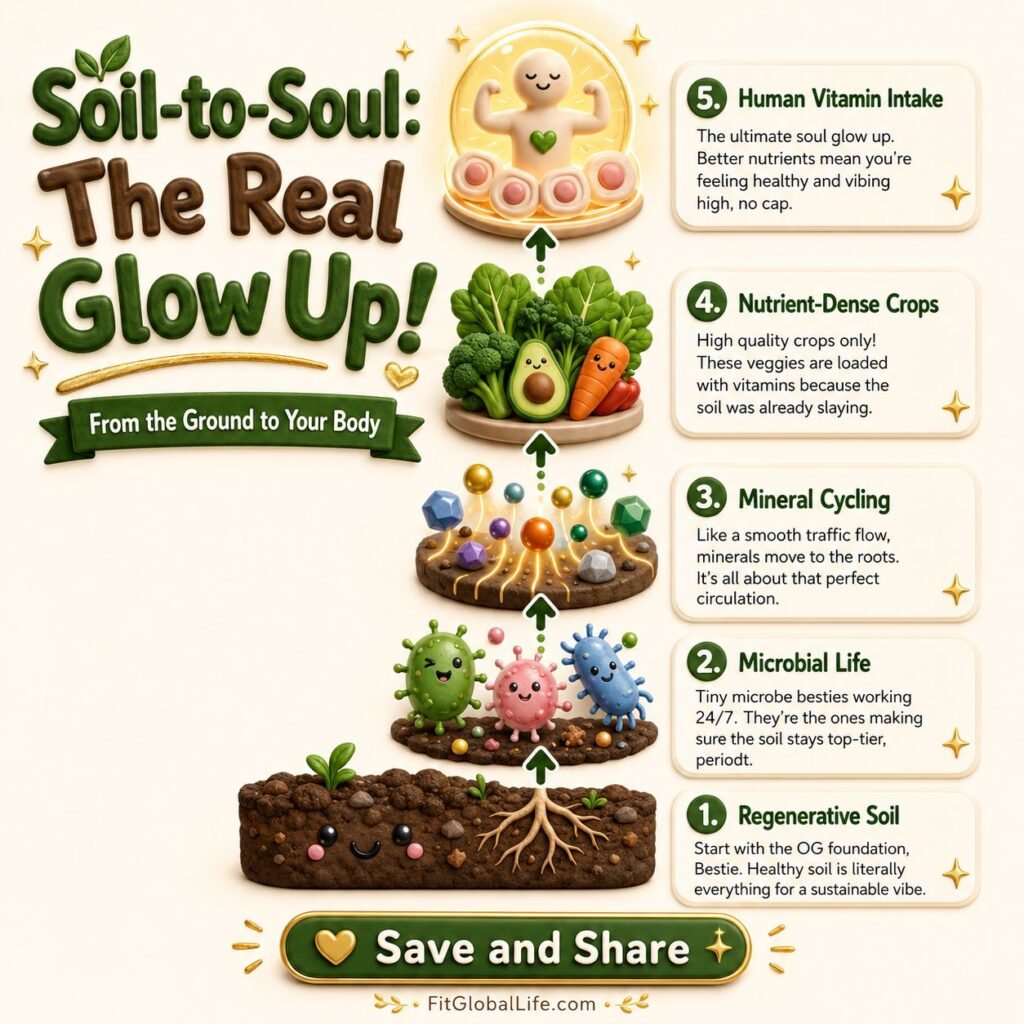
Let’s connect the dots explicitly. Healthy soil promotes diverse microbial activity, organic matter, mineral cycling, root development and water regulation. These variables can influence the growth and nourishment of plants. Plant nutrient composition influences what humans consume. Human nutrient intake influences metabolism, immunity, cognition, mood, recovery, hormone function, and long-term disease risk.
That is the soil-to-soul chain. It is not mystical. It is ecological nutrition. The human body is not separate from the landscape. It is built, repaired, fueled, and regulated by molecules that once moved through soil, water, roots, leaves, animals, microbes, sunlight, and human choices.
| Soil Factor | Crop-Level Effect | Human Nutrition Link | Why It Matters |
| Higher organic matter | Better nutrient retention, water balance, and microbial habitat | More stable conditions for crop nutrient development | Supports resilient food production and reduces nutrient loss |
| Active microbial life | Improved nutrient cycling and root interaction | Better potential mineral availability | Minerals support enzymes, immunity, energy, and cellular function |
| Diverse planting systems | Wider range of root exudates, habitats, and crop chemistry | More varied vitamin and phytochemical intake | Diversity improves diet quality and gut-supportive food patterns |
| Reduced erosion | Less topsoil loss and better water infiltration | Protects long-term nutrient base of food crops | Topsoil is slow to rebuild and easy to lose |
| Living roots and cover crops | Continuous carbon flow to soil organisms | Supports soil food web activity | Biological activity drives nutrient transformation |
| Balanced ecological stress | Potentially richer secondary plant compounds | More polyphenols, carotenoids, and related compounds | Supports antioxidant and cell-signaling pathways |
This is where the phrase “regenerative soul” becomes more than poetic branding. Human well-being is not separate from ecological well-being. Your nervous system, gut microbiome, mitochondria, immune system, and mood are all fed by molecules that come from landscapes. That does not mean every food choice needs moral drama. It means the body is downstream from ecology.
If you care about the gut-brain axis, this matters even more. The gut microbiome responds to fiber diversity, polyphenols, fermented foods, and overall diet quality. Soil microbiomes and gut microbiomes are not the same, but both remind us that health is ecological. You are not a machine fueled by isolated nutrients. You are a living system fed by other living systems.
This also overlaps with post-biotic power and next-generation gut health. Postbiotics, prebiotics, fermented foods, and diverse plant fibers all point toward the same truth: health is not built by isolated inputs alone. It is built by relationships among organisms, compounds, environments, and habits.
Regenerative Soil vs. Conventional Nutrition Thinking
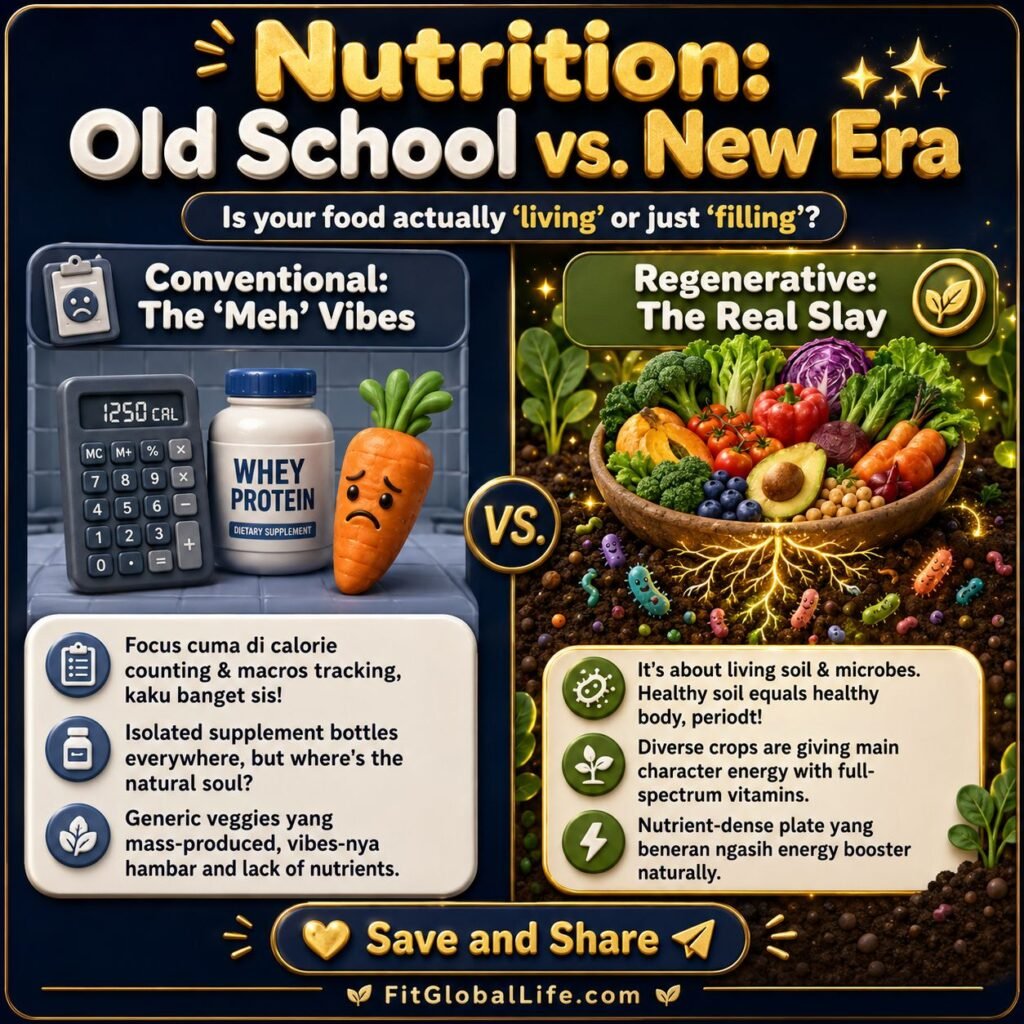
Conventional nutrition often asks, “How many nutrients are in this food?” Regenerative nutrition asks, “What conditions allowed this food to become nutrient-rich?” That one question upgrades the entire conversation. It does not reject conventional nutrition; it expands it.
| Conventional Nutrition Lens | Regenerative Nutrition Lens |
| Counts calories and macros | Looks at ecological nutrient origin |
| Focuses on individual foods | Focuses on food systems and farm practices |
| Uses average nutrient values | Recognizes nutrient variability across soils, seasons, and varieties |
| Treats supplements as backup | Prioritizes nutrient-dense food first while respecting medical needs |
| Separates environment from health | Connects soil, water, food, body, and climate |
| Asks “What should I eat?” | Also asks “How was this food grown?” |
Neither lens is useless. You still need enough of protein, calories, fiber, vitamins and minerals. If you are deficient, you may need supplements or medical support. But regenerative nutrition gives context that conventional nutrition often misses. It shifts the discussion from isolated inputs to living systems.
Smart snacking, for instance, isn’t just about avoiding blood sugar crashes. A regenerative snack could mean yogurt with berries from a diversified farm, nuts from a responsible grower, dark chocolate with traceable sourcing, or hummus with vegetables grown in compost-rich soil: same snack format, deeper food system logic.
Likewise, food pairing for glucose balance becomes more powerful when paired with nutrient density. A blood-sugar-friendly meal that lacks minerals and phytochemicals is only halfway there. Stable glucose is important. Micronutrient sufficiency is the next upgrade.
This is also where metabolic flexibility, instead of restrictive dieting, becomes useful. Regenerative eating is not a diet prison. It is a quality framework. You can still eat carbohydrates, fats, and protein. The question is whether those foods come from systems that support nutrient complexity instead of merely filling a plate.
The Regenerative Plate: How to Eat for Soil and Soul
You do not need to overhaul your entire diet overnight. A regenerative plate is not about perfection. It is about choosing foods that support both human nutrient intake and farming systems that rebuild biological richness. The point is not to shame people who shop at regular supermarkets. The point is to create a practical ladder: better choices when possible, not purity theater.
Build meals around diverse plants. Aim for leafy greens, colorful vegetables, legumes, herbs, roots, mushrooms, fruits, nuts, and seeds. Diversity increases exposure to a wider range of fibers, minerals, vitamins, and phytochemicals. It also makes meals less boring, which is important because nobody sticks with a nutrition plan that feels like edible homework.
Include mineral-aware foods. Pumpkin seeds, sesame, tahini, lentils, beans, leafy greens, sardines, eggs, seaweed, shellfish, dairy if tolerated, mushrooms, whole grains, and Brazil nuts can help support intake of magnesium, zinc, iron, iodine, calcium, selenium, and other minerals. Use the NIH dietary supplement fact sheets and nutrient recommendations as a starting point when you need evidence-based context for nutrients.
Add fermented and prebiotic foods. Fermented foods can support microbial diversity in the diet, while prebiotic fibers feed beneficial gut bacteria. Yogurt, kefir, kimchi, sauerkraut, tempeh, miso, lentils, oats, onions, garlic, asparagus, slightly green bananas, and cooked-then-cooled potatoes can all play a role depending on tolerance and culture.
Use protein with context. Protein matters, but source matters too. Regenerative grazing, well-managed fisheries, legumes from soil-building rotations, minimally processed tofu or tempeh, eggs from transparent farms, and pasture-based dairy can all fit depending on your ethics, location, budget, and body needs. This pairs naturally with the longevity investment mindset because long-term health is built on repeatable patterns, not heroic one-week experiments.
Eat seasonally and locally when possible. Not always healthier, but shorter supply chains could translate into more freshness and transparency. Seasonal eating can also increase variety across the year. You are more likely to eat a more diverse diet when your plate changes with the seasons rather than repeating the same imported items forever.
Reduce ultra-processed filler. Ultra-processed foods can crowd out micronutrient-dense foods. You do not need food-purity panic, but you do need food-pattern awareness. If most calories come from refined starches, sweetened drinks, industrial snacks, and convenience meals, the diet will struggle to deliver micronutrient depth, no matter how aesthetic the wellness routine looks on Instagram.
Choose regenerative sourcing when accessible. Farmers’ markets, CSA boxes, regenerative labels, direct farm websites, transparent grocers, and local co-ops can help you learn how food was grown. You do not need to interrogate every lettuce leaf as it owes you rent. Start with one category: eggs, greens, grains, meat, beans, dairy, or fruit. Upgrade gradually.
How to Shop for Nutrient-Dense Food Without Falling for Greenwashing
Regenerative agriculture has become trendy, and trendy words attract marketing chaos. Some brands use “regenerative” responsibly. Others use it like glitter on a weak product. Consumers need a practical filter so that the term remains useful rather than becoming another vague wellness sticker.
Start by asking better questions. Does the farm use cover crops? Is the soil kept covered? Are living roots maintained for more of the year? Are crop rotations diverse? Are animals integrated responsibly where appropriate? Is compost used? Is tillage reduced? Are pesticides and fertilizers reduced over time? Is soil organic matter measured? Does the producer explain outcomes, not just vibes?
| Question to Ask | Why It Matters | Greenwashing Warning Sign |
| Does the farm use cover crops? | Cover crops protect soil, feed microbes, and reduce erosion. | The brand says “earth-friendly” but names no practices. |
| Is crop diversity part of the system? | Diversity supports soil life and reduces ecological fragility. | One crop, one claim, no rotation details. |
| Is the soil kept covered? | Bare soil is vulnerable to erosion and moisture loss. | Pretty farm photos but exposed fields everywhere. |
| Are outcomes measured? | Organic Matter of the Soils. water intrusion Biodiversity. Nutrient Analysis | No data. No proof. Just emotional storytelling. |
| Is the sourcing transparent? | Direct farm detail increases accountability. | No farm name, no region, no supply-chain clarity. |
You do not need to become a certification detective every time you buy carrots. But when paying premium prices, ask premium questions. Better signs include farmer transparency, soil testing, crop rotation details, compost use, reduced tillage, biodiversity practices, third-party verification, and direct explanation of how the farm rebuilds soil.
Be especially cautious of vague phrases such as “earth-friendly,” “natural,” “sustainable-ish,” or “grown with care” when no practices are disclosed. Cute words do not feed microbes. Receipts, please.
This attitude is also in line with regenerative travel, which gives back to destinations. Whether we are eating or traveling, the deeper question is the same: did our presence extract from a place, or help it recover? The logic of regeneration should not stop at the farm gate.
For globally minded readers, the same principle appears in eco-conscious escapes and sustainable travel without sacrificing comfort. Sustainability becomes stronger when it moves from surface-level consumer choice to measurable impact. Food should be held to the same standard.
What Regenerative Soil Cannot Promise
This section matters for trust. Regenerative soil is promising, but it cannot promise that every regenerative carrot contains more vitamin A than every conventional carrot. Nutrient density depends on crop variety, soil type, climate, time of harvest, storage, processing, cooking style, testing method and specific regenerative methods.
Promising, preliminary, is the 2022 regenerative crop comparison. It should inspire deeper research, not exaggerated claims. A responsible nutrition article should not turn early evidence into certainty. That is how wellness content becomes messy. Hope is useful. Hype is expensive.
Also, not all vitamins are of soil origin in the same way. The plant produces chemicals including vitamin C, carotenoids, folate, vitamin K, and numerous phytonutrients, which are controlled by heredity and growing conditions. Minerals are derived from soil and geologic sources, but their availability depends on soil chemistry and biology. Vitamin B12 is not dependably available from plants and normally needs to be taken from animal-source diets, fortified foods or supplements. Vitamin D mainly comes from sunlight exposure, fortified foods, fatty fish, and supplements, not soil-grown vegetables.
So the claim is not: regenerative soil fixes all vitamin problems. The better claim is that regenerative soil can improve the ecological conditions that support nutrient-dense food, and that nutrient-dense food can improve the odds of adequate vitamin and mineral intake.
That is less viral. It is also more honest. This is the editorial line FitGlobalLife should hold: hopeful, evidence-aware, and allergic to wellness nonsense.
Practical 7-Day Regenerative Nutrition Reset
This 7-day reset is not a detox. Your liver did not resign. Your kidneys are not waiting for a celery ceremony. This is a simple way to reconnect food quality with soil awareness. Use it as a practical experiment, not a purity challenge.
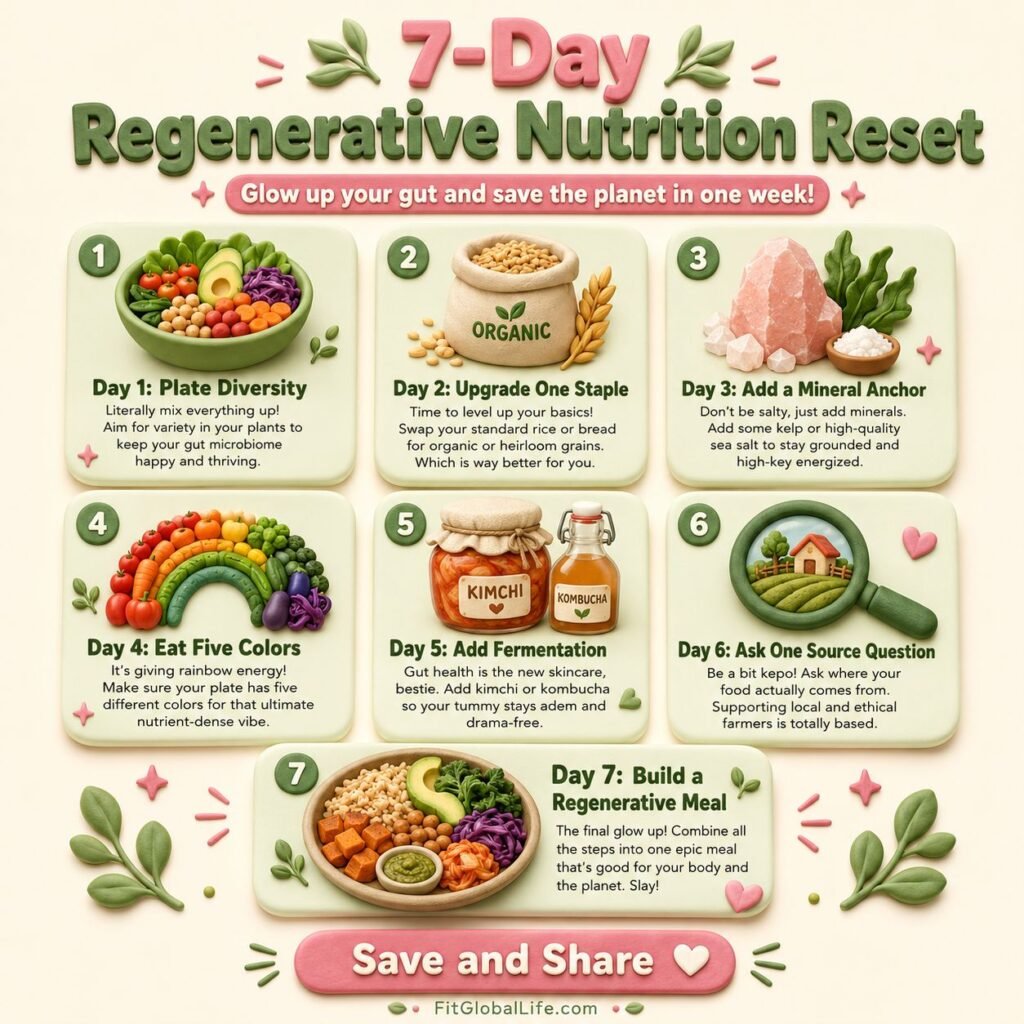
Day 1: Audit Your Plate Diversity
Write down how many different plant foods you ate today. Count herbs, spices, legumes, grains, fruits, vegetables, nuts, and seeds. A realistic weekly goal is 20 to 30 different plant foods, depending on access and budget. This supports dietary variety and improves exposure to micronutrients, fiber types, and phytochemicals. It also helps you move beyond repetitive “healthy eating” patterns that rely on the same three foods forever.
Day 2: Upgrade One Staple
Choose one staple food and upgrade its source. Buy vegetables from a local farmer. Choose pasture-raised eggs if accessible. Try grown legumes in soil building rotations. Choose whole grains Buy fresh herbs – not just sauces. Staples repeat, little upgrades add up. One better staple can quietly improve dozens of meals.
Day 3: Add a Mineral Anchor
Build one meal around a mineral-rich food. Use pumpkin seeds for zinc and magnesium; lentils with lemon for iron and vitamin C; sardines for calcium and omega-3s; seaweed in small amounts for iodine; or leafy greens with tahini for calcium and magnesium. This pairs well with daily energy wellness habits because energy is not only about sleep and caffeine. It is also about micronutrient sufficiency.
Day 4: Eat a Soil-Linked Color Spectrum
Create a plate with at least five colors from whole foods: purple cabbage, orange carrots, green arugula, red tomatoes, white beans, and golden olive oil. Color is not a perfect measure of nutrient intake, but it is a practical proxy for dietary diversity. It also makes meals look alive, which helps psychologically. Nobody feels inspired by a beige plate unless it is bread, and even then, let’s add something green.
Day 5: Add Fermentation
Include one fermented food such as yogurt, kefir, sauerkraut, kimchi, tempeh, miso, or fermented pickles. This supports the living systems theme from soil to gut. If you want a deeper internal pathway, connect this with the secret organ that affects your health.
Day 6: Ask One Source Question
At a market, store, or online shop, ask: “How was this grown?” You may not always get a clear answer. That is fine. The point is to train your consumer awareness. Food systems change when buyers ask better questions. Even if the answer is incomplete, the habit builds sourcing intelligence.
Day 7: Build a Regenerative Meal
Create one meal using one legume or quality protein, two or more vegetables, one fermented or prebiotic food, one mineral-rich topping, one herb or spice, and one minimally processed fat. Example: lentil bowl with roasted carrots, arugula, sauerkraut, pumpkin seeds, parsley, olive oil, and lemon. This is not fancy. It is just food with receipts.
If you want to make the reset more restorative, pair the food experiment with a nature-based brain fog reset. Nutrition, light exposure, movement, sleep, and time spent outdoors all interact. A regenerative plate becomes more powerful when the rest of the body is not running in stress mode 24/7.
Conclusion: The Future of Nutrition Starts Underground
The most original way to understand regenerative soil is not through farming alone. It is through identity. Modern wellness often treats the body like a performance device: optimize sleep, track glucose, measure HRV, count protein, take supplements, improve focus, upgrade output. Some of that can be useful. But it is incomplete.
You are not only a body to optimize. You are an ecosystem. Your gut contains microbial communities. Your immune system responds to environmental signals. Your mitochondria respond to nutrient availability. Your nervous system responds to inflammation, sleep, light, stress, food, and connection. Every ecosystem needs another ecosystem.
Soil feeds plants. Plants feed microbes and humans. Humans shape farming demand. Farming practices shape soil. Soil health shapes food quality. Food quality shapes human resilience. Human values shape the next food system. That loop is the real story.
Regenerative soil is not a wellness buzzword. It is a reminder that nutrition begins before food becomes food. Your vitamin intake is shaped not only by discipline, meal planning, or supplement routines, but by the living systems that produce what you eat. Healthy soil supports microbial life, mineral cycling, water retention, plant resilience, and ecological diversity. Those forces can influence the nutrient potential of crops and, eventually, the quality of your diet.
The old nutrition question was: “What should I eat?” The better question is: “What kind of world did this food come from, and what kind of world does it help create?” That is the regenerative shift. Eat for your body. Eat for your microbes. Eat for the soil because a depleted planet cannot keep producing nourished humans forever.
FAQ
Regenerative soil may improve the ecological conditions that support nutrient-dense crops, including better microbial activity, organic matter, mineral cycling, and plant diversity. But the vitamin content varies with the type of crop, the kind of soil, the climate, the time of harvest, storage and preparation. Regenerative soil may support nutrient density, but it is not guaranteed to result in greater vitamin levels in all foods.
Not every time. Organic is mostly about input limits, whereas regenerative is primarily about soil-building results. Some farms are both organic and regenerative. Others are certified organic but not regenerative in practice. The best option is food from transparent producers who can explain how they conserve soil, boost biodiversity and monitor improvement.
No. If you have a confirmed deficiency, limited diet, pregnant demands, medical issues, poor absorption or limited sun exposure you may still need supplements. Regenerative food can improve the quality of a diet but should not substitute medical advice or specific supplementation when needed.
Certain minerals including magnesium, zinc, iron, selenium, copper and calcium are closely related to soil and geological origins. Growing circumstances can alter levels of nutrients produced by plants such as vitamin C, folate, carotenoids, vitamin K and polyphenols. Vitamin B12 and D are separate approaches and should not be presumed to originate from regenerating plants.
Begin with diversity. Eat more colorful vegetables, legumes, herbs, fermented foods, mineral-rich seeds and minimally processed meals. Buy from local or transparent farms when possible. Ask how food was grown. Replace one staple at a time instead of trying to transform your entire diet overnight.
Disclaimer
This article is for educational and informational purposes only and does not provide medical, nutritional, or agricultural advice. Nutrient needs vary based on age, sex, health status, medication use, pregnancy, activity level, geography, diet pattern, and medical history. If you feel you have a vitamin or mineral deficiency, see a qualified healthcare professional for appropriate laboratory testing. While regenerative ag research holds promise, it’s still in its infancy, and nutrient results might vary by crop, region, season, farming system, and testing method.