
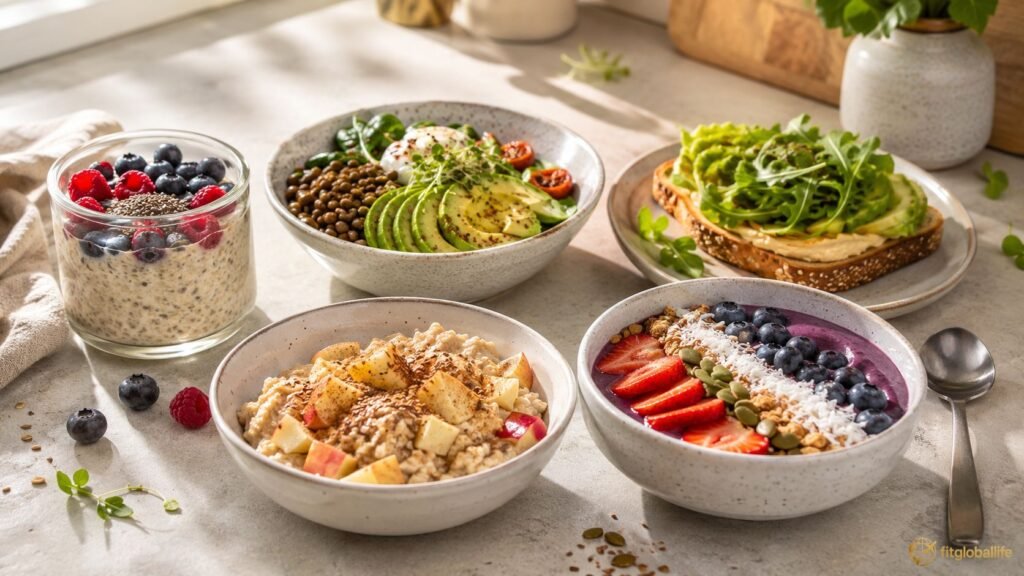
Disclosure: This article may contain affiliate links. If you buy through selected links, FitGlobalLife may earn a commission at no extra cost to you. The recommendations below are food and lifestyle education only, not medical nutrition therapy.
Fiber-rich breakfasts are not about turning your morning into a punishment bowl. A good gut-supportive breakfast should feel like food you would actually repeat on a Tuesday when your inbox is rude, your coffee is cooling, and your stomach is asking for a little respect. The goal is simple: use whole-food fiber to feed beneficial gut microbes, support regularity, slow the glucose spike of breakfast, and keep energy steadier until lunch.
Fiber is one of the most under-celebrated tools in everyday nutrition. The FDA Daily Value for dietary fiber is 28 grams per day on a 2,000-calorie reference diet, yet many adults fall short. The current Dietary Guidelines for Americans also emphasizes whole, nutritious foods, including fruits, vegetables, legumes, nuts, seeds, and whole grains. Breakfast is a smart place to start because it is repetitive by nature. You do not need a perfect diet; you need a reliable first meal that quietly moves your daily average in the right direction.
This guide takes a practical route. Instead of telling you to ‘eat more fiber’ and leaving you alone with a bag of bran cereal like it is 1997, it gives you five breakfast templates built around oats, chia, berries, lentils, avocado, whole grains, beans, flaxseed, and resistant starch. If you want the bigger science story first, read FitGlobalLife’s primer on the microbiome as a living ecosystem. For the breakfast plan itself, stay here. We are going plate by plate.
Why Fiber-Rich Breakfasts Support Gut Health
Your gut microbiome is not a static organ. It is closer to a city: crowded, adaptive, and heavily influenced by what gets delivered. Dietary fibers are carbohydrates that the small intestine does not fully digest. Some fibers move through largely intact and help with stool bulk. Others are fermented by gut microbes in the colon, producing short-chain fatty acids and other metabolites that are being studied for roles in gut barrier function, inflammation, and metabolic health. A peer-reviewed review on fiber and gut microbiota review describes this fermentation process as one reason fiber-rich dietary patterns are linked with healthier gut environments.
The most useful breakfast question is not ‘Which single ingredient fixes the gut?’ That is supplement-bro thinking wearing a lab coat. A better question is: ‘How many different plant fibers can I comfortably eat across the week?’ The American Gut Project paper found an association between greater weekly plant diversity and microbiome diversity. That does not mean you need thirty plants before breakfast, but it does suggest that rotating oats, berries, seeds, legumes, greens, apples, and whole grains beats eating the same beige bar every morning.
The breakfast advantage is timing. A fiber-rich morning meal can create a smoother start before cravings and decision fatigue take over. Pairing fiber with protein and healthy fats also helps breakfast feel less like a quick sugar hit and more like a stable launch. For deeper pairing strategy, the FitGlobalLife guide to glucose-friendly food pairing is a useful companion.
Still, more fiber is not automatically better if you add it too fast. A sudden jump from low-fiber toast to chia-lentil-berry-oat madness can produce gas, bloating, or bathroom drama. The win is gradual progression. Your gut likes rhythm. Your gut does not like surprise parties every morning.
The Gut-Smart Breakfast Formula
A strong gut-supportive breakfast usually includes four pieces: a fiber base, a microbial or prebiotic helper, a protein anchor, and a comfort cue. The comfort cue matters because gut health is not just a nutrient math problem. Texture, warmth, hydration, chewing, and meal pace influence how a breakfast lands.
| Breakfast Piece | What It Does | Examples | Gut Comfort Tip |
| Fiber base | Raises total daily fiber and supports regularity | Oats, oat bran, whole-grain toast, lentils, berries, apples | Start with smaller servings if your usual breakfast is low in fiber. |
| Microbial or prebiotic helper | Feeds or accompanies beneficial microbes | Yogurt, kefir, onions, garlic, banana, berries, flaxseed, chia | Use lactose-free yogurt or unsweetened soy yogurt if dairy bothers you. |
| Protein anchor | Improves fullness and balances the meal | Greek yogurt, eggs, tofu, lentils, nut butter, seeds | Keep portions moderate; breakfast should energize, not sedate. |
| Comfort cue | Makes the meal easier to tolerate and repeat | Warm bowl, soaked seeds, plenty of water, slow chewing | Increase fiber over days, not overnight. |

Most people do not need to count every gram, but estimates can help. The USDA FoodData Central database is a useful reference when checking ingredient nutrition. The USDA DRI Calculator is a tool that can help you with nutrient recommendations based on age, sex, height, weight, and activity level to set individual intake goals. For this article, the fiber estimates are practical kitchen ranges rather than lab-perfect calculations.
Quick Comparison: 5 Fiber-Rich Breakfasts
| Breakfast | Approx. Fiber Range | Best For | Main Gut-Supportive Angle | Prep Style |
| Overnight oats with chia, berries, and yogurt | 10-16 g | Busy mornings | Soluble fiber, berry polyphenols, fermented dairy option | Make-ahead jar |
| Savory lentil-avocado breakfast bowl | 12-18 g | Big appetite mornings | Legume fiber, resistant starch, plant diversity | Batch-cook base |
| Whole-grain toast with hummus, greens, and seeds | 8-12 g | Fast savory breakfast | Chickpea fiber plus whole grains and seeds | 10-minute assembly |
| Warm apple-flax oat bran bowl | 10-15 g | Sensitive digestion | Gentle warmth, soluble fiber, pectin, ground flax | Stovetop or microwave |
| Berry-green smoothie bowl with flax and resistant starch | 9-14 g | Hot weather or post-workout mornings | Blended plant diversity and easy add-ins | Blender bowl |
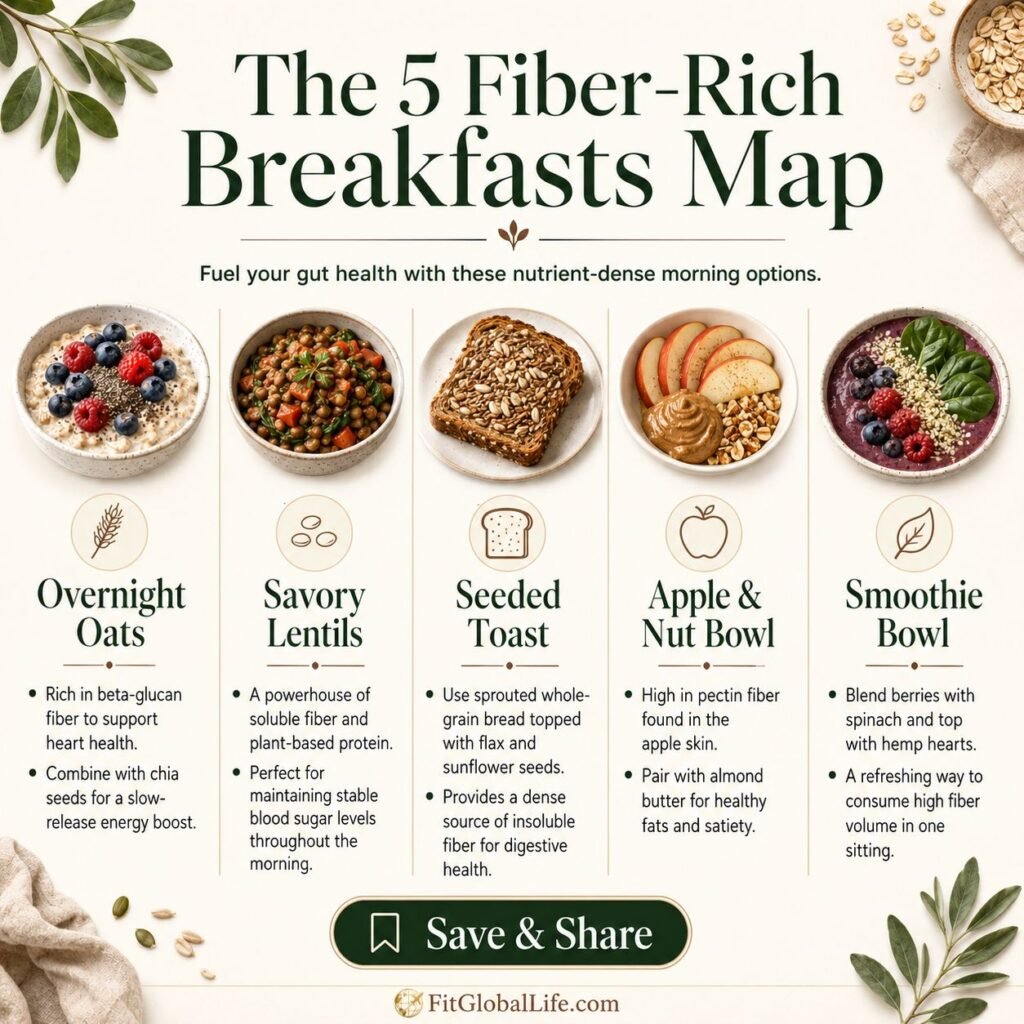
1. Overnight Oats With Chia, Berries, and Yogurt
This is the breakfast most people can actually keep. Overnight oats are cheap, flexible, and friendly to chaotic mornings. Oats bring beta-glucan, a soluble fiber known for its gel-forming texture. Chia seeds add a mix of insoluble fiber and mucilage, the gel-like coating that appears when they soak. Berries add fiber plus colorful plant compounds. Yogurt or kefir adds protein and, depending on the product, live cultures. If you want to understand why fermented foods often show up in gut-health conversations, FitGlobalLife’s guide to the gut-brain connection gives useful background.
Basic build: combine 1/2 cup rolled oats, 1 tablespoon chia seeds, 1/2 cup plain Greek yogurt or unsweetened kefir, 1/2 cup milk or fortified soy milk, 1/2 cup berries, cinnamon, and a pinch of salt. Refrigerate overnight. In the morning, loosen with water or milk if needed. For a more budget-friendly version, use frozen berries. For a higher-protein version, use Greek yogurt. For a dairy-free version, use unsweetened soy yogurt and soy milk.
The gut-comfort trick is hydration. Dry oats and chia absorb liquid, so the jar should look a little too loose at night. By morning it thickens. If your oats look like cement, your gut may have to do extra work. Add liquid. Future you will not send a complaint email.
To make this breakfast easier, use overnight oats jars with enough room for stirring instead of tiny aesthetic jars that look cute and behave like hand traps. If you prep several breakfasts at once, glass meal prep containers also work well because they are wide, stackable, and easier to clean.
Why this breakfast supports the gut
This meal combines several fiber types in one low-effort format. Oats are rich in soluble fiber. Chia contributes bulk and water-holding texture. Berries bring fruit fiber without needing a large serving of sugar. Fermented dairy or cultured plant yogurt may add live cultures, although products vary. The result is not magic; it is consistency. When a breakfast is easy enough to repeat, the microbiome gets a steadier supply of plant material over time.
Make it gentler
If you are new to chia, start with 1 teaspoon instead of 1 tablespoon. If cold breakfasts bother your stomach, warm the oats briefly after soaking. If berries feel too acidic, choose banana slices or cooked apple. If you have IBS or have identified particular fermentable carbohydrates that trigger symptoms, adjust portions and consult with a registered dietitian.
2. Savory Lentil-Avocado Breakfast Bowl
Breakfast does not have to be sweet. In many parts of the world, morning food is savory, warm, and substantial. A lentil-avocado bowl is the quiet hero for people who want steady energy and a more lunch-like breakfast. Lentils bring fiber and plant protein. Avocado adds fiber and healthy fat. Greens bring volume and micronutrients. A soft egg or tofu adds another protein layer. This is where plant-based protein choices become practical, not theoretical.
Basic build: warm 3/4 cup cooked lentils with olive oil, lemon, cumin, and black pepper. Add a handful of spinach or arugula. Top with 1/4 to 1/2 avocado, a soft egg or tofu cubes, and a spoon of plain yogurt or tahini sauce. Add herbs if you have them. If cooked lentils sound like too much at 7 a.m., batch-cook them once or buy low-sodium canned lentils and rinse them well.
The unique benefit of this breakfast is that it moves fiber beyond grains. Many people think fiber equals cereal, but legumes are one of the strongest everyday sources. Lentils also make breakfast feel grounded. You are less likely to hunt for a pastry at 10:30 when your morning meal contains legumes, fat, and protein. Your snack drawer may still try to flirt, but it loses leverage.
Why this breakfast supports the gut
Legumes provide fermentable fibers that gut bacteria can use. When paired with fat, protein, and greens, they also create a meal that feels complete rather than medicinal. If you are building a broader weekly plan, this bowl connects nicely with FitGlobalLife’s anti-inflammatory weekday meals because both rely on simple components rather than complicated recipes.
Make it gentler
Start with 1/3 to 1/2 cup cooked lentils if you are not used to legumes. Rinse canned lentils thoroughly. Choose red lentils if you prefer a softer texture. Cook with ginger, cumin, fennel, or bay leaf if those seasonings feel good for you. Keep the avocado portion moderate if a high-fat breakfast makes you sluggish.
3. Whole-Grain Toast With Hummus, Greens, and Seeds
This breakfast is for people who say, ‘I do not have time,’ and actually mean it. It takes about ten minutes, it is portable if you fold it, and it feels more satisfying than plain toast. The key is to choose bread that contributes meaningful fiber. Look for whole grain as the first ingredient and check the Nutrition Facts label. A bread that offers 3 to 5 grams of fiber per slice can turn toast into a gut-supportive base.
Basic build: toast one or two slices of dense whole-grain bread. Spread with hummus. Add greens, cucumber, tomato, sauerkraut if tolerated, hemp or sesame seeds, and black pepper. If you need more protein, add a boiled egg, tempeh strips, smoked tofu, or leftover chicken. The point is not to make Instagram toast with five edible flowers. The point is a fiber-and-protein breakfast you can assemble while half awake.
This template also helps you avoid the trap of ultra-processed ‘high fiber’ products that technically list fiber but do not offer much whole-food structure. FitGlobalLife’s article on whole-food nutrition rules is a good follow-up for readers trying to separate useful convenience from marketing glitter.
Why this breakfast supports the gut
Chickpeas in hummus provide legume fiber. Whole-grain bread contributes grain fiber. Greens add plant diversity. Seeds add texture, minerals, and additional fiber. The meal is also savory, which can reduce the need to sweeten breakfast heavily. It is a small change, but small changes are how routines stop being fake inspirational posters and start becoming real life.
Make it gentler
If raw greens cause bloating, use lightly wilted spinach. If hummus feels heavy, spread a thinner layer and add extra cucumber or tomato. If you tolerate fermented vegetables, use a small spoonful instead of a mountain. Fermented foods can be useful, but more is not always kinder.
4. Warm Apple-Flax Oat Bran Bowl
Some guts prefer warmth. A warm apple-flax oat bran bowl is softer than a cold smoothie, easier to chew than granola, and more comforting than a chalky fiber supplement. It is especially useful for people who want a higher-fiber breakfast but do not want a dramatic texture. Oat bran brings concentrated oat fiber. Apple adds pectin, a fruit fiber that becomes gentle and jammy when cooked. Ground flaxseed brings both soluble and insoluble fiber.
Basic build: simmer 1/3 cup oat bran with 1 cup water, milk, or fortified soy milk. Add one chopped apple, cinnamon, and a pinch of salt. Cook until creamy. Stir in 1 tablespoon ground flaxseed after cooking. Add walnuts or peanut butter if you want more staying power. If you want to stock the pantry, use ground flaxseed rather than whole flaxseed because ground flax is easier to use in bowls and batters.
This breakfast is not flashy. That is the charm. It works like a soft landing for the digestive system. The texture is warm, the fiber is hydrated, and the fruit is cooked. For people who find raw high-fiber breakfasts too aggressive, this bowl can be the difference between ‘fiber helps me’ and ‘fiber betrayed me.’
Why this breakfast supports the gut
Oats and oat bran contribute soluble fiber. Apple contributes fruit fiber and water. Flaxseed adds fiber and plant-based omega-3 fat. This meal also demonstrates a useful principle from functional nutrition basics: the form of food matters. A warm cooked bowl may be easier to tolerate than the same ingredients eaten dry or rushed.
Make it gentler
Peel the apple if skins bother you. Start with 1 teaspoon ground flaxseed and build up. Add more liquid if the bowl thickens too much. Eat slowly. The chewing part sounds basic, but many people inhale breakfast like it is a software update they forgot to install.
5. Berry-Green Smoothie Bowl With Flax and Resistant Starch
Smoothies can be gut supportive, or they can be dessert with a wellness costume. The difference is structure. A gut-smart smoothie bowl should have whole fruit, seeds, a protein anchor, and a spoonable texture that slows you down. Drinking a huge fruit smoothie in three minutes is not the same as eating breakfast. Make it thick, put it in a bowl, add toppings, and use a spoon like a civilized breakfast goblin.
Basic build: blend 1 cup frozen berries, 1 small banana or 1/2 banana, 1 cup unsweetened kefir, Greek yogurt, or soy yogurt, 1 tablespoon ground flaxseed, a handful of spinach, and enough liquid to blend. Optional: add 1 to 2 tablespoons cooked and cooled oats, cooled potato, or green banana flour if tolerated for resistant starch. Top with pumpkin seeds or a small portion of low-sugar granola. If chia is your preferred add-in, chia seeds can be stirred in after blending so they hydrate rather than clump.
This breakfast is useful in hot weather, after a workout, or during travel days when heavy food feels unappealing. For readers who travel often, FitGlobalLife’s guide to a healthy travel routine pairs well with this idea. And if digestive issues have disrupted trips before, it can be sensible to review basic travel health protection before leaving; this is not personalized insurance advice, just a planning reminder.
Why this breakfast supports the gut
Berries bring fiber and polyphenols. Greens add plant diversity without taking over the flavor. Ground flaxseed adds fiber and fat. Yogurt or kefir adds protein and may include live cultures. Resistant starch, if tolerated, can be fermented by gut bacteria. This is a flexible breakfast, but the portion matters. Keep it satisfying, not supersized.
Make it gentler
If smoothies cause bloating, reduce the serving size and eat it slowly from a bowl. Skip raw spinach if it bothers you. Use lactose-free yogurt or soy yogurt if dairy is an issue. Avoid adding five powders just because the internet said so. Your gut is not a storage unit for every trend.
How to Increase Breakfast Fiber Without Bloating
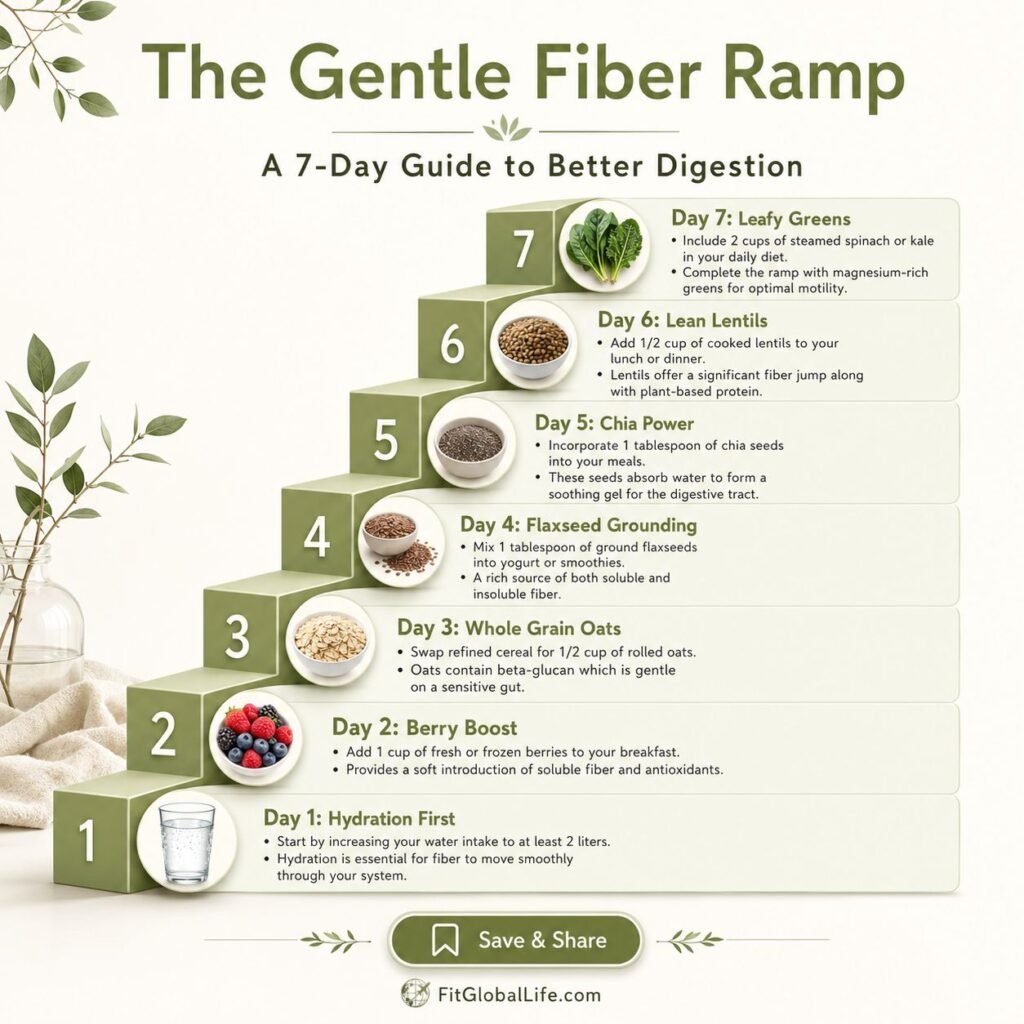
The biggest mistake is upgrading too aggressively. Fiber needs water, time, and repetition. If your current breakfast is coffee and a refined pastry, a 16-gram fiber breakfast on day one may feel heroic until your abdomen files a complaint. Start with one change, then build.
| Day Range | Small Upgrade | What to Watch | Next Step |
| Days 1-2 | Add berries or one teaspoon ground flaxseed | Gas, bloating, fullness | Drink water and keep breakfast simple. |
| Days 3-4 | Switch refined toast to whole-grain toast or add 1/4 cup oats | Stool changes and comfort | Keep protein steady. |
| Days 5-6 | Add chia, lentils, or hummus in modest portions | Tolerance to legumes/seeds | Increase only if comfortable. |
| Day 7+ | Rotate 3-5 plant foods at breakfast across the week | Consistency, not perfection | Create a weekly breakfast rhythm. |
A good rule: add fiber in 2- to 5-gram steps and notice how you feel. Hydration matters because fiber holds water. Meal pace matters because digestion starts before food reaches the gut. Sleep and stress matter too; gut comfort is not isolated from the rest of the nervous system. Readers can connect food habits with recovery habits through FitGlobalLife’s mind-body recovery rhythm.
People with IBS, inflammatory bowel disease, celiac disease, gastroparesis, recent gastrointestinal surgery, or unexplained digestive symptoms should get individualized medical advice. Some high-fiber foods are healthy in general but not comfortable for every gut in every season. That is not failure. That is personalization.
A Weekly Rotation for Fiber-Rich Breakfasts
You do not need five different breakfasts every week. You need enough variety to feed a broader range of microbes while keeping decisions easy. Here is a realistic rhythm.
| Day | Breakfast | Plant Diversity Focus | Prep Note |
| Monday | Overnight oats with chia and berries | Oats, chia, berries | Prep Sunday night. |
| Tuesday | Whole-grain toast with hummus and greens | Whole grains, chickpeas, greens, seeds | Use prewashed greens. |
| Wednesday | Warm apple-flax oat bran bowl | Oat bran, apple, flax | Cook extra apple topping. |
| Thursday | Lentil-avocado breakfast bowl | Lentils, greens, avocado, herbs | Use leftover lentils. |
| Friday | Berry-green smoothie bowl | Berries, spinach, flax, banana | Keep it thick and spoonable. |
| Saturday | Repeat your favorite | Consistency | Do not overcomplicate weekends. |
| Sunday | Prep two bases for next week | Oats and lentils | Future you deserves help. |
This rotation also makes content sense for readers already exploring daily energy habits. Energy is not only about caffeine. It is about building meals that digest steadily, carry you through the morning, and reduce the number of tiny food decisions that drain attention.
What About Fiber Supplements?
Fiber supplements can be helpful for some people, especially when recommended by a clinician, but they should not replace a varied diet. Whole foods bring water, texture, vitamins, minerals, and phytochemicals alongside fiber. That full package matters. A scoop of fiber in water may support regularity, but it does not automatically create the same dietary pattern as oats, berries, lentils, greens, seeds, and fruit.
The Harvard T.H. Chan fiber overview emphasizes fiber-rich foods such as whole grains, fruits, vegetables, legumes, nuts, and seeds. That is the direction to copy. If you use a supplement, treat it as a bridge, not your entire gut-health personality.
Common Mistakes With High-Fiber Breakfasts
Mistake 1: Adding fiber without adding fluid
Fiber and fluid are a team. If you add chia, flax, oats, bran, and legumes while barely drinking water, the breakfast may feel heavy. Hydrated fiber is generally kinder than dry fiber.
Mistake 2: Treating granola as automatically healthy
Granola can be useful, but some versions are closer to dessert cereal. Check serving size, added sugar, and fiber. Use it as a topping, not the entire meal, unless it genuinely fits your needs.
Mistake 3: Forgetting protein
Fiber helps fullness, but protein anchors the meal. Yogurt, tofu, eggs, lentils, nut butter, seeds, and soy milk can all help. That balance is what separates a gut-supportive breakfast from a bowl of carbohydrates that disappears in an hour.
Mistake 4: Eating the same ‘healthy’ breakfast forever
Your gut benefits from variety. Rotate grains, fruits, legumes, seeds, and fermented foods when tolerated. If you want more ideas beyond breakfast, the smart snack strategy can help fill the rest of the day without creating an ultra-processed snack loop.
Mistake 5: Ignoring your own tolerance
The healthiest breakfast on paper is not helpful if it makes you miserable. Your best breakfast is the highest-fiber option you can enjoy, digest, and repeat. Build from there.
Ingredient Notes: What Makes Each Fiber Source Different
Not all fiber behaves the same way in the kitchen or in the gut. That is why a mixed breakfast routine usually feels better than forcing one heroic ingredient every morning. Oats and oat bran tend to create a soft gel when cooked or soaked. Chia and flax hold water and thicken meals. Berries bring fruit fiber in a relatively compact serving. Lentils and chickpeas provide legume fiber plus plant protein. Whole-grain bread adds structure and convenience, especially for people who prefer chewing over spoon meals. Apples bring pectin and become gentler when cooked. So rotation is important.
A useful weekly goal is to combine at least three fiber families at breakfast: grain fiber, fruit fiber, and legume or seed fiber. For example, Monday might be oats, berries, and chia. Tuesday might be whole-grain toast, hummus, and sesame seeds. Wednesday might be oat bran, cooked apple, and flax. By the end of the week, breakfast has become a quiet plant-diversity habit rather than a nutrition project with a spreadsheet. If you enjoy the cognitive side of food planning, FitGlobalLife’s nootropic nutrition planning can help connect steady meals with focus and mental clarity.
The most overlooked ingredient note is texture. A dry, crunchy, high-fiber breakfast may technically hit the numbers but feel rough. A hydrated breakfast often lands better. Soak oats. Cook apples. Let chia bloom. Warm lentils with sauce. Add yogurt, tahini, olive oil, or milk to soften the meal. Texture is not a cosmetic detail; it changes how a person experiences the food and whether they will repeat it.
Meal Prep Blueprint for Busy Weeks
The easiest way to fail a high-fiber breakfast plan is to require morning ambition. Morning ambition is unreliable. It says dramatic things at night and then snoozes the alarm. Build the plan around low-friction prep instead. Choose two base components on Sunday: one sweet base and one savory base. The sweet base can be overnight oats or cooked apple topping. The savory base can be lentils, hummus, boiled eggs, tofu, or washed greens. With two bases ready, breakfast becomes assembly, not cooking.
For commuters or people who work away from home, warm breakfasts can travel in an insulated food jar. This is especially useful for oat bran, lentil bowls, and cooked apple oats. A warm meal can feel more satisfying than another packaged bar, and it prevents the classic office breakfast problem: buying something convenient that gives a quick lift and a quicker crash.
Here is a simple Sunday flow: cook lentils, wash greens, portion oats, freeze bananas in halves, and mix a small jar of cinnamon, flaxseed, and chopped nuts for topping. None of this needs to look cinematic. The goal is a system that survives a real week. A breakfast routine earns its place when it works on the morning you did not sleep perfectly, when groceries are low, and when the calendar is already side-eyeing you.
Meal prep also protects variety. If your only available option is one cereal box, your gut diversity gets boxed in too. Keeping oats, lentils, berries, apples, greens, seeds, and whole-grain bread in rotation creates more plant exposure without creating a new recipe every day. That is the same practical spirit behind FitGlobalLife’s morning ritual ideas: small routines work best when they reduce friction rather than depend on motivation.
Conclusion: Build the Breakfast Your Gut Can Trust
The best fiber-rich breakfasts are not extreme. They are repeatable. Overnight oats, lentil bowls, hummus toast, apple-flax oat bran, and smoothie bowls all work because they combine whole-food fiber with protein, hydration, and real-life prep. That is the boring truth that actually wins. Viral gut hacks come and go. A good breakfast you can make half awake? That has staying power.
Start with one breakfast this week. Keep the portion comfortable. Drink water. Rotate plants. Notice your body’s response. Then build. If you want to keep improving the whole day, pair this article with FitGlobalLife’s guide to metabolic flexibility meal plan and the broader list of habits that age well.
FAQ: Fiber-Rich Breakfasts and Gut Health
A practical target is 8 to 15 grams, depending on your current intake and tolerance. The FDA lists 28 grams as the Daily Value for dietary fiber, but you do not need to eat all of it at breakfast. Spread fiber across the day with whole grains, fruits, vegetables, legumes, nuts, and seeds.
Yes, oats can be a useful gut-supportive food because they contain soluble fiber and are easy to combine with berries, seeds, yogurt, and nuts. Choose plain oats more often than heavily sweetened instant packets.
Many people tolerate warm oat-based breakfasts well, especially when the fiber is cooked and hydrated. A warm apple-flax oat bran bowl is often gentler than a large raw smoothie or a big serving of legumes.
They can if you increase fiber too quickly or choose foods you do not tolerate. Begin eating slowly, drink lots of fluids, chew food well and increase portion sizes gradually. Persistent bloating, pain, diarrhoea, constipation or unexplained symptoms should be discussed with a health professional.
Not Exactly. Probiotics can be useful in specific situations, but fiber-rich whole foods are foundational because they feed beneficial gut microbes. Yogurt or kefir can be part of breakfast if you tolerate them, but they are not mandatory.
Medical and Affiliate Disclaimer
This content is for general wellness education only. It is not medical advice, diagnosis, or treatment. Nutrition needs vary by age, health condition, medication use, digestive tolerance, pregnancy status, and activity level. If you have a diagnosed gastrointestinal condition, food allergy, disordered eating history, diabetes, kidney disease, or persistent symptoms, consult a qualified healthcare professional or registered dietitian before making major dietary changes.
Some links may be affiliate links, including Amazon-style product links and travel health protection links. FitGlobalLife may earn a commission if readers purchase through those links. Affiliate relationships do not determine the editorial recommendations; products should be selected based on usefulness, safety, and relevance.