
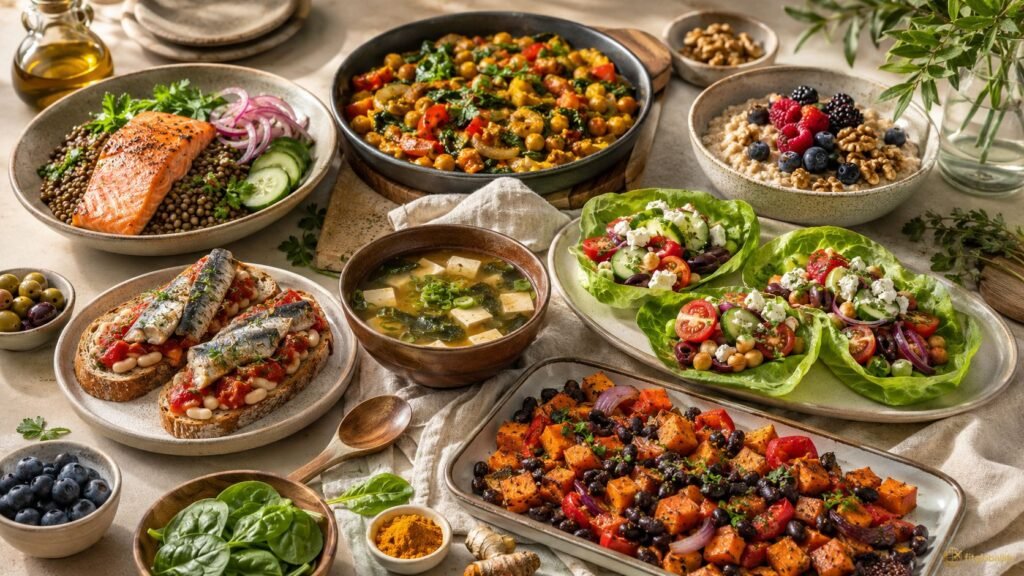
Anti-inflammatory meals are not magic plates, celebrity detoxes, or the sad desk salad era trying to make a comeback. They are practical meals built around a simple pattern: colorful plants, fiber-rich carbohydrates, quality protein, healthy fats, herbs, spices, and fewer ultra-processed shortcuts. That matters most on busy weekdays, because stress, rushed eating, sleep debt, and convenience food tend to arrive as a team. When dinner becomes a panic decision, the body often gets a meal that is high in refined starch, low in fiber, and emotionally unsatisfying. No shade to emergency noodles, but they should not be running the whole department.
This guide turns anti-inflammatory eating into seven realistic weekday meals that can be assembled, reheated, or adapted without needing a private chef, a luxury wellness pantry, or three hours of emotional labor in the kitchen. The framework draws from the Mediterranean-style pattern often recommended for inflammation-conscious eating: vegetables, fruits, legumes, whole grains, nuts, seeds, olive oil, herbs, spices, and fish or other lean proteins. Harvard Health describes anti-inflammatory eating as a shift toward whole, minimally processed foods such as fruits, vegetables, whole grains, legumes, fish, poultry, nuts, seeds, and oils like olive or avocado oil, while keeping added sugar and highly processed foods to a minimum. Harvard Health’s anti-inflammation diet overview gives a clear public-facing starting point for that pattern.
The goal here is not perfection. It is repeatability. A weekday anti-inflammatory meal should do four jobs: stabilize energy, support gut health, reduce the friction of cooking, and taste good enough that you do not abandon it by Wednesday. For deeper background on plant-forward protein choices, FitGlobalLife’s guide is a useful companion, especially for readers who want less meat without drifting into low-protein meals.
Affiliate disclosure: This article may contain affiliate links, including Amazon links. As an Amazon Associate I earn from qualifying purchases, at no extra cost to you. Product links are included only where they fit the article’s practical meal-prep context.
Quick View: 7 Anti-Inflammatory Meals for Busy Weekdays
| Meal | Best for | Key anti-inflammatory assets | Busy-weekday shortcut |
| Salmon, Lentil, and Greens Power Bowl | Lunch or dinner after a demanding workday | Omega-3 fats, legumes, leafy greens, olive oil | Use canned lentils and prewashed greens |
| Turmeric Chickpea and Vegetable Skillet | Plant-based dinner in 20 minutes | Legumes, turmeric, black pepper, colorful vegetables | Use frozen vegetables and canned chickpeas |
| Berry-Walnut Overnight Oats | Breakfast, snack, or post-commute reset | Berries, oats, walnuts, fermented dairy | Assemble 2-3 jars at once |
| Sardine, Tomato, and White Bean Toast | No-cook lunch with real protein | Omega-3s, beans, tomatoes, olive oil | Keep tins and beans in pantry |
| Miso-Ginger Tofu Noodle Soup | Comfort meal when tired | Soy protein, fermented miso, ginger, greens | Use quick-cooking noodles and frozen edamame |
| Mediterranean Turkey or Tempeh Lettuce Plates | Fast family-style dinner | Lean protein, herbs, vegetables, yogurt sauce | Cook filling once, serve multiple ways |
| Sweet Potato, Black Bean, and Avocado Tray Meal | Meal-prep dinner and next-day lunch | Fiber, carotenoids, legumes, avocado fats | Roast extra vegetables on one tray |
Why Anti-Inflammatory Meals Matter More on Busy Weekdays
Inflammation is not automatically bad. Acute inflammation helps the body respond to infection, injury, and repair. The problem is chronic, low-grade inflammation, which can be shaped by many factors: poor sleep, inactivity, chronic stress, smoking, pollution, excess alcohol, and a dietary pattern heavy in ultra-processed foods, added sugars, refined grains, and saturated fat. A 2024 review in PubMed Central summarizes how chronic inflammation is involved in pathways associated with obesity, type 2 diabetes, cardiovascular disease, certain cancers, cognitive disorders, and other noncommunicable diseases. This review of anti-inflammatory diets is not saying dinner alone prevents disease; it is saying dietary patterns are one meaningful lever in a much bigger system.
Busy weekdays are where that lever gets tested. Many people do not fall off their health goals because they lack information. They fall off because Tuesday at 7:34 p.m. has no mercy. Meetings run late. The fridge looks like a crime scene. The brain wants instant reward. The body wants calories now. This is why anti-inflammatory meals need to be designed for friction, not fantasy. The best meal plan is not the one with the most superfoods; it is the one that still works when the sink is full, someone needs a ride, and your inbox is auditioning for a horror movie.
The weekday advantage is consistency. Seven reasonably good meals, repeated in different forms, can beat one perfect wellness dinner surrounded by six chaotic ones. This also fits the bigger habit logic behind FitGlobalLife’s guide to small daily self-care habits: health improves when the supportive action is small enough to repeat. For food, that means keeping beans, oats, frozen berries, greens, eggs, tofu, tinned fish, olive oil, herbs, and quick whole grains within reach.
Research-backed anti-inflammatory eating is less about single heroic ingredients and more about pattern density. Harvard Health’s list of foods associated with anti-inflammatory eating includes tomatoes, olive oil, leafy greens, nuts, fatty fish, and fruits such as berries and oranges. Its foods-that-fight-inflammation guide aligns with the same practical kitchen logic used in this article: choose meals that stack multiple supportive ingredients at once.
What Counts as an Anti-Inflammatory Meal?
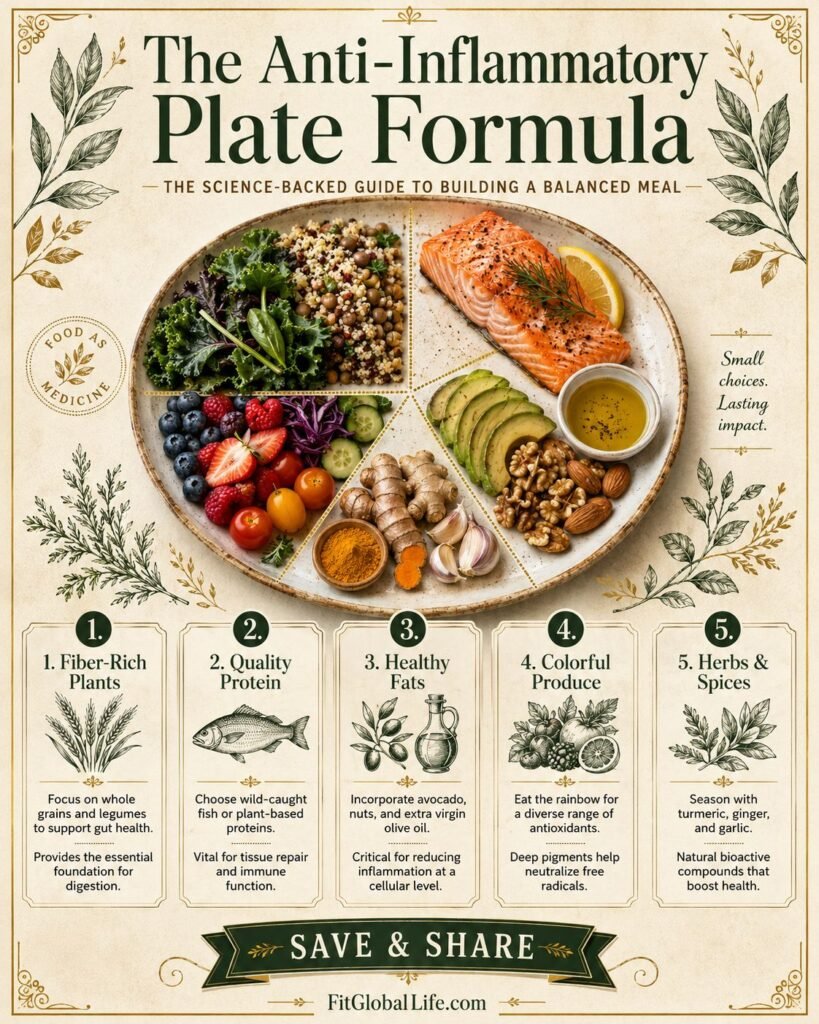
A useful anti-inflammatory meal usually includes five building blocks. First, it has fiber from vegetables, legumes, fruit, oats, barley, brown rice, quinoa, sweet potatoes, or other minimally processed carbohydrates. Fiber helps support satiety and the gut ecosystem. FitGlobalLife’s article on the microbiome as a quiet health partner explains why the gut should not be treated as a side character in wellness.
Second, the meal includes protein. That can come from fish, poultry, eggs, Greek yogurt, tofu, tempeh, lentils, beans, edamame, or a combination. Protein supports satiety and helps a weekday meal feel complete, rather than like a motivational poster with garnish. Third, it contains healthy fats, especially from extra-virgin olive oil, avocados, nuts, seeds, and fatty fish. The American Heart Association recommends eating fish, particularly fatty fish, two times per week, with a serving described as 3 ounces cooked or about three-quarters cup flaked. The AHA fish and omega-3 guidance is a helpful external source when discussing salmon, sardines, anchovies, and similar choices.
Fourth, an anti-inflammatory meal brings color. Dark leafy greens, berries, tomatoes, carrots, squash, bell peppers, herbs, citrus, beets, and purple cabbage offer different phytochemicals and micronutrients. Fifth, it minimizes the ingredients that often crowd out nutrient density: sugary drinks, refined flour, deep-fried foods, processed meats, and snack foods designed to be finished before your brain notices. The Dietary Guidelines for Americans emphasize nutrient-dense foods across vegetables, fruits, grains, dairy, protein foods, and oils while limiting added sugars, saturated fat, and sodium. The Dietary Guidelines PDF is useful in supporting this broader public health framing.
One more point: anti-inflammatory meals should not create food anxiety. The word “inflammation” is often abused online, as a marketing weapon. Real life is messier. A useful plan should be flexible enough for culture, budget, taste, family preferences, allergies, and time. This is why the meals below include swaps, pantry shortcuts, and a prep system. For readers trying to avoid glucose swings without counting every calorie, FitGlobalLife’s guide to food pairing for steadier glucose gives a practical lens: pair carbohydrates with protein, fiber, and fat instead of treating carbs like the villain of the season.
The 7-Meal Weekday Framework
1. Salmon, Lentil, and Greens Power Bowl
This is the weekday bowl for people who want something that feels restaurant-level without requiring restaurant-level patience. The base is cooked lentils, a pile of greens, roasted or pan-seared salmon, olive oil, lemon, herbs, and something crunchy such as walnuts, pumpkin seeds, or sliced radish. It is high in protein, rich in fiber, and built around omega-3 fats from salmon. The lentils make it filling enough for dinner, while the greens keep it bright instead of heavy.
How to make it fast: use canned or vacuum-packed lentils, prewashed spinach or arugula, and salmon portions that cook in under ten minutes. Season the salmon with salt, pepper, paprika, garlic, and lemon zest. Sear it skin-side down or bake it while you assemble the bowl. Toss lentils with olive oil, lemon juice, chopped parsley, diced cucumber, and a little mustard. Add greens, salmon, seeds, and a spoonful of yogurt-tahini sauce for a creamy finish.
Why it works: omega-3-rich fish, legumes, and leafy greens give this meal more anti-inflammatory density than a plain protein-and-rice plate. It also supports stable energy because the lentils slow the meal down. The bowl can be served warm, at room temperature, or cold, making it office-friendly. If salmon is too expensive, try sardines, trout, canned salmon, or even a boiled egg plus extra lentils. Wellness does not need to invoice you like a boutique hotel.
Busy-weekday swap: replace salmon with canned sardines, smoked trout, or baked tofu. Replace lentils with chickpeas or white beans. Replace fresh greens with frozen spinach warmed in olive oil and garlic. The point is to keep the structure: protein plus legumes plus greens plus healthy fat.
For a deeper FitGlobalLife follow-up, pair this meal with nutrition to support mental clarity, especially if you want the nutrition habit to connect with energy, gut health, or long-term wellness rather than becoming another short-lived food project.
2. Turmeric Chickpea and Vegetable Skillet
This skillet is the “I have 20 minutes and one pan” meal. It starts with olive oil, onion or shallot, garlic, grated ginger, turmeric, black pepper, chickpeas, frozen vegetables, and a splash of coconut milk or broth. Serve it over brown rice, quinoa, cauliflower rice, or whole-grain couscous. It is warm, colorful, cheap, and forgiving. You can make it when the fridge is uninspiring, but the pantry still has your back.
How to make it fast: Cook Onion, garlic and ginger for two minutes. Add turmeric, cumin, black pepper and a pinch of chili. Add drained chickpeas and frozen vegetables such as peas, spinach, cauliflower, carrots, or green beans. Add broth or light coconut milk, simmer for eight to ten minutes, and finish with lemon or lime. If you want more protein, add tofu cubes, shredded chicken, or Greek yogurt on top.
Why it works: chickpeas bring fiber and plant protein; turmeric and ginger bring flavor compounds that are often discussed in anti-inflammatory nutrition; vegetables add color and volume. Black pepper is commonly paired with turmeric because piperine can increase curcumin bioavailability, although this does not turn dinner into medicine. It simply makes the spice pairing smarter.
Busy-weekday swap: use a frozen vegetable mix and microwave grains. If the skillet tastes flat, add acid before adding more salt. Lemon, lime, or a small spoon of vinegar can wake the whole thing up. For readers interested in a broader view of food-based focus support beyond supplements, FitGlobalLife’s guide to functional eating can sit beside this skillet as a practical companion.
For a deeper FitGlobalLife follow-up, pair this meal with functional nutrition without wellness theatrics, especially if you want the nutrition habit to connect with energy, gut health, or long-term wellness instead of becoming another short-lived food project.
3. Berry-Walnut Overnight Oats with Greek Yogurt
Breakfast can either stabilize the day or quietly sabotage it before 9 a.m. This overnight oat jar is built for the person who opens the laptop before the kettle has finished boiling. Combine rolled oats, Greek yogurt or kefir, chia seeds, berries, walnuts, cinnamon, and milk or a fortified plant milk. Let it sit overnight. In the morning, it is ready before your decision fatigue has even logged in.
How to make it fast: use a 1:1 ratio of oats to liquid, then add two or three spoonfuls of yogurt, a tablespoon of chia seeds, a handful of berries, and chopped walnuts. Sweeten lightly with mashed banana, grated apple, or a small drizzle of honey if needed. Make two or three jars at once. Keep the texture adjustable: add more liquid for softer oats, less for a thicker pudding feel.
Why it works: oats and chia provide soluble fiber; berries bring polyphenols; walnuts add ALA omega-3 fats; yogurt or kefir adds protein and fermented-food value. This meal also helps people who snack all morning because their breakfast was basically dessert wearing a health halo. For more snack architecture between meals, FitGlobalLife’s guide to
pairs well with this breakfast strategy.
Busy-weekday swap: use frozen berries straight from the freezer. They thaw overnight and release juices into the oats. If dairy does not work for you, use soy yogurt or another protein-rich alternative. If nuts are not allowed, use pumpkin seeds or sunflower seed butter.
For a deeper FitGlobalLife follow-up, pair this meal with fermented foods that support mood and immunity, especially if you want the nutrition habit to connect with energy, gut health, or long-term wellness instead of becoming another short-lived food project.
4. Sardine, Tomato, and White Bean Toast
This is the no-cook meal that looks suspiciously simple until you realize it solves lunch in five minutes. Toast whole-grain bread. Mash white beans with olive oil, lemon, garlic, and black pepper. Add sardines, sliced tomatoes, herbs, and a little chili flake. That is it. The result is savory, protein-rich, and far more satisfying than a sad cracker situation.
How to make it fast: keep tinned sardines, canned beans, whole-grain bread, and jarred roasted peppers in the pantry. Mash the beans with a fork directly in a bowl. If tomatoes are out of season, use roasted peppers or a spoon of tomato paste stirred into the beans. Add arugula or spinach if available.
Why it works: sardines provide omega-3 fats and protein; white beans add fiber; tomatoes add lycopene and acidity; olive oil enhances flavor and mouthfeel. It is also budget-friendly compared with many wellness meals. The Cleveland Clinic notes that Mediterranean and DASH-style eating patterns are among the best-supported anti-inflammatory approaches.
is a useful source for the broader pattern behind this meal.
Busy-weekday swap: use canned salmon, tuna, mackerel, or smashed boiled eggs if sardines are not your thing. If bread is not ideal for you, serve the bean mash and fish over greens, brown rice cakes, or leftover roasted sweet potato slices.
For a deeper FitGlobalLife follow-up, pair this meal with whole-food rules for the ultra-processed era, especially if you want the nutrition habit to connect with energy, gut health, or long-term wellness instead of becoming another short-lived food project.
5. Miso-Ginger Tofu Noodle Soup
This is comfort food with a calmer nutritional backbone. It is especially useful on evenings when you want something warm but do not want the heaviness of takeout. Start with broth, ginger, garlic, mushrooms, tofu, miso, greens, edamame, and quick-cooking soba or rice noodles. The broth does the emotional work; the tofu, edamame, and noodles do the practical work.
How to make it fast: simmer broth with sliced ginger, garlic, and mushrooms for five minutes. Add tofu cubes, greens, and noodles. Turn off the heat before stirring in miso, because boiling can damage some of its delicate qualities and flatten the flavor. Finish with sesame oil, scallions, chili crisp, or lime. If you want more vegetables, add frozen spinach, bok choy, napa cabbage, or shredded carrots.
Why it works: soy foods provide plant protein; miso is fermented; mushrooms bring savory depth; ginger adds warmth; greens add micronutrients. Mediterranean diet, microbiota and inflammation: interactions between dietary patterns, gut microbes and inflammation – A review
helps support the gut-focused reasoning without pretending one bowl of soup rewrites biology overnight.
Busy-weekday swap: use pre-cubed tofu, frozen edamame, and instant miso packets as the emergency version. Add leftover chicken if tofu is not preferred. The meal’s value lies not in purity, but in building a better default than scrolling through delivery apps when hungry.
For a deeper FitGlobalLife follow-up, pair this meal with next-generation gut-health basics, especially if you want the nutrition habit to connect with energy, gut health, or long-term wellness rather than becoming another short-lived food project.
6. Mediterranean Turkey or Tempeh Lettuce Plates
This meal is for households where everyone wants dinner fast, but not everyone wants the same dinner. Cook a skillet filling with lean ground turkey or crumbled tempeh, garlic, oregano, smoked paprika, tomato paste, chopped spinach, and chickpeas or lentils. Serve it with lettuce cups, cucumbers, olives, yogurt sauce, herbs, and whole-grain pita or brown rice. People can build their own plates, which reduces dinner negotiations by at least 38 percent. That statistic is fake, but the relief is real.
How to make it fast: cook the protein with spices and tomato paste until browned. Add chickpeas, spinach and a splash of water. Let it simmer for five minutes. Stir together Greek yogurt, lemon, garlic, and dill for sauce. Put everything on the table as components. Adults can build bowls; kids can build wraps; meal-prep people can pack leftovers over grains.
Why it works: the meal balances protein, fiber, herbs, fermented dairy if using yogurt, and vegetables. It also supports metabolic flexibility because the carbohydrate portion can change with activity level and hunger. For readers who want that concept without turning meals into math homework, FitGlobalLife’s article on
gives the bigger framework.
Busy-weekday swap: use rotisserie chicken, canned lentils, or pre-cooked tempeh strips. Use hummus instead of yogurt sauce. Use cabbage leaves, tortillas, or grain bowls instead of lettuce cups. Flexibility is the point.
For a deeper FitGlobalLife follow-up, pair this meal with daily energy habits that actually survive workdays, especially if you want the nutrition habit to connect with energy, gut health, or long-term wellness instead of becoming another short-lived food project.
7. Sweet Potato, Black Bean, and Avocado Tray Meal
The tray meal is the weekday hero because the oven does the repetitive work while you answer messages, clean a counter, or stare into space like a tired but honorable citizen. Roast sweet potato cubes, red onion, bell peppers, and cauliflower with olive oil, cumin, smoked paprika, and chili powder. Add black beans near the end to warm through. Serve with avocado, lime, cilantro, and a spoon of yogurt or tahini sauce.
How to make it fast: chop vegetables on Sunday or buy pre-cut options when the week is crowded. Roast at high heat until browned. Make extra because the leftovers become lunch bowls, tacos, egg scrambles, or salad toppers. This is one of the easiest ways to make healthy eating feel abundant instead of restrictive.
Why it works: sweet potatoes add fiber and carotenoids; black beans bring protein and resistant starch; avocado adds monounsaturated fat; peppers and onions add flavor and color. The meal is also naturally affordable. If readers want to connect food quality with broader nutrient systems, FitGlobalLife’s guide to
adds a useful lens on why ingredients are more than macros.
Busy-weekday swap: use frozen sweet potato cubes, canned black beans, and pre-made guacamole. If you need more protein, add eggs, chicken, tofu, tempeh, or pumpkin seeds. If you need more crunch, add shredded cabbage. If you need more comfort, put it in a warm bowl and call it a win.
For a deeper FitGlobalLife follow-up, pair this meal with the mineral gap in modern healthy diets, especially if you want the nutrition habit to connect with energy, gut health, or long-term wellness instead of becoming another short-lived food project.
The Busy Weekday Prep System: 90 Minutes, 7 Meal Paths
The easiest way to make anti-inflammatory meals happen on weekdays is to stop treating each meal like a separate creative project. Batch the foundations, then assemble different combinations. You do not need seven complete recipes sitting in containers, because that can become boring and oddly stressful. You need modular pieces: one grain, one legume, one protein, two vegetables, one sauce, one crunchy topping, and one emergency no-cook option.
Here is a 90-minute rhythm. First, cook one pot of grains such as quinoa, brown rice, farro, or barley. Second, roast a tray of vegetables: sweet potatoes, onions, cauliflower, carrots, peppers, zucchini, or Brussels sprouts. Third pick a protein: Baked salmon, boiled eggs, tofu, tempeh, chicken, turkey filling or lentils. Fourth, Make one sauce: Lemon-tahini, yogurt-dill, miso-ginger, or olive oil vinaigrette. Fifth, wash and dry greens. Sixth, portion berries, nuts, seeds, or oats for breakfast. Seventh, set aside a pantry meal for the day everything goes sideways.
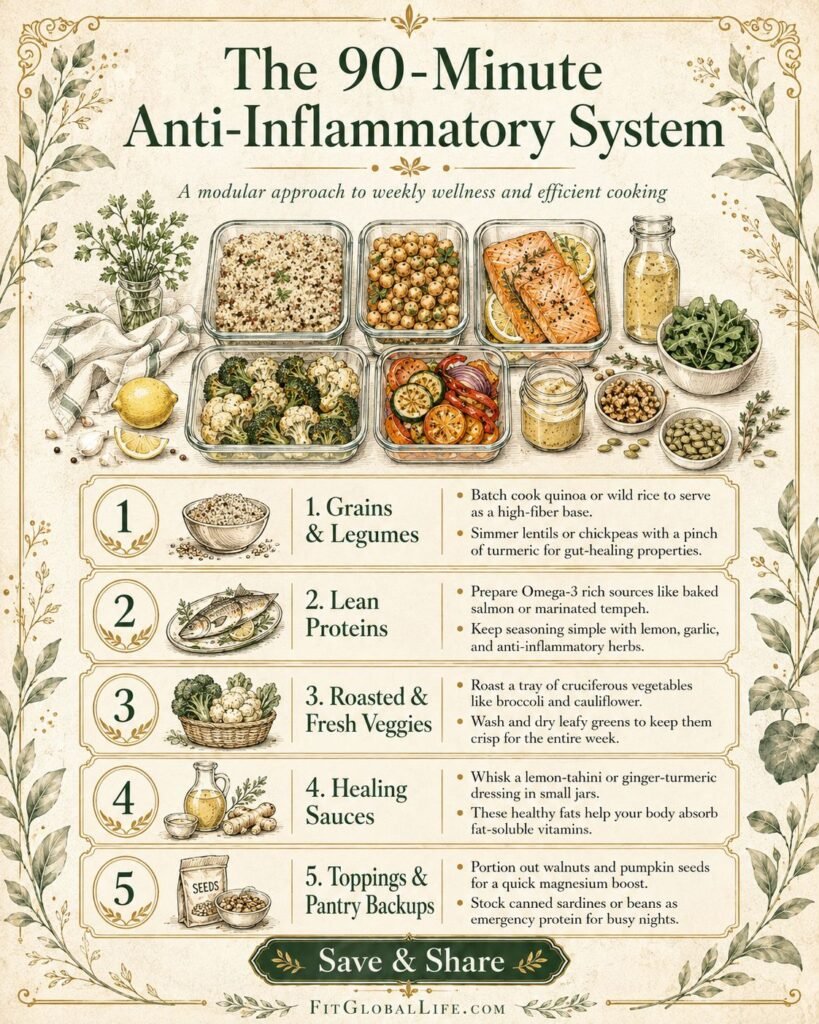
This system respects the reality that appetite changes. Monday may need a salmon bowl. Tuesday may need miso soup. Wednesday may need toast. Thursday may need a tray meal. Friday may need leftovers dressed up with avocado and lime because morale is hanging by a thread. For people who travel often or eat away from home, the same logic also supports staying healthy while traveling: build meals around repeatable patterns rather than rigid rules.
| Prep block | What to make | Time | How it becomes meals |
| Grain or starch | Quinoa, brown rice, farro, oats, sweet potatoes | 20-35 minutes | Bowls, tray meals, breakfast jars, lettuce plates |
| Legume | Lentils, chickpeas, black beans, white beans | 5-20 minutes | Skillets, toast, bowls, soups |
| Protein | Salmon, tofu, tempeh, turkey, eggs, yogurt | 10-25 minutes | Main meal anchor for satiety |
| Vegetables | Roasted tray plus raw greens | 15-30 minutes | Volume, color, fiber, micronutrients |
| Sauce | Tahini-lemon, yogurt herb, miso ginger, vinaigrette | 5 minutes | Prevents healthy meals from tasting like punishment |
| Emergency pantry | Sardines, beans, oats, frozen berries, frozen greens | 0-5 minutes | Protects the week when plans collapse |
For readers focused on long-term health rather than short-term food challenges, this prep style connects well with FitGlobalLife’s guide to health habits that age well. The best weekday meal system is not the most impressive one. It is the one quiet enough to repeat.
Anti-Inflammatory Grocery List for Real Life
A grocery list becomes more useful when it is organized by function rather than by aspiration. Nobody needs a cart full of expensive powders if they do not have dinner ingredients. Start with foundations. Choose two proteins, two legumes, two greens or vegetables, one grain, one fruit, one healthy fat, and one flavor booster. That is enough to make many anti-inflammatory meals without turning your kitchen into a nutrition laboratory.
| Category | Good choices | Why it helps |
| Proteins | Salmon, sardines, eggs, tofu, tempeh, chicken, turkey, Greek yogurt | Satiety, muscle support, meal completeness |
| Legumes | Lentils, chickpeas, black beans, white beans, edamame | Fiber, plant protein, gut support |
| Vegetables | Spinach, kale, broccoli, peppers, tomatoes, carrots, cauliflower | Color, polyphenols, micronutrients, volume |
| Fruits | Berries, oranges, apples, cherries, kiwi | Fiber, vitamin C, polyphenols |
| Whole grains and starches | Oats, quinoa, brown rice, barley, sweet potatoes, soba | Energy, fiber, meal structure |
| Healthy fats | Olive oil, avocado, walnuts, chia, flax, pumpkin seeds | Flavor, satiety, fatty acid diversity |
| Flavor boosters | Garlic, ginger, turmeric, herbs, lemon, vinegar, miso, chili | Makes healthy meals craveable |
| Convenience backups | Frozen berries, frozen greens, canned beans, tinned fish, microwave grains | Keeps the plan alive during chaos |
The phrase “real life” matters. Frozen vegetables count. Canned beans count. Tinned fish count. Prewashed greens count. Microwave grains count. The wellness internet sometimes makes people feel that if they are not massaging kale under artisan moonlight, they have failed. No. Convenient whole-food ingredients are not cheating; they are infrastructure. For readers interested in how modern food quality and processing affect daily choices, FitGlobalLife’s article on whole-food rules for the ultra-processed era gives helpful context.
Micronutrients matter too, especially when people eat the same few foods all week. Magnesium, potassium, iron, zinc, selenium, iodine, vitamin D, folate, and omega-3 fats often require intentional variety. FitGlobalLife’s piece on the mineral gap in modern healthy diets is a smart follow-up for readers who assume “healthy” automatically means “nutritionally complete.”
Optional Amazon Shopping Shortcuts for This Meal Plan
If you use Amazon for kitchen or pantry restocks, keep the links practical: tools that reduce weekday friction, not miracle products. Check labels, allergens, sizes, shipping details, and current availability before buying.
| Amazon-friendly item | Where it helps in this guide | Shopping link |
| Glass meal prep containers | Power bowls, tray meals, leftovers, and lunch portions | Shop glass meal prep containers on Amazon |
| Overnight oats jars | Berry-walnut overnight oats, chia pudding, yogurt jars, and grab-and-go breakfasts | Shop overnight oats jars on Amazon |
| Insulated food jar | Miso-ginger tofu soup, warm grains, and office-friendly comfort meals | Shop insulated food jars on Amazon |
| Half sheet pans | Sweet potatoes, vegetables, salmon, tofu, and one-tray meal prep | Shop half sheet pans on Amazon |
| Canned sardines in olive oil | No-cook toast, pantry lunches, omega-3-rich backup meals | Shop canned sardines on Amazon |
| Miso paste | Fast broth, noodle soup, sauces, and savory meal-prep flavor | Shop miso paste on Amazon |
Editorial note: These links are shopping shortcuts, not medical recommendations. Choose products based on your dietary needs, budget, and food-safety preferences.
Common Mistakes That Make Healthy Meals Feel Impossible
The first mistake is trying to cook a new recipe every night. Novelty is fun until it becomes unpaid project management. Keep the base pattern consistent and change the flavor: Mediterranean one day, miso-ginger the next, turmeric skillet after that.
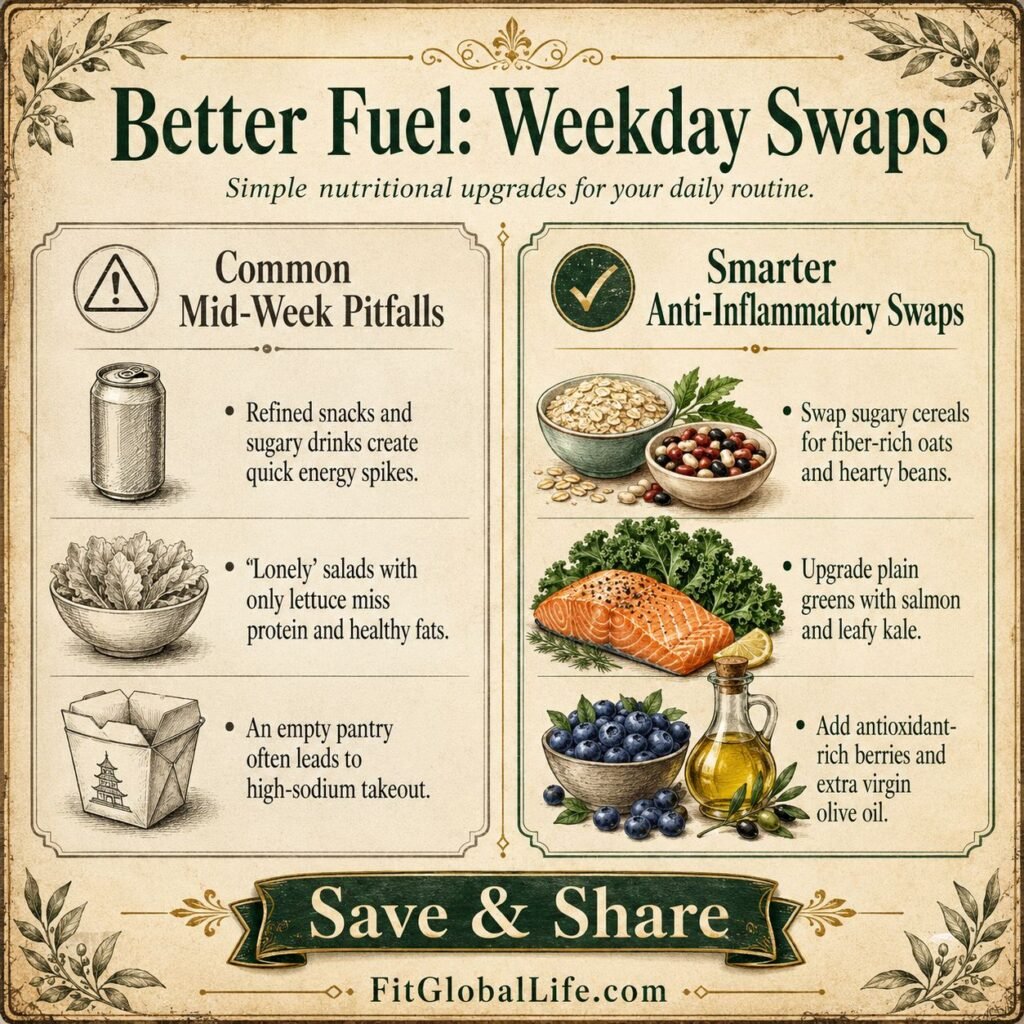
The second mistake is under-eating at breakfast or lunch, then expecting heroic discipline at dinner. A breakfast with protein, fiber, and fat makes the evening version of you less chaotic. Berry-walnut oats, eggs with greens, yogurt with fruit, or leftovers can all work. This is where morning rituals that support well-being can become practical: the first meal is not just food; it sets the tone.
The third mistake is making meals too low in carbohydrates. Some people feel better with fewer refined carbs, but many busy adults need enough slow carbohydrates to function. Sweet potatoes, oats, beans, lentils, brown rice, barley, and fruit can support energy without turning the meal into a sugar roller coaster, especially when paired with protein and fat.
The fourth mistake is forgetting pleasure. A meal that is technically healthy but emotionally bleak will not survive. Add sauce. Add herbs. Add acid. Add texture. A lemony yogurt sauce can rescue a bowl. Toasted walnuts can rescue oats. Chili crisp can rescue soup. Food should support the body without making the soul file a complaint.
The fifth mistake is using anti-inflammatory eating as a moral identity. This is food, not a purity contest. If you eat fries with friends on Friday, you have not destroyed the week. The long-term pattern matters more than the single meal. FitGlobalLife’s guide to daily energy habits that actually survive workdays supports that realistic rhythm: steady beats dramatic.
The sixth mistake is ignoring recovery outside the kitchen. Diet interacts with sleep, movement, stress, sunlight, social connection, and workload. A person cannot out-salmon a chronically exhausted life. Meals help, but they are part of a system. For readers interested in cellular energy and recovery, FitGlobalLife’s guide to mitochondrial recovery and everyday energy provides a broader wellness lens.
How to Turn the 7 Meals Into a Weekday Menu
Here is a sample flow. Monday: salmon, lentil, and greens bowl. Tuesday: Turmeric chickpea skillet with leftover grains Wednesday: Berry-walnut overnight oats and sardine-white bean toast Thursday: Miso-ginger tofu noodle soup. Friday: Mediterranean lettuce plates with turkey or tempeh. Saturday or Sunday prep: sweet potato, black bean, and avocado tray meal, with leftovers becoming Monday lunch.
The trick is overlap. The chickpeas used in the skillet can become a crunchy topping. The greens used in the bowl can go into soup. The yogurt used in oats can be used as sauce. The herbs used for turkey plates can brighten beans. The roasted sweet potatoes can be made into breakfast hash. This is not meal prep as punishment; it is ingredient choreography.
Readers who enjoy personalized nutrition may be curious about genetics, glucose responses, or bio-individuality. That can be useful, but it should not block the basics. FitGlobalLife’s article on epigenetic eating and DNA markers can be explored after the foundational pattern is in place. Start with fiber, protein, plants, fats, and consistency. Advanced personalization works better when the basics are not missing.
| Day | Main meal | Prep carryover | Adjustment |
| Monday | Salmon, lentil, and greens bowl | Cook extra lentils | Use leftovers for toast or salad |
| Tuesday | Turmeric chickpea skillet | Use frozen vegetables | Serve over leftover grains |
| Wednesday | Berry-walnut oats + sardine toast | Use pantry fish and beans | No-cook survival day |
| Thursday | Miso-ginger tofu noodle soup | Use leftover greens | Add edamame for protein |
| Friday | Mediterranean lettuce plates | Use yogurt sauce and herbs | Turn leftovers into wraps |
| Weekend prep | Sweet potato black bean tray meal | Roast extra vegetables | Pack lunch bowls |
Final Thoughts: Your Weekday Meals Do Not Need a Personality Makeover
The best anti-inflammatory meals for busy weekdays are not the most photogenic meals. They are the meals that lower friction, feed the gut, stabilize energy, support protein needs, and make whole foods feel normal. Salmon bowls, chickpea skillets, overnight oats, sardine toast, miso soup, Mediterranean plates, and sweet potato tray meals are not random recipes; they are templates. Once you understand the template, you can adapt it to budget, culture, appetite, and schedule.
That is the real win. A person who learns to build a meal from fiber, protein, color, healthy fat, and flavor does not need to start over every Monday. They can open the fridge and see possibilities instead of failure. They can eat well on a tired night without turning dinner into a performance review.
Anti-inflammatory eating is not about becoming the kind of person who never wants pizza. That person may not exist, and if they do, they probably need a hug. The practical goal is simpler: make the default meal supportive enough that occasional imperfect meals become part of a balanced life, not proof that the whole plan collapsed.
FAQ
They can support weight management by improving satiety and reducing reliance on ultra-processed foods, but they are not automatically a weight-loss plan. Yes. Portions, activity, sleep, medications, hormones and health conditions all count.
Yes. Focus on legumes, tofu, tempeh, edamame, nuts, seeds, whole grains, fruits, vegetables, olive oil, herbs and spices. For omega-3s, use chia, flax, walnuts, hemp seeds and consult a clinician about algae-based EPA/DHA if needed.
We do not know how long it will take. Some people notice steadier energy or digestion within days, but inflammatory markers and chronic conditions involve many factors. Think in terms of a consistent dietary pattern over weeks and months, not a one-week miracle.
Yes. Frozen vegetables are often picked and frozen quickly so they’re a great pick for busy week days. The bigger issue is what they are packaged with. Plain frozen vegetables are usually more useful than heavily sauced or fried versions.
Not unless you have a diagnosed condition, allergy, intolerance, or medical reason. Many people can include some dairy, whole grains, tomatoes, peppers, and modest sugar within an overall healthy pattern. Restriction should be personalized, not copied from random internet panic.
Disclaimer
This article is for educational and informational purposes only. It is not medical advice, diagnosis, or treatment. People with chronic inflammatory conditions, autoimmune disease, kidney disease, diabetes, cardiovascular disease, gastrointestinal disorders, pregnancy-related needs, eating disorder history, food allergies, or medication interactions should consult a qualified healthcare professional or registered dietitian before making major dietary changes.