

When everything is connected in the spring of 2026, a silent revolution is happening. People all throughout the world are thinking about it, not doing it on the streets. A new movement has reached a fever pitch after ten years of our attention being collected, broken apart, and sold to the highest bidder. At Fit Global Life, we are seeing a massive shift in how people define “freedom.” It is no longer about physical movement or financial independence alone; it is about Cognitive Sovereignty.
We worried about data privacy for years, like who owned our emails or our location history. But in 2026, the stakes have changed. “Who owns your data?” is not the right question anymore. But “Who owns your next thought?”
What does “Cognitive Sovereignty” mean in 2026?
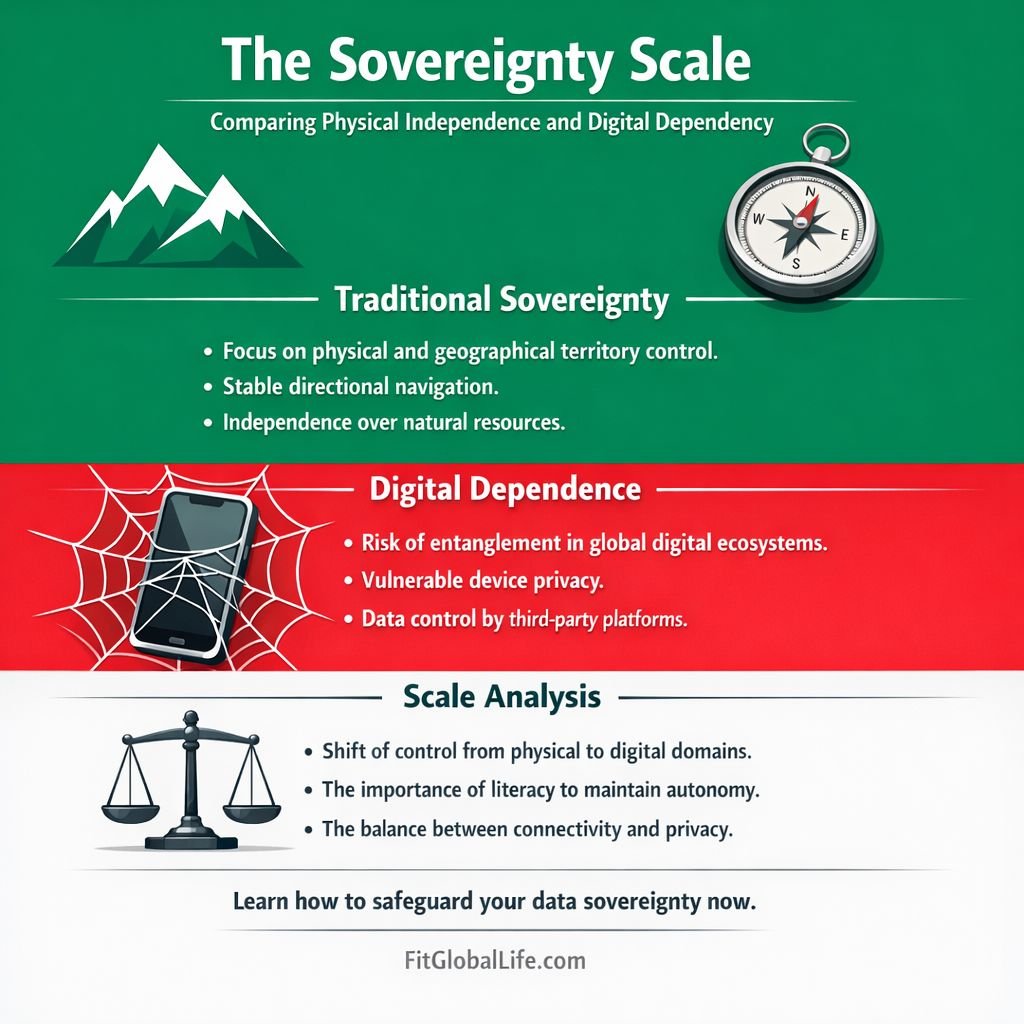
Cognitive Sovereignty means that a person has the right to be the sole controller of their own thoughts, attention, and choices. It is like border security for your intellect. In an era where generative AI and predictive algorithms can anticipate our moods before we even feel them, our “choices” are often the result of sophisticated “choice architecture” designed by entities that profit from our distraction.
This isn’t just about “scrolling less.” It is about recognizing that external interests are colonizing your brain. If you feel like your mind is “looping” or that your focus is shattered, you aren’t failing—your sovereignty is being eroded. This is one of the 7 shocking critical insights everyone must understand in 2026 to avoid being left behind.
The Crisis of 2026: From Getting Data to Controlling Thoughts
The change from the “Attention Economy” to the “Cognitive Extraction Economy” has been small but very bad. Recent research from the Stanford Center for Digital Civil Society shows that the average person now changes tasks every 42 seconds when using a digital device.
This frequent “context switching” is a type of brain damage. By 2026, “Neuro-Fatigue” has risen by 40% globally, directly correlating with the integration of “always-on” AI assistants. We have become “autonomously depleted,” feeling as though our daily schedules are dictated by notifications rather than by intent. To combat this, we must master digital deceleration, which is the primary art of “Deep Focus” in an AI-driven world.
The 5 Pillars of Reclaiming Your Cognitive Sovereignty
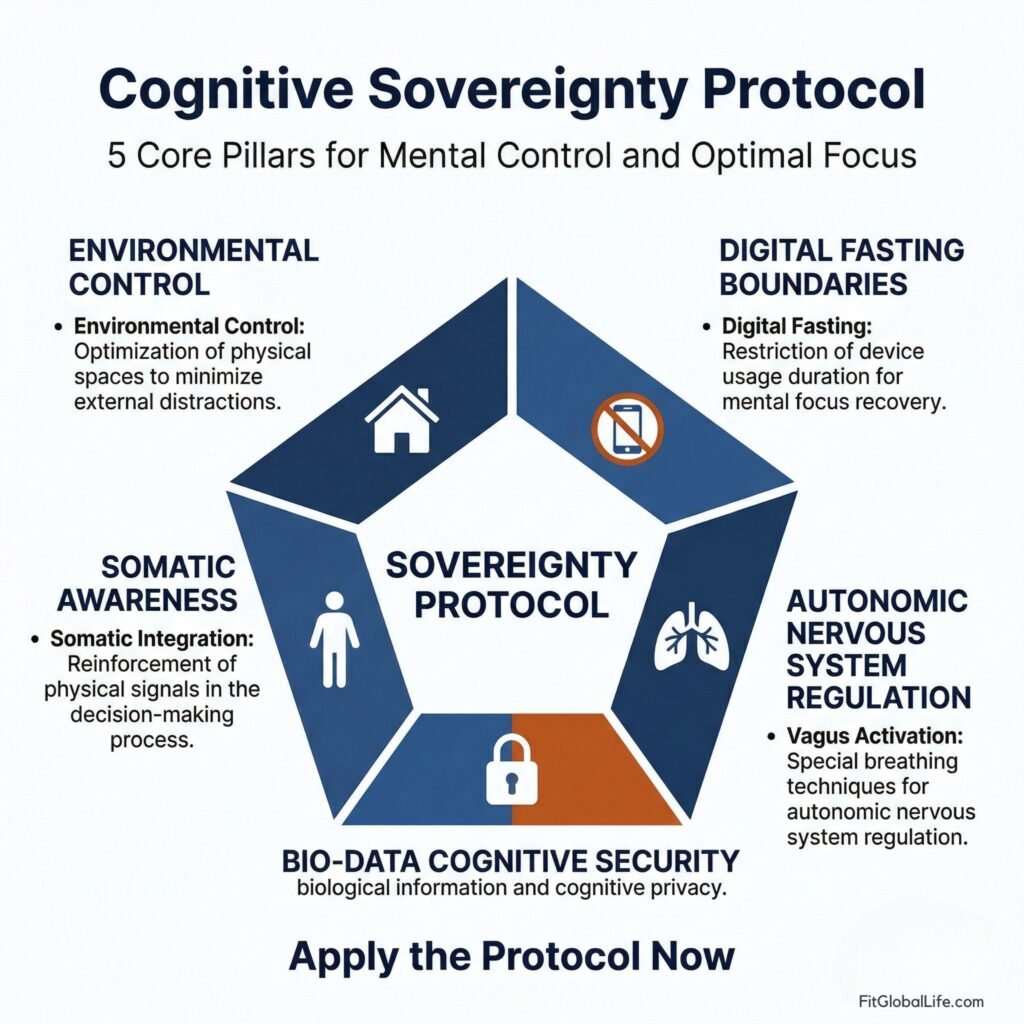
Reclaiming your brain requires more than a weekend “reset.” It requires a structural overhaul of your interaction with the digital and physical world. Here is the expanded 2026 protocol for mental autonomy.
1. Neural Architecture and Environmental Design
Your brain is a plastic organ that physically reshapes itself in response to its surroundings—a concept known as neuroplasticity. However, most modern environments are designed for consumption, not creation. To reclaim your sovereignty, you must become the architect of your own space.
In 2026, we discovered that neuro-architecting your morning is the most effective way to “gate-keep” your focus for the rest of the day. This involves creating “Analog Zones” where silicon-based technology is physically barred. Furthermore, the architecture of sleep plays a critical role; research in the Journal of Clinical Sleep Medicine (.org) shows that bedroom layout and air ionization can either amplify or degrade REM cycles, which are essential for processing the day’s cognitive load.
The Strategy: Design your “Sovereignty Suite”—a room or corner dedicated to high-order thinking. No screens, no notifications, and specific lighting designed to trigger “Alpha” brain waves.
2. Algorithmic Fasting and Decision Autonomy
Just as we fast to improve mitochondrial recovery and cellular energy, we must fast from algorithms. Algorithmic fasting is the practice of making decisions—what to eat, what to read, where to walk—without the assistance of a recommendation engine.
We are currently suffering from “Choice Paralysis,” where we rely on AI to filter our reality. This erodes our “intuition muscle.” By following a 7-day digital detox, you can reset your body and mind so you can hear your own internal voice again. True Cognitive Sovereignty is the ability to say “No” to the “Recommended for You” section and “Yes” to a path you discovered yourself. This is the essence of a digital detox protocol, which involves 7 simple habits to reclaim focus.
The Strategy: Once a week, engage in “Raw Exploration.” Go to a bookstore, a park, or a restaurant without using a search engine or GPS. Let your curiosity, not a line of code, guide you.
3. Vagus Nerve Mastery and Emotional Resilience
Cognitive sovereignty is impossible if your nervous system is in a state of chronic “fight or flight.” When you are stressed, your prefrontal cortex—the seat of rational decision-making—shuts down, leaving you vulnerable to impulsive clicks and emotional manipulation.
In 2026, activating the vagus nerve will be the biological “missing link” that helps people stay calm and do well. When you tone the vagus nerve, you raise your “Vagal Tone.” This lets you stay a spectator of digital chaos instead of a reactive participant. You need to learn how to be emotionally strong and use the 7 thought changes to safeguard your freedom from “outrage culture.” polyvagal parenting often teaches this so that the next generation’s nervous systems stay in check.
The Plan: Use breathing exercises like “Box Breathing” or “Exhale Lengthening” to reset your nervous system in less than five minutes.
4. The “Cold Storage” Mind and Bio-Data Sovereignty
Your brain waves, heart rate variability (HRV), and even the size of your pupils are the new “cookies” in 2026. Wearable tech gives companies a way to see into your mind and figure out how you feel before you even know it.
We are entering the sovereign health era, where the most radical act you can perform is taking your bio-data off the cloud and into personal “cold storage”. This protects your “Neuro-Rights.” We are seeing a rise in decentralized health, where blockchain technology is finally being used to protect personal fitness and brain-health records from corporate extraction.
The Strategy: Audit your wearables. Make sure your data is stored on your device and not synced to a cloud service that isn’t yours. Put privacy-first platforms first. They should respect your bio-markers as private information.
5. Somatic Integration: Using Your Whole Body to Think
We have been taught that “thinking” solely happens in our heads. But the top neuroscientists at Harvard’s Mind Brain Behavior Initiative in 2026 say that our gut and muscles are very important to how we think.
To get rid of the “mental clutter” that builds up from living in a fast-paced digital world, you need to do Somatic release and somatic practices. If your body is tight and stagnant, your thoughts will be too. By engaging in mind-body recovery, you ensure that your cognitive decisions are grounded in physical reality rather than digital abstraction. This is why body-mind connection practices are now the standard for reducing “algorithmic anxiety”.
The plan: use “physical pattern interrupts.” Every 90 minutes of digital work, take 2 minutes to do some strenuous movement or somatic stretching to “shake off” the digital trance and get back in touch with your body.
The Focus Economy: Why Paying Attention Is the New Global Currency
We used to count wealth in gold, then in oil, and now in data. People who can regulate their own attention will be the wealthy in 2026. If you can work on one difficult activity for four hours without getting distracted by your phone, you have an advantage against AI that no one else can match.
This transformation is good for the peaceful economy, where “slow growth” and deep focus are more vital than “fast money” and shallow metrics. We are seeing the rise of the post-work wellness economy, where “Soft Living”—a life defined by mental peace and sovereignty—is the new ultimate status symbol.
The Dark Side: Why the System Wants Your Distraction
There is a multi-billion-dollar “Attention Infrastructure” dedicated to keeping you in a state of “continuous partial attention.” When you are sovereign, you are unpredictable. You don’t buy the “suggested” product. You don’t click the “outrage” headline. You become an “anomaly” in the predictive models.
For the modern digital economy to work, it needs you to be a predictable node in a network. When you choose Cognitive Sovereignty, you are choosing to be a person, not just a number. This is why people are moving away from “aesthetic fitness” and toward functional health. They are learning that having a six-pack is pointless if you don’t own the mind inside the body.
In conclusion, the future belongs to people who govern themselves.
Cognitive Sovereignty is not just a trend; it is a way for the human spirit to survive in the age of AI. The line between “Self” and “System” will continue to get blurry as we use digital interfaces more and more.
The next ten years will be led by people who put their mental agency first. They will be the creators who can think original thoughts, the leaders who can navigate chaos with a clear head, and the individuals who find genuine joy in a world designed to keep them anxious. It is time to stop being a passenger in your own brain. Reclaim your focus. Reclaim your sovereignty. Reclaim your life.
FAQ: Frequently Asked Questions
Disclaimer
The information provided in this article is for educational and informational purposes only and is not intended as medical, psychological, or legal advice. Always consult with a qualified health professional or neuro-ethicist before making significant changes to your mental health routine or data-sharing habits.