
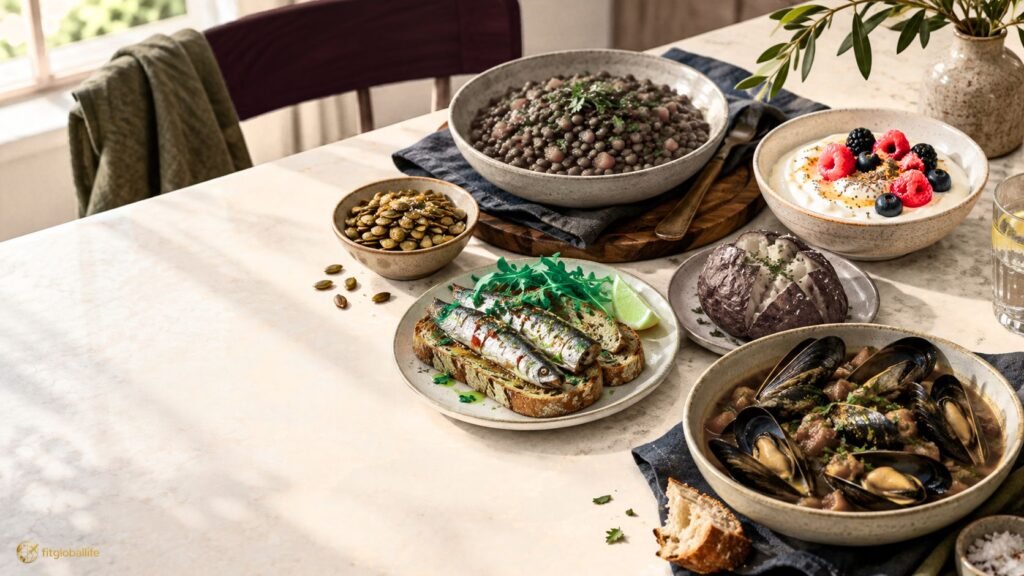
Mineral-rich foods rarely get the same attention as protein, fiber, or trendy longevity ingredients. Yet, minerals are woven into nearly every ordinary thing your body has to do well: move muscles, transmit nerve signals, carry oxygen, maintain bone, regulate fluid balance, build enzymes, and support normal thyroid and immune function. The problem is not that everyone is clinically deficient. The more common issue is quieter: many diets do not provide enough of several micronutrients consistently.
According to a 2024 modeling research that included 185 countries, 68% of the world's population had insufficient intakes of iodine, 66% of calcium, and 65% of iron from diet alone, before fortification or supplements were taken into account. For a number of minerals, including iron, zinc, magnesium, and selenium, the same research revealed sex-specific variations. That does not imply that a diagnosed deficiency affects two-thirds of the world's population. It does indicate that there are enough gaps in micronutrient consumption throughout the world to warrant practical intervention.
Whole, nutrient-dense foods are also emphasized in the 2025–2030 Dietary Guidelines for Americans. Because of this, it's a good time to start talking about creating meals that naturally include multiple elements at once rather than pursuing individual nutrients. Consider this the useful companion piece: less alarm, more grocery basket if you've already read our in-depth analysis of why contemporary healthy diets might still overlook minerals.
Why Foods High in Minerals Are More Important Than a Single “Superfood”
Internet nutrition culture adores a victor. One meal is marketed as “the best” source of magnesium, another as a zinc hack, and a third as the solution to exhaustion. Real diets don't always go as planned. Along with protein, fiber, lipids, organic acids, vitamins, and other minerals, minerals move through food matrices. “What is the number-one mineral food?” is not a useful question. “Does my weekly pattern expose me to different mineral sources repeatedly?” is the question.
This is one reason a whole-food pattern that reduces reliance on ultra-processed convenience foods can matter. Refining and processing can change the nutrient profile of foods, while a narrow diet – even one made from “healthy” foods – can repeat the same nutrient strengths and weaknesses every day. Variety is not glamorous, but metabolically it is a very competent adult in the room.
Intake inadequacy is not the same as clinical deficiency.
Low dietary intake, low body stores, and a diagnosed mineral deficiency are three different things. Blood tests are appropriate for some nutrients and situations. Still, they are not interchangeable with a food diary, and symptoms such as tiredness or muscle cramps are not specific enough to diagnose a mineral problem on their own. For example, the NIH notes that many Americans consume less magnesium than recommended, while diet-alone magnesium deficiency is uncommon in otherwise healthy people. In NHANES 2013-2016 data cited by NIH, 48% of Americans consumed less magnesium from food and beverages than their Estimated Average Requirement. See the NIH magnesium fact sheet for the distinction between low intake and deficiency.
Think mineral coverage, not mineral perfection.
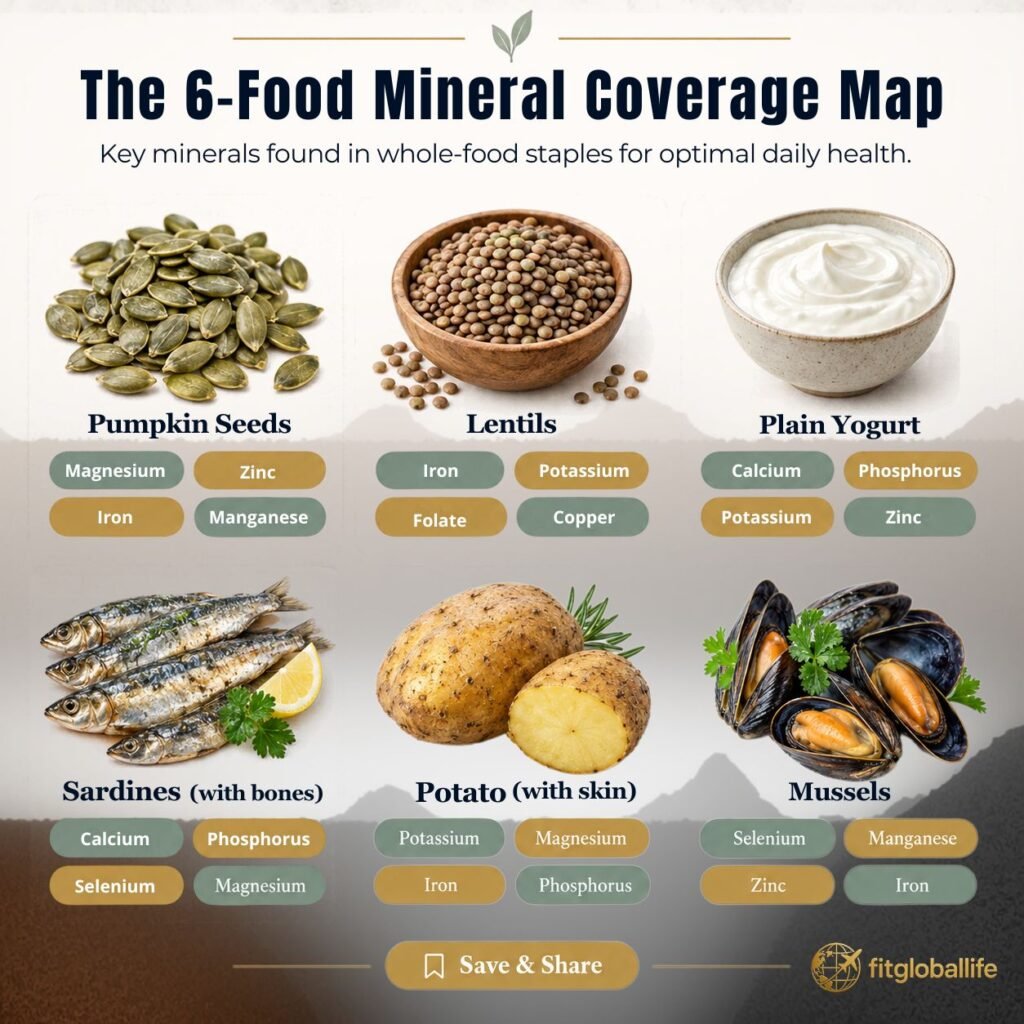
We selected the six foods below for coverage, practicality, and variety. Together they bring meaningful amounts of magnesium, potassium, calcium, iron, zinc, selenium, copper, and phosphorus into the conversation. This is not a prescription, and you don't need to eat all six. The point is to notice which food families are missing from your routine and add one or two that fit your culture, budget, preferences, and health needs.
At-a-Glance Mineral Coverage
| Pumpkin seeds | Magnesium, zinc, iron, copper | Small serving, broad mineral spread | Oats, yogurt, salad, trail mix |
| Lentils | Iron, magnesium, potassium, zinc | Affordable plant protein + fiber + minerals | Soup, curry, grain bowl, salad |
| Plain yogurt | Calcium, phosphorus, potassium, zinc | Accessible calcium-rich staple | Breakfast, dip, sauce, snack |
| Sardines with bones | Calcium, selenium, phosphorus, zinc | Edible bones add calcium; shelf-stable | Toast, salad, pasta, rice bowl |
| Potatoes with skin | Potassium, magnesium, copper | Underestimated whole-food potassium source | Bake, roast, bowl base |
| Mussels | Iron, zinc, selenium, copper | Dense trace-mineral seafood option | Stew, pasta, tomato broth |
Six Foods High in Minerals That You Should Include in Your Diet
1. Pumpkin Seeds: A Small Upgrade in Magnesium and Zinc
A meal's weak point is subtly fixed with pumpkin seeds. They add iron, copper, zinc, and magnesium without changing the recipe. Roasted pumpkin seeds are listed in the NIH zinc reference table as a helpful source of zinc. Foods high in magnesium, such as seeds, are particularly beneficial because magnesium is frequently underconsumed.
A tablespoon or two can go over oatmeal, unsweetened yogurt, soup, roasted vegetables, or a grain bowl. If your current snack is mostly crackers, sweets, or coffee, replacing part of it with seeds can also make your snack more nutrient-dense. That idea fits naturally with our approach to building smarter snacks that provide steadier nutrition.
One caution: seeds are energy-dense. More is not automatically better. Use them as a mineral-rich accent, not a bowl-filling challenge issued by social media.
2. Lentils: The Mineral-Rich Pantry Staple
Lentils are one of the best examples of nutritional overlap: they contribute iron, magnesium, potassium, and zinc while also providing protein and fiber. That combination is especially useful for people trying to increase plant-based protein without relying on highly processed substitutes.
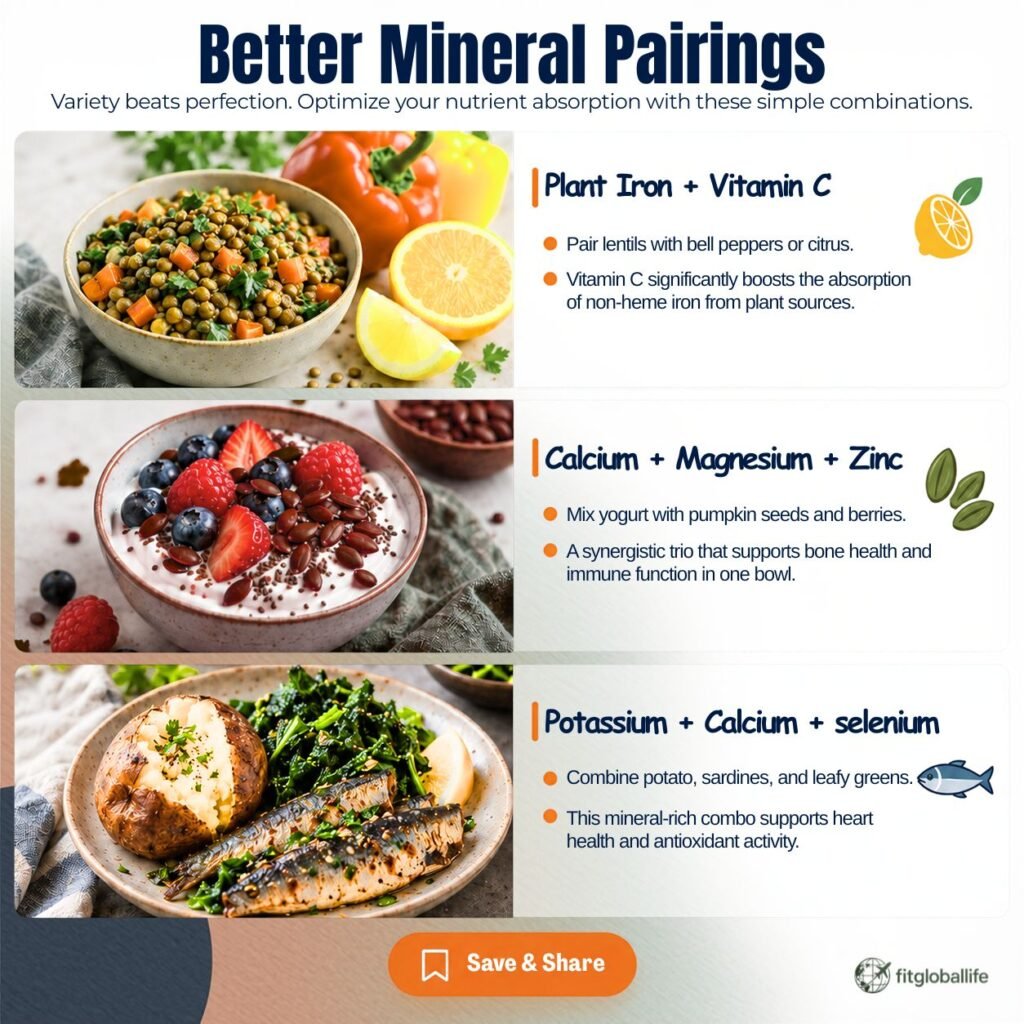
The body absorbs non-heme iron from plants in a different way than it does heme iron from animal sources. Because non-heme iron is less easily absorbed, vegetarians should pay more attention to iron, according to the NIH iron guidelines. That's not an excuse to stay away from lentils; rather, it's a cause to construct the meal wisely. To aid in the absorption of non-heme iron, use bell peppers, tomatoes, citrus, kiwis, or other foods high in vitamin C.
Lentils also work beautifully in fiber-rich breakfast patterns when used in savory bowls, and they pair with whole grains, vegetables, herbs, and olive oil for a meal that is much more nutritionally complete than a protein bar with good branding.
3. Calcium and a Beneficial Mineral Matrix in Plain Yogurt
Although plain yogurt's protein and probiotic content are frequently highlighted, its mineral content merits equal attention. Zinc, potassium, phosphorus, and calcium can all be found in dairy yogurt. According to the NIH calcium information page, the main sources of calcium in American diets are cheese, yogurt, and milk. Beyond its role in bone building, calcium is essential for healthy muscular contraction and nerve transmission.
If at all feasible, choose unsweetened yogurt and add your own fruit, seeds, almonds, or oats. This broadens the nutritious mix while giving you control over added sugar. Our guide on fermented foods and the gut-brain axis delves deeper into that aspect of the tale. Fermented foods also fit into a broader discussion about the gut environment.
If you do not eat dairy, check fortified plant-based yogurts carefully. Calcium and vitamin D fortification vary by product, and protein can vary dramatically. The front of the package may say “plant-based”; the nutrition panel tells you whether it is actually doing useful work.
4. Small Fish with Serious Mineral Density: Sardines with Bones
One of the best methods to add calcium to a meal, along with some zinc, phosphorus, and selenium, is through the soft, edible bones of sardines. Canned sardines and salmon with bones are particularly listed by the NIH as foods that contain calcium. They are very multipurpose for such a tiny tin because they also include protein and omega-3 fats.
If you're afraid of sardines, start with a tiny bit mixed with olive oil or plain yogurt, lemon, herbs, and pepper, then spread it over whole-grain toast. They can also be folded into rice or tomato spaghetti. Culinary heroics is not the aim. It is normalizing a nutrient-dense meal to the point where it can be repeated.
That repeatability is important for readers who are creating long-lasting habits instead of pursuing ideal diets. The similar idea underlies health behaviors that endure for many years: a beneficial practice must endure regular Tuesdays.
5. Skin Potatoes: The Food People Undervalue for Potassium
For years, potatoes have been reduced to “carbs,” which is unhealthy. Depending on how it is prepared, a whole potato—especially one with the skin—contributes potassium, magnesium, and copper in addition to fiber and vitamin C. Even when supplements are taken, many Americans consume less potassium than is advised, according to the NIH potassium information sheet.
Potassium is important because it promotes muscular function, neuronal transmission, and fluid homeostasis. The practical win is straightforward: instead of using potatoes as a vehicle for excessive salt and saturated fat, bake or roast them, preserve the peel when appropriate, and serve them with beans, yogurt-based sauce, fish, eggs, or vegetables.
This is also why carbohydrate quality matters more than carbohydrate fear. Our guide to smart carbohydrates for steadier energy looks at how whole-food carbohydrate choices can work inside a balanced meal rather than being automatically demonized.
6. Mussels: A Powerhouse of Trace Minerals
Salmon and chicken are more frequently featured in everyday wellness content than mussels, which is precisely why they should be included here. In a small portion, shellfish can supply iron, zinc, copper, and selenium. Fish and other seafood are listed as natural sources of selenium in the NIH selenium guidelines, while shellfish are listed as one of the dietary copper categories with the highest levels of copper in the NIH copper guidelines.
They also remind us that mineral-rich eating doesn't have to be plant-only or animal-only. A varied pattern can draw strengths from legumes, seeds, dairy or fortified alternatives, tubers, and seafood. If mussels are not available or suitable, oysters, clams, other seafood, beans, seeds, or fortified foods can fill similar nutritional needs.
People who are pregnant, immunocompromised, or otherwise advised to avoid raw or undercooked shellfish should adhere to food safety guidelines and medical advice. Shellfish allergy is a clear exception.
How to Get More Mineral Value From the Foods You Already Eat
Choosing mineral-rich foods is only half the story. The rest is meal context. You do not need to micromanage every absorption pathway, but a few principles make the pattern more effective and more realistic.
Pair plant iron with vitamin C
For lentils, beans, seeds, and leafy greens, add a vitamin-C-rich ingredient in the same meal. Think lentil soup with tomatoes, bean tacos with salsa and cabbage, pumpkin-seed salad with citrus dressing, or hummus with bell peppers. This is a food-first strategy, not a supplement protocol.
Use preparation to improve the meal, not chase “perfect absorption”
Soaking, sprouting, fermenting, and cooking can change antinutrient levels and digestibility in some plant foods, but the internet often turns that nuance into fear. Legumes, whole grains, nuts, and seeds remain valuable foods. If you agree, eat them in varied forms rather than treating phytate as a nutritional villain with a tiny mustache.
A healthy gut environment may also influence how well your body handles the overall diet. For a deeper look at microbial metabolites and diet, see our article on post-biotic nutrition and gut health.
Rotate food families across the week.
A repetitive “healthy” menu can still be narrow. If breakfast is always the same oats, lunch is always chicken and rice, and dinner is always salad, the ingredients may be respectable, but the mineral exposure is predictable. Rotate seeds, legumes, dairy or fortified alternatives, seafood, whole grains, tubers, leafy greens, fruit, and herbs. This is more useful than obsessing over one perfect superfood.
That wider pattern also complements functional nutrition principles that start with dietary context rather than treating every nutrient as an isolated hack.
A Simple Mineral-Coverage Formula for Real Life
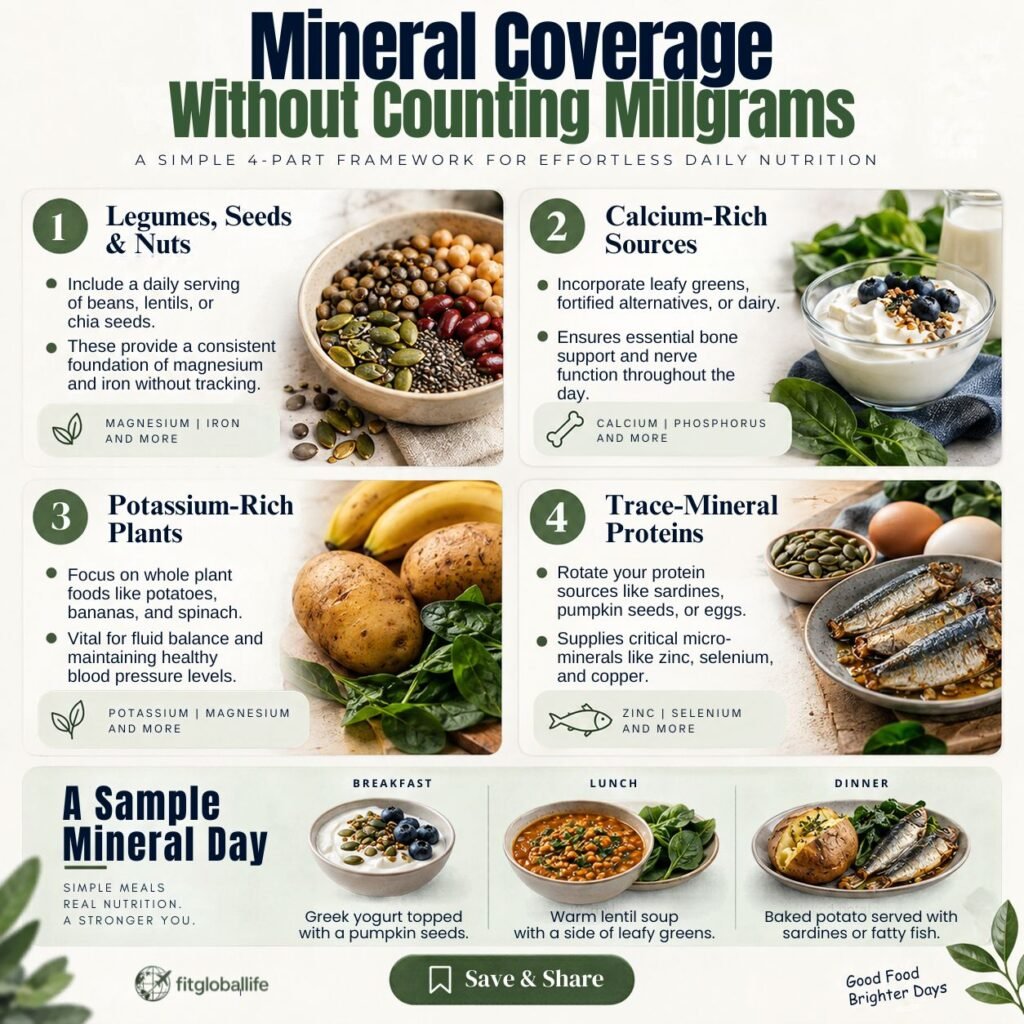
Instead of counting eight minerals at every meal, use a simple four-part check. Across the day, try to include: (1) one legume, seed, or nut source; (2) one calcium-rich food or fortified alternative; (3) one potassium-rich plant food; and (4) a rotating protein source that contributes trace minerals. You can cover most of that with ordinary meals.
- Breakfast: plain yogurt + berries + oats + pumpkin seeds.
- Lunch: lentil-tomato soup + whole-grain bread + leafy salad.
- Dinner: roasted potato with skin + vegetables + sardines, eggs, tofu, or seafood.
- Snack: fruit + small handful of seeds or nuts.
For nutrient estimates, use the USDA FoodData Central database rather than relying on viral graphics. Food composition varies by species, brand, preparation, fortification, and serving size, so databases are best used as practical estimates rather than biological commandments.
Who May Need More Individualized Attention
Food-first advice works well for many generally healthy adults, but nutrient needs and absorption can shift with life stage, health status, medications, and dietary pattern. People who are pregnant, have heavy menstrual blood loss, follow highly restrictive diets, have gastrointestinal conditions, have undergone bariatric surgery, use certain diuretics or acid-suppressing medicines, or have kidney disease may need more individualized assessment.
Older adults also deserve special attention because appetite, absorption, medication use, and total food intake can change with age. The broader goal is not just avoiding deficiency; it is preserving function. Nutrition sits alongside sleep, strength, and mobility habits that protect long-term health.
If you have persistent symptoms, abnormal lab results, or a diagnosed condition, work with a physician or registered dietitian. Do not use an online food list to self-diagnose iron deficiency, electrolyte disorders, thyroid disease, or another medical problem.
Supplements come second to food.
When there is a proven need, when food consumption is insufficient to meet needs, or during particular phases of life, supplements may be helpful. However, just because the dosage appears outstanding does not mean that they are necessarily safer or more effective. Certain minerals interact with drugs, some compete for absorption, and some build up at large intakes.
Selenium is an excellent illustration. Although it is necessary, the NIH cautions that consuming too many Brazil nuts may cause intake to exceed the upper limit due to their high selenium content. Optimized does not equate to more. Widening the diet, determining whether a true gap still exists, and, if necessary, using targeted supplements are the more sensible steps.
Personalization can be helpful, but it shouldn't be used as a means of predicting one's health. It is advisable to interpret our explanation of individual diversity and epigenetic eating as a foundation for more insightful inquiry. The same base is reinforced by nutrition for cognitive clarity, which prioritizes regular nutrient adequacy above exotic optimization.
Conclusion: Build a Wider Plate, Not a Longer Supplement List
The ability to strive for a flawless daily score is not the most beneficial aspect of eating foods high in minerals. They increase the resilience of a diet. Zinc and magnesium are found in pumpkin seeds. Minerals, fiber, and plant protein are all combined in lentils. Potassium and calcium can be found in yogurt. Sardines provide selenium and calcium. Potatoes are a silent source of potassium. A rich mixture of trace minerals is brought by mussels.
You do not require all six, nor do you require them on a daily basis. Choose foods that suit your lifestyle, switch across food families, and keep an eye out for the gaps that come from repetition. Our article on regenerative soil and nutrient intake delves deeper into the food-system aspect of nutrient density.
Finding a single miracle item is rarely the foundation of a healthy diet. It is constructed by providing your body with sufficient amounts of various raw ingredients, frequently enough, and for a sufficient amount of time. not going viral. incredibly successful.
Frequently Asked Questions
Since demands vary according to age, sex, health, and nutrition, there is no one uniform ranking. Minerals such as calcium, potassium, magnesium, iron, zinc, selenium, iodine, copper, phosphorus, salt, and others play vital roles. A diverse diet is more dependable than concentrating on a single mineral.
Indeed, a well-planned vegetarian diet that includes legumes, tofu, nuts, seeds, whole grains, vegetables, dairy or fortified substitutes, and other foods can help many people satisfy their mineral needs. Because absorption from plant foods is different from that from animal sources, iron and zinc require additional planning.
Not always. The mineral and its chemical form, the dosage, concurrent consumption of other foods or supplements, and personal health variables all have an impact on absorption. Additionally, foods supply vitamins, lipids, fiber, protein, and other substances that supplements cannot match.
Heat can diminish some vitamins, but it doesn't harm minerals because they are elements. Minerals can, however, find their way into cooking water. You may lose some minerals from the portion you consume if you boil food and dump the liquid. Roasting, steaming, soups, stews, and utilizing the cooking liquid can all reduce that loss.
Symptoms alone are not reliable as fatigue, cramps, hair changes or poor concentration can be caused by many things. If deficiency is suspected, a qualified healthcare professional can review your diet, medications, medical history, and appropriate laboratory tests.
Disclaimer
This is not medical advise; it is merely meant to be instructive and informative. Age, sex, stage of life, health, medications, and dietary habits all affect nutrient requirements. This page should not be used to diagnose or treat any medical condition, including mineral deficiencies. See a trained medical expert or registered dietitian if you have symptoms, abnormal lab results, kidney illness, gastrointestinal disorders, are pregnant, or are thinking about using high-dose mineral supplements.