

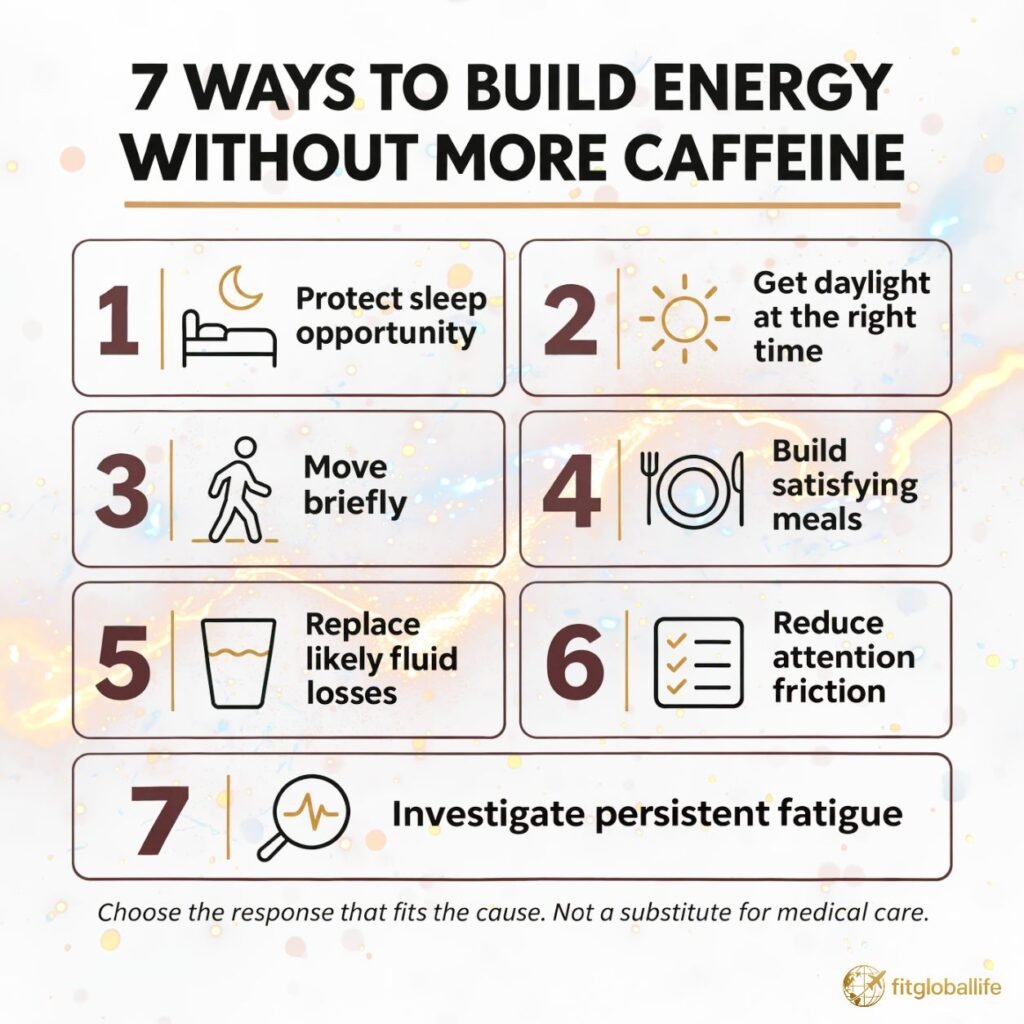
If you want to build energy without caffeine, the first step is to stop treating every slump as the same problem. Feeling sleepy, physically drained, hungry, dehydrated, or mentally overloaded can all sound like “I need coffee,” but they call for different responses. A second cup may make you feel more alert for a while; it cannot replace sleep, lunch, recovery, or medical care.
This guide focuses on realistic ways to support steadier daytime energy—not a guaranteed boost or a substitute for diagnosis. Adults generally need at least seven hours of sleep, though individual needs vary, and the CDC’s sleep guidance emphasizes both duration and quality. One U.S. estimate found that 35% of adults reported short sleep in 2020; that is a population snapshot, not a prediction about any one person. The useful question is: what is most likely draining your energy today?
First, identify what kind of “low energy” you mean
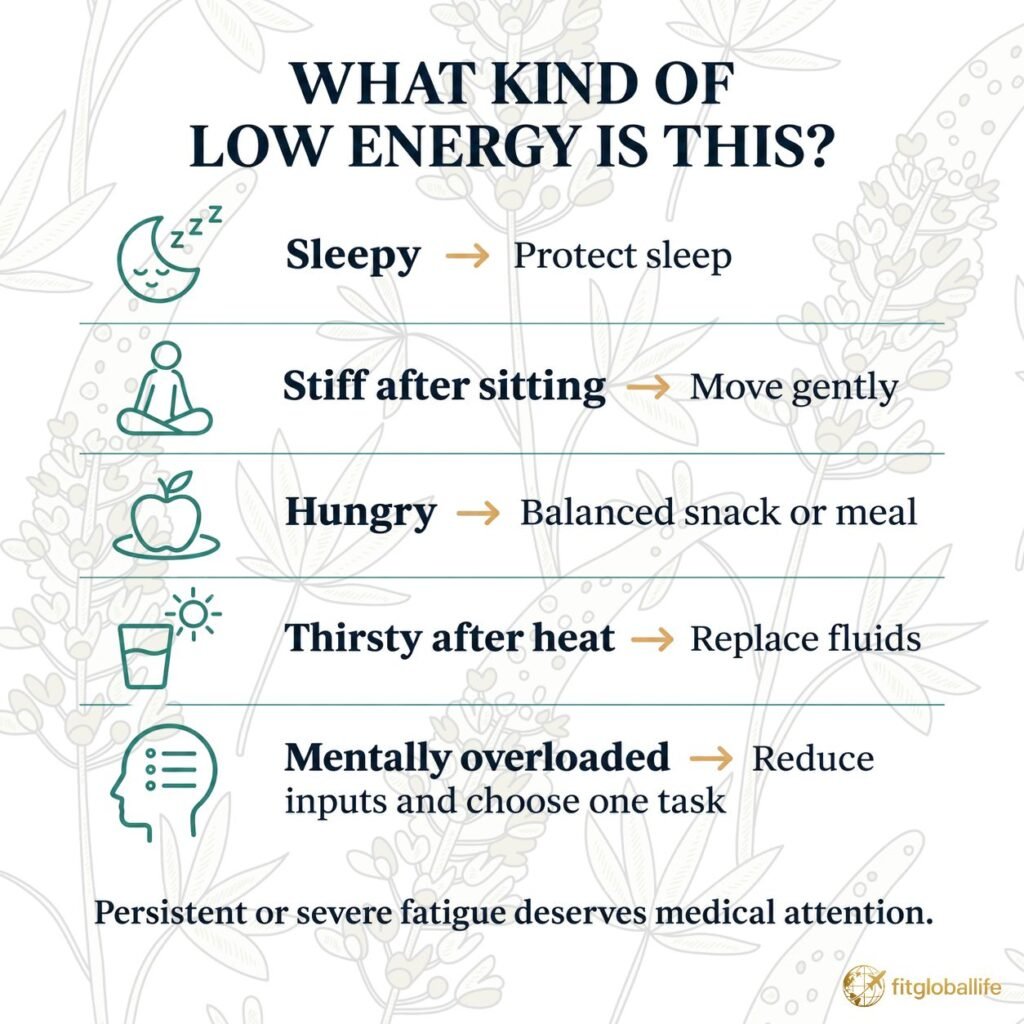
Try a quick check before reaching for another stimulant: “Could I fall asleep right now?” points toward sleepiness. “Do my legs or body feel spent?” may point toward physical fatigue or recovery. “Can I do the task, but cannot hold my attention?” may call for reducing distraction or stress. “Have I eaten or had fluids since morning?” makes basic fueling worth checking. These are clues, not diagnoses.
A simple energy-pattern note can help you record sleep timing, caffeine timing, meals, movement, and when the slump appears for one week. It may reveal a repeatable pattern—such as a late coffee followed by poor sleep—more clearly than a complicated “biohacking” routine.
1. Protect the sleep opportunity you actually need
If the main symptom is heavy eyelids, start with sleep rather than trying to out-stimulate it. Keep a reasonably steady wake time, allow enough time in bed, and make the bedroom dark, quiet, and comfortable. For adults ages 18–60, guidance generally calls for at least seven hours; adults over 60 have age-specific ranges. Quality and regularity matter too. If you wake repeatedly, snore loudly, gasp, or feel unrefreshed despite adequate time in bed, habit tweaks may not be enough.
Caffeine timing can be part of the loop. The FDA notes that up to 400 mg per day is not generally associated with negative effects for most adults, but sensitivity varies, and that figure is not a target or a guarantee for everyone. The National Heart, Lung, and Blood Institute notes caffeine’s effects can last up to eight hours. If your sleep is fragile, experiment with an earlier cutoff and observe the result. To reduce a high daily intake, taper gradually; abrupt changes can bring headaches or other withdrawal symptoms. This connects with FitGlobalLife’s guide to why rest is an active part of health.
2. Use daylight as a timing cue
If you feel groggy after waking or spend most of the morning indoors, get outside for a few minutes when practical. Daylight is a time cue for the body clock; it is not a magic energy drink, and the exact effect depends on your schedule, season, and light exposure. The CDC’s NIOSH training explains how light timing affects circadian rhythms. A short outdoor walk can pair light with gentle movement.
For night-shift workers or people with changing schedules, “get morning sun” may be the wrong advice. Work with the sleep window you are trying to protect: bright light during the planned wake period and a darker sleep environment can be more relevant. FitGlobalLife’s overview of how indoor lighting can support circadian timing can add context, but a lamp does not replace individualized advice for a sleep disorder.
Keep the experiment modest: spend a few minutes outdoors after waking, then notice whether it changes your alertness or bedtime over several days. Cloud cover still provides daylight, but avoid staring at the sun. If you have a diagnosed eye condition, take a medicine that increases light sensitivity, or are considering a therapeutic light box, ask a healthcare professional what is appropriate for you.
3. Move briefly before you demand more from your brain
A brisk 5–10-minute walk, a few flights of stairs, or gentle mobility can interrupt a long seated stretch. Think “change state,” not “burn calories.” The CDC says even one session of moderate-to-vigorous activity has immediate health benefits, including better sleep quality and reduced anxiety; it does not promise an instant cure for fatigue. If you are ill, dizzy, in pain, or recovering, choose rest or a gentler option.
Make the action small enough to repeat: refill water on a farther floor, take a walking call, or stand and stretch between tasks. FitGlobalLife’s five-minute exercise-snack ideas and mobility habits for daily function offer related ways to build movement into an ordinary day.
A useful test is to move before the slump becomes a full stop: take a short walk after a meeting or do a gentle mobility break between two concentration-heavy tasks. If you are new to activity, increase gradually rather than turning one tired afternoon into an intense workout. The goal here is a comfortable change in posture and pace, not pushing through warning signs or substituting exercise for recovery.
4. Build meals around staying power, not “energy” claims
Food does not work like a switch. A meal or snack can help when hunger or a long gap between meals is contributing to the slump, but no specific food can guarantee sustained energy. Try combining a source of carbohydrate with protein, fiber, or unsaturated fat—for example, fruit with yogurt, beans with whole-grain toast, or oats with nuts. Choose portions and timing that suit your appetite, culture, schedule, and health needs.
If a very large lunch leaves you sluggish, test a moderate portion and a brief walk afterward rather than banning carbohydrates. FitGlobalLife already covers snacks with more staying power, carbohydrate choices for steadier meals, and fiber-rich breakfast ideas. Those guides can give readers more detailed food examples without turning this article into a second recipe roundup.
A practical meal check is to look at the whole plate and the gap before your next chance to eat. A meal that is mostly refined starch or sweet drink may leave some people hungry sooner; adding beans, eggs, tofu, yogurt, vegetables, nuts, or another familiar protein- and fiber-containing food can make it more satisfying. This is a flexible pattern, not a rule that every meal must be perfectly balanced. People managing diabetes, digestive conditions, allergies, or a prescribed eating plan should follow individualized guidance.
5. Drink to replace likely fluid losses—not to chase a number
If you have been sweating, exercising, spending time in heat, or simply forgetting to drink, water may help address dehydration. But drinking extra water when you are already hydrated is not a reliable energy treatment. Thirst, dry mouth, unusually dark urine, or less urination can be practical prompts to consider fluids; some health conditions require individualized fluid limits, so follow your clinician’s advice if you have one.
A glass of water within reach is enough as a cue. You do not need to force a universal daily volume or treat every afternoon dip as dehydration. If the slump continues after reasonable food, fluids, movement, and sleep, use the next step instead of endlessly adding wellness hacks. Heat, long exercise sessions, fever, vomiting, and diarrhea can raise fluid losses; older adults and some people taking medicines may need extra attention. When illness causes fluid loss, follow local medical advice about rehydration rather than relying on a generic energy tip.
6. Reduce attention friction and emotional load
Sometimes the body is not sleepy; the mind is saturated. Notifications, task switching, unresolved worry, and long stretches without a pause can make ordinary work feel exhausting. Before adding caffeine, close unrelated tabs, silence nonessential alerts, write down the next physical action, and work on one task for 15–25 minutes. Then take a short screen-free break. This is not a cure for burnout, anxiety, or depression; it is a way to reduce avoidable friction in a normal work block.
A brief breathing pause, a short walk, or a conversation with someone you trust may also help you reset. FitGlobalLife’s guides to mindfulness during busy workdays and small repeatable wellness wins can support readers who want a simple routine. For a deeper focus system, direct them to rituals for a scattered mind.
7. Treat persistent fatigue as information
If low energy is new, worsening, lasts for weeks, or interferes with work and daily life, do not assume you need a stronger morning routine. Fatigue may be due to sleep disorders, stress, infection, medications, anemia, thyroid problems, or other causes. If you’re still tired or it’s affecting your everyday life, the NHS says you should get medical help. A clinician can review your symptoms, medicines, sleep, and whether tests are appropriate.
Seek urgent care for severe or sudden symptoms such as chest pain, fainting, severe shortness of breath, confusion, or signs of serious dehydration. Do not start iron, B vitamins, “adrenal” products, or stimulant supplements just because you feel tired; supplements can be unnecessary or harmful and may delay finding the cause. FitGlobalLife’s guide to everyday health signals can encourage observation, but it should not be used to self-diagnose.
Before an appointment, a short record can make the conversation more useful: when fatigue began, whether it is constant or comes in waves, sleep schedule and snoring, recent illness, changes in mood or weight, menstrual bleeding where relevant, medicines and supplements, and what improves or worsens it. A clinician can decide whether evaluation is needed; the record is context, not a home diagnostic test.
A simple low-energy decision guide
| What you notice | First low-risk experiment | When to look deeper |
| Sleepy, especially after a short night | Protect sleep time; review late caffeine | Persistent unrefreshing sleep, loud snoring, gasping |
| Slump after a long seated stretch | Walk or move gently for 5–10 minutes | Pain, dizziness, illness, or exercise intolerance |
| Hungry or long gap since food | Eat a balanced meal/snack that fits your needs | Repeated symptoms or special dietary/medical needs |
| Thirsty after heat or sweating | Drink fluids; replace losses sensibly | Severe dehydration signs or fluid restriction |
| Foggy with many open tasks | Reduce notifications; choose one next action | Ongoing low mood, anxiety, or impairment |
| Low energy for weeks without clear reason | Track pattern and book a health appointment | Urgent symptoms need urgent care |
Conclusion: choose the smallest useful reset
Building energy without more caffeine is usually less about finding a hidden superfood and more about matching the response to the cause. Protect sleep if you are sleepy. Move if you have been still. Eat if you are under-fueled. Drink when you have likely lost fluids. Reduce task friction when attention is overloaded. And get help when fatigue persists or comes with concerning symptoms.
Try one change for several days and notice what shifts. You do not need to overhaul your life before lunch. A useful reset should make the next hour more manageable—and help you understand what your body may be asking for.
Frequently asked questions
If you are mildly sluggish, try a few minutes of outdoor light and easy movement, or a short break from screens. If you are sleep-deprived, these may temporarily improve alertness but cannot replace adequate sleep.
Water helps when low fluid intake or fluid loss has contributed to dehydration. Extra water is not a general stimulant; drink according to thirst, conditions, and any medical fluid guidance.
A brief nap can improve alertness for some people, but it cannot repay ongoing sleep loss. Keep it early enough not to disrupt nighttime sleep; adults who nap may benefit from keeping it brief.
If you regularly drink caffeine, you might want to reduce your intake gradually, as going cold turkey can give you withdrawal symptoms such as a headache.Ask a clinician if you have a relevant condition, are taking interacting medication, are pregnant or have other concerns.
If you have felt tired for a few weeks without an obvious reason, and this is affecting your everyday life or you also have symptoms such as changes in weight, mood, palpitations, breathlessness or interrupted breathing during sleep then seek medical advice. Urgent assessment of acute severe symptoms.
Disclaimer
This article is for general education and is not medical advice, diagnosis, or treatment. Individual health, medications, sleep, nutrition, work and other factors affect energy and fatigue. Consult a qualified healthcare professional about persistent or concerning symptoms and before making changes that may affect a medical condition. Do not delay care because of information in this article.