

Future health signals are not always buried in a lab report, a DNA panel, or the dashboard of an expensive wearable. Some of the most useful clues about where your health may be heading show up in ordinary life: when you fall asleep, how easily you climb a flight of stairs, whether your blood pressure is drifting upward, how your clothes fit, what your gums are doing, and how often you genuinely connect with other people.
That does not mean your Tuesday morning routine can predict your medical future. It cannot. A single poor night’s sleep, one breathless staircase, or one high blood pressure reading is mostly noise. The useful information is in the pattern. Direction matters more than drama.
That distinction is important because wellness culture has become unusually good at turning normal variation into alarm. One device notification can make a healthy person feel broken. At the same time, gradual changes can be easy to ignore because they arrive quietly. A better approach is to treat everyday signals as a personal dashboard: notice what is stable, what is drifting, and what deserves professional evaluation.
This article builds on the idea that small repeatable wellness wins matter. Still, it asks a different question: not simply “What healthy habit should I add?” but “What is my ordinary life already telling me?” That shift from optimization to observation is one of the most practical ways to think about healthspan.
Why Future Health Signals Matter More as Trends Than Snapshots
Health is dynamic. Sleep changes after travel. Resting pulse can rise during an infection. Blood pressure can jump after caffeine, poor sleep, pain, or stress. Weight moves with hydration. Walking pace slows when you are tired. Social contact can drop during a busy month. None of those changes automatically means disease.
The more useful concept is trajectory. If a measure that was stable for months begins moving in one direction and stays there, the change is worth understanding. That’s why clinicians often prefer repeated measurements over isolated readings. It is also why a practical longevity strategy should be less obsessed with a perfect score and more interested in habits that remain useful across decades.
A 2025 prospective study of more than 72,000 UK adults illustrates the point well. Researchers found that irregular sleep was associated with a higher risk of major adverse cardiovascular events over follow-up, even after accounting for several other factors. The study does not prove that an irregular schedule directly causes a heart attack, but it shows why repeated daily patterns can carry meaningful information when examined across large populations. You can review the device-based sleep regularity study directly.
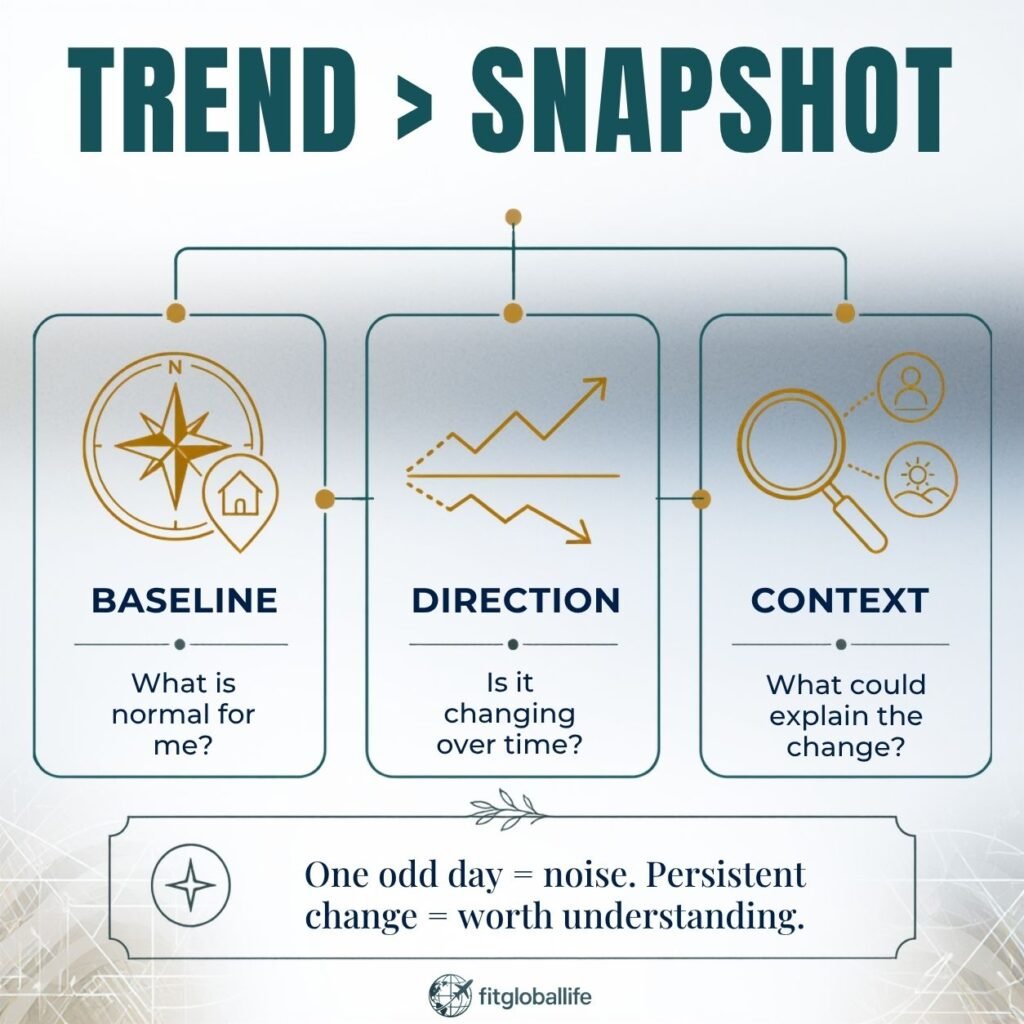
For everyday tracking, use three questions:
- Baseline: What is normal for me when I am well?
- Direction: Has the pattern changed for days, weeks, or months?
- Context: Is there an obvious explanation, such as illness, travel, medication, stress, training, pregnancy, or a major life change?
Those three questions prevent two common mistakes: panicking about a single abnormal number and normalizing a slow decline simply because it happened gradually.
A Six-Signal Dashboard for Everyday Health
| Signal | What it may reflect | Simple trend to notice | What it does NOT diagnose |
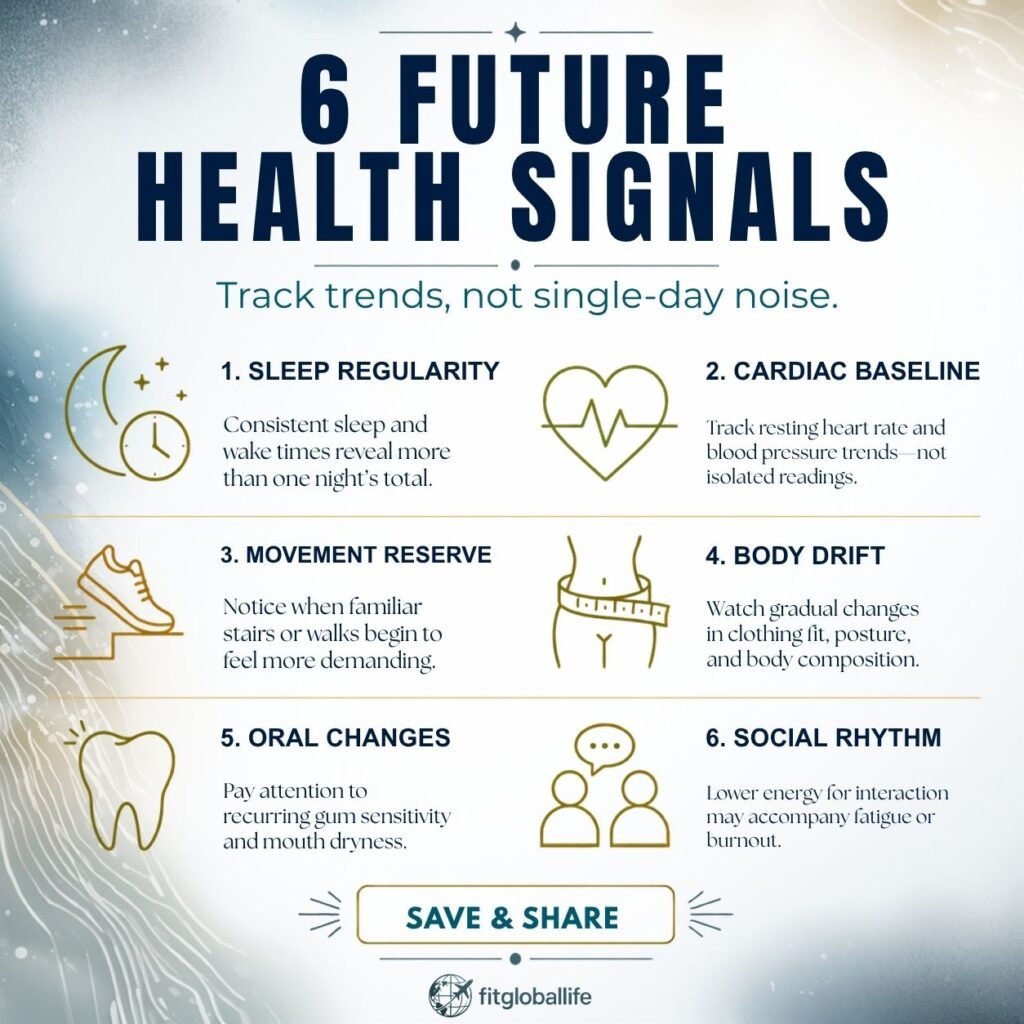
| 1. Sleep regularity | Circadian stability, recovery, sleep health | Bed/wake timing becoming consistently erratic | A sleep disorder, heart disease |
| 2. Quiet cardiovascular baseline | Vascular load and autonomic state | Repeated home BP or resting pulse shifting upward | Hypertension from one reading, heart disease from pulse alone |
| 3. Movement reserve | Cardiorespiratory and functional capacity | Usual walking/stairs becoming harder or slower | A specific lung, heart, joint, or neurologic condition |
| 4. Body drift | Energy balance, body composition, metabolic direction | Unplanned weight or waist change over time | Diabetes, cancer, thyroid disease, or any single cause |
| 5. Gum and mouth changes | Local oral inflammation and dental health | Persistent bleeding, swelling, pain, chewing changes | Cardiovascular disease |
| 6. Social rhythm | Connection, stress buffering, daily function | Persistent isolation or shrinking meaningful contact | Depression or any mental health diagnosis |
Signal 1: Your Sleep Schedule Is Becoming Less Predictable
Most sleep advice still begins with duration, and duration matters. But sleep health is broader than hours alone. The American Heart Association now describes sleep as multidimensional, including regularity, timing, quality, satisfaction, alertness, efficiency, and disturbances. Its 2025 scientific statement summarizes why sleep regularity deserves attention alongside sleep duration.
The useful daily-life clue is not whether you went to bed late once. It is whether your sleep-wake timing is becoming increasingly unstable without a clear reason. A pattern of midnight one day, 2:30 a.m. the next, then 10:30 p.m. after exhaustion may be telling you that work demands, light exposure, stress, alcohol, caregiving, travel, or an underlying sleep problem is disrupting recovery.
What to notice
- Your bedtime and wake time are drifting by large amounts across most days.
- You need repeated weekend catch-up sleep just to feel functional.
- Daytime sleepiness is increasing even when total time in bed looks adequate.
- Your schedule has become less regular after a new medication, a new work pattern, travel, or a health change.
Before buying another sleep gadget, fix the low-tech variables first. Morning light, evening light, room conditions, caffeine timing, and consistency matter. FitGlobalLife has already explored how circadian-friendly lighting can support the biological clock and how bedroom design can shape the sleep environment. Those are useful interventions, but here the signal is the change in regularity itself.
How to track it without becoming obsessive
For two weeks, record only bedtime, approximate sleep onset, wake time, and daytime sleepiness on a 1-to-5 scale. You do not need sleep stages. Consumer wearables can be useful for trends, but they are not a substitute for polysomnography when a sleep disorder is suspected.
Bring persistent new insomnia, loud snoring with choking or gasping, marked daytime sleepiness, or other worsening sleep problems to a healthcare professional. The signal is not “my sleep score was 72.” The signal is “my normal sleep pattern changed and is not returning.”
Signal 2: Your Quiet Cardiovascular Baseline Is Drifting
High blood pressure is famous for being quiet. You can feel completely normal while vascular stress is rising. That makes blood pressure one of the few future-oriented health signals worth measuring rather than guessing from symptoms.
The American Heart Association’s current guidance says normal adult blood pressure is below 120/80 mm Hg, while high blood pressure begins at 130 systolic or 80 diastolic. More importantly for this article, the AHA emphasizes that a record of readings over time provides a more complete picture than a single snapshot. Its guidance on home blood pressure monitoring also recommends validated automatic upper-arm cuff devices and cautions against relying on wrist, finger, or cuffless smartwatch readings for diagnosis.
What to notice
- Your home readings are repeatedly higher than your established baseline.
- A previously normal pattern becomes consistently elevated over days or weeks.
- Your resting pulse also trends higher for no obvious reason such as fever, dehydration, anxiety, stimulant use, or increased training load.
- You are seeing a change after starting or stopping medication.
This is where digital health can help without taking over your life. FitGlobalLife has discussed how bio-data is reshaping longevity conversations and how AI can personalize wellness without becoming biohacking theater. The rule is simple: use technology to improve pattern recognition, not to manufacture certainty.
A useful measurement routine
If your clinician has asked you to monitor blood pressure, take readings under similar conditions: sit quietly for at least five minutes, keep your back supported, feet flat, arm supported at heart level, and avoid exercise, smoking, or caffeine for about 30 minutes beforehand. Take two readings and log them rather than reacting to the first number.
If you need a device, choose a clinically validated automatic upper-arm model. An upper-arm home blood pressure monitor (affiliate link) can be convenient, but confirm the model appears on a recognized validation list and bring it to a medical visit to compare its readings with clinical equipment. The product matters less than validation, cuff fit, and technique.
A reading above 180/120 mm Hg requires prompt action. If it remains that high and you also have chest pain, shortness of breath, weakness, numbness, vision change, back pain, or difficulty speaking, emergency evaluation is appropriate. Do not use an article or smartwatch notification to manage a possible hypertensive emergency.
Signal 3: Ordinary Movement Is Costing You More
One of the most revealing health questions is not “How hard did I train?” It is “How hard has ordinary life become?” Walking to the station, carrying groceries, rising from a low chair, taking stairs, and moving through an airport all demand a mix of cardiovascular fitness, muscle strength, balance, joint function, and confidence.
Research on gait speed is strongest in middle-aged and older adults, so it should not be turned into a universal home diagnostic test. Still, the population-level signal is striking. A meta-analysis of 48 prospective cohorts involving more than 100,000 participants found that each 0.1 m/s lower gait speed was associated with a 12% higher risk of earlier mortality and an 8% higher risk of cardiovascular disease in older adults. The gait-speed meta-analysis is a good example of why functional capacity can contain information that a scale cannot.
What to notice
- Your normal walking pace has been slowing for several weeks or months.
- A familiar flight of stairs now requires an unexpected pause.
- You avoid carrying objects, hills, or longer walks that used to feel routine.
- Your recovery after ordinary effort is noticeably slower than your personal baseline.
Context matters enormously here. A sprained ankle, respiratory infection, heat, poor sleep, anemia, medication effects, pregnancy, pain, deconditioning, and many other factors can change movement. The useful signal is a persistent unexplained decline, especially if it is paired with chest discomfort, fainting, unusual shortness of breath, weakness, or neurologic symptoms.
This signal also has a constructive side. Instead of waiting until formal workouts feel impossible, build capacity with ordinary movement. Short bouts can count. FitGlobalLife’s guide to brief exercise snacks is a practical way to increase daily movement without turning every session into a performance test, while its discussion of cellular energy and recovery offers a broader context for why recovery capacity matters.
Signal 4: Your Body Is Changing Without a Clear Plan
Weight is noisy. Salt, hydration, bowel contents, menstrual cycles, travel, and carbohydrate intake can move the scale quickly. That is why daily weigh-ins can create anxiety without adding insight. But longer-term body drift – especially when it is unintentional – deserves attention.
Current Mayo Clinic guidance says that losing more than about 5% of body weight over 6 to 12 months without trying is generally a reason to speak with a healthcare professional. Unexplained loss can have many possible causes, from medication effects and mood changes to gastrointestinal, endocrine, infectious, or other medical conditions. The important point is not to self-diagnose from weight loss, but not to ignore a persistent unplanned trend. See the Mayo Clinic overview of unexplained weight loss.
Waist change can also add information that BMI does not fully capture. The U.S. National Institute of Diabetes and Digestive and Kidney Diseases notes that a larger waist circumference is a risk factor for type 2 diabetes and heart disease, even when BMI is in the normal range. Its type 2 diabetes risk guidance explains why abdominal fat distribution can matter.
What to notice
- Clothes fit differently over several months without an intentional change in eating or activity.
- Weight is steadily rising or falling beyond your normal fluctuation range.
- Waist circumference is increasing even while body weight looks stable.
- The change comes with appetite shifts, fatigue, weakness, digestive symptoms, swelling, fever, or other new symptoms.
Do not turn this into daily body surveillance. A monthly waist measurement under consistent conditions and an occasional weight trend are usually more useful than reacting to every fluctuation. Nutrition quality matters more than chasing one metric. If your body trend is moving in the wrong direction, start with repeatable basics such as functional health rather than aesthetic wellness and carbohydrate choices that support steadier energy – while getting medical advice when the change is unexplained or substantial.
Signal 5: Your Mouth Is Becoming More Inflamed or Less Functional
The mouth is easy to mentally separate from the rest of the body. That is a mistake. Your gums, teeth, chewing comfort, and oral hygiene affect nutrition, inflammation, quality of life, and your ability to eat a varied diet.
The CDC notes that red, swollen, tender, or easily bleeding gums can signal gingivitis, while periodontitis can progress to bone loss and tooth loss. Importantly, gum disease can become serious before symptoms feel dramatic. Persistent bleeding should not simply be normalized as “my gums are sensitive.”
Be cautious with cardiovascular claims. A scientific statement from the American Heart Association published in late 2025 says that periodontal disease is associated with atherosclerotic cardiovascular disease and major cardiovascular events, but causality has not been established. That nuance matters. Gum disease is not a home test for heart disease, and treating gum disease should not be marketed as a proven way to prevent a heart attack. The AHA statement on periodontal and cardiovascular disease is worth reading for the distinction.
What to notice
- Bleeding with brushing or flossing that persists rather than improving.
- New gum swelling, tenderness, recession, or bad breath that does not settle.
- Loose teeth, new sensitivity, or changes in your bite.
- Chewing becomes painful, or you quietly start avoiding certain foods.
This signal matters because oral changes can alter diet long before someone describes themselves as “unwell.” If crunchy vegetables, nuts, or protein-rich foods become difficult to chew, nutrition can narrow. That is a practical health trajectory issue even before discussing systemic associations.
Signal 6: Your Social World Is Quietly Shrinking
This is the least “medical-looking” signal on the list, which is exactly why it is easy to miss. Health is not only a biological project. The amount and quality of social connection shape stress, behavior, sleep, help-seeking, mood, and daily resilience.
The U.S. Surgeon General’s social connection resources summarize evidence that social isolation is associated with a 29% higher risk of premature mortality, while poor social relationships, isolation, and loneliness are associated with higher risks of heart disease and stroke. Association is not destiny, and the numbers describe populations rather than individual forecasts. Still, the public-health evidence on social connection is strong enough that relationships belong on a serious health dashboard.
What to notice
- Weeks pass without a meaningful conversation that feels supportive.
- You are withdrawing from people or activities you previously valued.
- Your social life is becoming almost entirely passive, such as scrolling rather than interacting.
- A move, caregiving role, retirement, remote work, illness, grief, or conflict has removed your usual sources of connection.
The answer is not “network harder.” Social health is about quality, reciprocity, and belonging, not collecting contacts. This is one place where human wellness skills that technology cannot replace matter more than another app. It also connects with interoceptive awareness: noticing that you feel depleted, lonely, tense, or disconnected before those states become the background noise of daily life.
How to Build a 30-Day Personal Health Signal Dashboard
The goal is not to turn your life into a spreadsheet. It is to create just enough structure to notice direction. Thirty days is long enough to reveal some patterns and short enough to remain practical.
| Signal | Suggested frequency | What to record | Keep it simple |
| Sleep regularity | Daily | Bedtime, wake time, daytime sleepiness | One line |
| Blood pressure | As advised or 2-3 days/week for a short baseline | Two seated readings under similar conditions | Log average |
| Movement reserve | Weekly | How a familiar walk/stair route feels | Easy / same / harder |
| Body trend | Weekly or monthly | Weight trend and/or waist under same conditions | Avoid daily interpretation |
| Oral health | Weekly awareness | Bleeding, pain, swelling, chewing changes | Yes / no / improving |
| Social rhythm | Weekly | Meaningful conversations or shared activities | Quality over count |
Use the baseline-direction-context rule
At the end of each week, ask three questions. First: what is my normal range? Second: is anything moving consistently away from that range? Third: is there an obvious context that explains it? That simple sequence is more valuable than hunting for perfect “normal” numbers on social media.
Use a traffic-light system, not a score
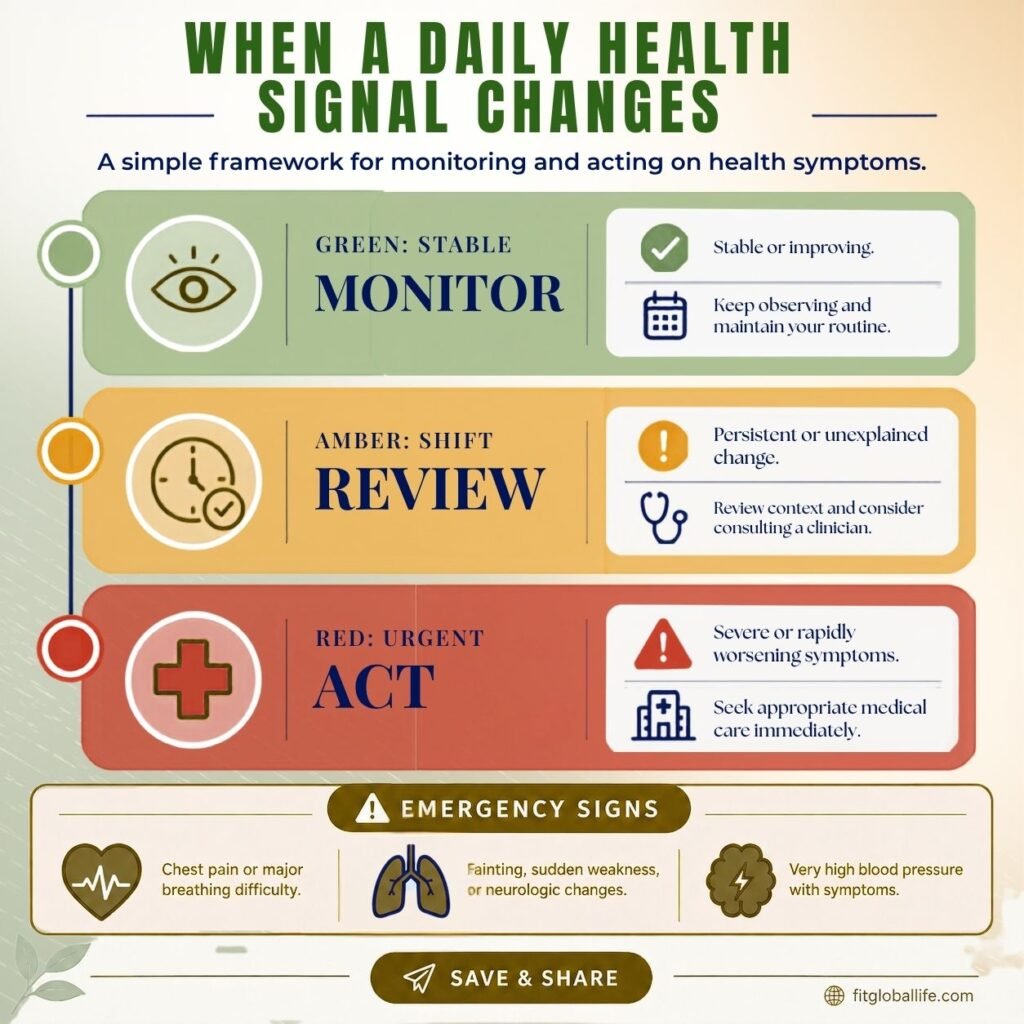
- Green: stable or improving, with no concerning symptoms. Keep living.
- Amber: a signal has shifted for more than a week or two, or several signals are changing together. Review sleep, stress, illness, medication, nutrition, and activity context; consider discussing it with a clinician.
- Red: a significant or rapidly worsening change, serious symptoms, very high blood pressure, fainting, chest pain, major breathing difficulty, sudden weakness, or neurologic symptoms. Seek appropriate medical care rather than continuing self-tracking.
This framework pairs well with nervous-system habits that support a calmer week and recovery rituals that reduce reliance on motivation. The point is not to “win” the dashboard. The point is to make course correction easier.
What Not to Do With Everyday Health Data
More data can improve awareness, but it can also create false precision. A watch can estimate sleep. A scale can estimate body composition. A ring can calculate readiness. A phone can count steps. None of those devices can see the full clinical context.
- Do not diagnose yourself from one wearable metric.
- Do not compare your resting pulse, sleep stages, or step count with an influencer as if their baseline should be yours.
- Do not change prescribed medication based on home data without professional guidance.
- Do not assume a “good” wearable score rules out illness.
- Do not chase daily variability that disappears when you zoom out to a monthly trend.
If tracking itself is making you more scattered, track less. The same principle appears in focus rituals designed for overloaded attention: reduce unnecessary inputs so the information that matters becomes easier to see.
When Everyday Signals Deserve Medical Evaluation
A trend is most useful when it leads to proportionate action. Speak with a healthcare professional when a meaningful change persists, is unexplained, interferes with daily function, or arrives with other symptoms. Examples include:
- Unintentional weight loss of roughly 5% or more over 6 to 12 months.
- High readings on a home blood pressure monitor on a regular basis, especially if this is a new pattern.
- Extremely high blood pressure (over 180/120 mm Hg) that doesn’t go down and urgent symptoms that require immediate medical attention.
- Shortness of breath that is either new or getting worse, chest pain, fainting, noticeable weakness, or an abrupt change in activity capacity.
- Persistent gum bleeding, swelling, dental pain, loose teeth, or chewing difficulty.
- Persistent severe insomnia, gasping during sleep, or excessive daytime sleepiness.
- Social withdrawal accompanied by persistent low mood, hopelessness, or inability to function normally.
You do not need to wait until a symptom becomes dramatic. Preventive care works best when subtle but persistent changes can be discussed before they become crises.
The Bigger Idea: Healthspan Is Often Visible Before It Is Measurable
The future of health will undoubtedly include better sensors, smarter algorithms, and more personalized risk models. But it would be a mistake to assume that meaningful health information only exists inside advanced technology. Daily life already provides a continuous stress test of your sleep, circulation, mobility, metabolism, oral function, and social resilience.
What makes these six signals useful is not their novelty. It is their accessibility. You can observe most of them without a subscription, lab package, or biohacking protocol. More importantly, they reward the habit that matters most in preventive health: noticing change early without overreacting to noise.
A healthy dashboard does not ask, “Am I perfect today?” It asks, “Is my normal changing?” That is a much better question for the long game.
Track lightly. Look for direction. Add context. Seek professional care when a change is persistent, substantial, or concerning. Your body rarely sends a push notification saying, “future problem detected.” More often, it changes the texture of ordinary life first.
FAQ: Future Health Signals
Not for an individual with certainty. Many everyday measures are associated with future health outcomes at the population level, but association is not the same as a personal diagnosis or guaranteed prediction. Their best use is to identify meaningful trends that can guide prevention or prompt a medical conversation.
Start with the signal that is both relevant and easy to measure accurately. For many adults, that may be sleep regularity, home blood pressure (if recommended), or functional capacity, such as how a familiar walk feels. Avoid tracking six metrics at once if that creates anxiety or poor adherence.
They can be useful for trends in things like steps, heart rate, and estimated sleep, but accuracy varies per device, metric, skin contact, movement, and algorithm. Wearable data should aid awareness, not supplant validated medical measurements or clinical assessment. “Cuffless smartwatch blood pressure should not be used to make a diagnosis of hypertension.
Since the meaning varies depending on the signal and context, there is no universal timeframe. While a slight change in sleep or movement could be OK to monitor for days or weeks, a significant acute symptom might need to be treated right away. Changes that are inexplicable, worsening, persistent, or function-limiting should be consulted by a professional as soon as possible.
No. It serves as a foundation for tracking common health trends. Genetics, the environment, medical issues, availability to treatment, social situations, choices, and chance all have an impact on longevity and health span. Your life expectancy cannot be predicted by a six-item dashboard.
Medical and Affiliate Disclaimer
This article is for general educational purposes only and is not medical advice, diagnosis, or treatment. An individual’s future health cannot be predicted by population-level associations. See a trained healthcare provider if you have abnormal measurements, major unexplained changes, or persistent or worrisome symptoms. Emergency symptoms call for immediate medical attention.
Certain product links might be affiliate links, which means FitGlobalLife might receive a commission at no extra cost to you. Clinical advice, equipment validation, and expert measurement are not replaced by product inclusion.